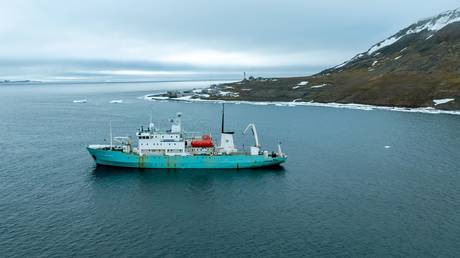
The headlines cheered. Another vessel smashed, another drug-running ghost ship neutralized, another supposed victory for maritime security off the coast of Ecuador. Washington pats itself on the back, local officials issue press releases about crushing the cartels, and the public breathes a sigh of relief.
It is all smoke and mirrors.
I have spent years watching the mechanics of international supply chains and illicit trade networks from the inside. I have seen governments blow millions of dollars on high-profile kinetic strikes while the underlying economic engines of the narcotics trade barely hiccup. Sinking a rustbucket in the Pacific does not disrupt the flow of cocaine any more than popping a single bubble stops a boiling pot of water.
The lazy consensus says that targeting the floating transport vectors strangles the cartels at their root. That is a comforting fairy tale told by bureaucrats who need to justify multi-million-dollar defense budgets to taxpayers. The reality is far uglier, far more adaptive, and entirely ignored by the standard media narrative.
The Economics of Infinite Redundancy
To understand why sinking a suspicious vessel is a tactical distraction, you have to look at how modern transnational cartels operate. They do not run like traditional corporations with fixed assets and vulnerable supply chains. They operate like decentralized, high-redundancy tech startups on steroids.
When a multi-ton shipment goes down, the financial loss is already baked into the operating margin. The markup on cocaine from the jungles of Colombia and processing labs in Ecuador to the streets of North America and Europe is astronomical. A single successful run covers the loss of three, four, or five intercepted or destroyed hulls.
By focusing on the physical asset—the boat—authorities are fighting yesterday's war. They are treating a symptom of a systemic financial disease and calling it a cure.
- Asset Interchangability: The vessels used are often cheap, easily replaceable fiberglass semi-submersibles or retrofitted fishing trawlers. Their capital expenditure is negligible.
- Route Fluidity: The ocean is vast. Ecuador's coastline is a complex labyrinth of estuaries, mangroves, and poorly monitored ports. Close one maritime corridor, and the operation shifts fifty miles west within hours.
- The Subcontractor Model: Cartels rarely own these boats outright. They use layered shell companies and independent maritime contractors who take the operational risk, meaning the core syndicate loses nothing when a hull is sunk.
The Intelligence Black Hole
There is another massive flaw in the kinetic approach that nobody in the defense establishment wants to admit. When you blow a ship out of the water, you destroy the best intelligence asset available: the crew, the communications gear, and the physical ledger.
Dead men tell no tales, and neither do charred remains sinking thousands of feet to the ocean floor.
Imagine a scenario where law enforcement boards the vessel, arrests the crew, seizes the encrypted communications equipment, maps the digital wallets, and tracks the logistical trail back to the onshore financiers and corrupt officials enabling the port departures. That is how you dismantle a network.
Instead, a kinetic strike provides a momentary flash of pyrotechnic glory for social media feeds, followed by total silence. The kingpins safe in their high-rise apartments in Guayaquil or Quito do not even break a sweat. They simply wire a payment for a new boat and hire a fresh crew from the endless pool of impoverished local labor.
The Sovereignty Trap in Ecuador
Ecuador has increasingly become the focal point of this theater because the country's security apparatus has faced unprecedented pressure from organized crime syndicates over recent years. Gangs tied to international cartels have turned parts of the country into logistical hubs.
When foreign powers step in to execute high-profile maritime interdictions or kinetic strikes in or near Ecuadorian waters, it creates a dangerous illusion of progress. It signals to the domestic population that the state, backed by superpower allies, is taking hard action.
However, this outward display of force masks a profound internal rot. You cannot bomb your way out of institutional corruption, compromised port authorities, and a hollowed-out judicial system. If the container terminals in Guayaquil can be subverted by bribery, sinking a fishing boat thirty miles offshore is nothing more than expensive performance art.
The real work of anti-narcotics enforcement is tedious, unglamorous, and deeply political. It requires forensic accounting, tracing cryptocurrency transactions, cleaning up customs agencies, and prosecuting the white-collar enablers—the bankers, lawyers, and politicians who launder the billions generated by these networks.
What Actually Works
If we stopped treating the drug trade like a naval war and started treating it like a sophisticated logistics and financial crime network, our strategies would look entirely different.
- Follow the Crypto and Fiat: Narcotics proceeds move through standard banking channels and digital assets long before they turn into physical cash. Target the compliance officers and financial institutions turning a blind eye.
- Secure the Ports at the Source: X-ray every single container leaving high-risk South American ports, rather than chasing shadows on the open ocean.
- Protect the Whistleblowers and Investigators: Stop funding flashy kinetic hardware and start funding secure, incorruptible investigative units within domestic law enforcement.
Until we abandon the addiction to flashy maritime explosions, the cartels will continue to laugh all the way to the offshore bank, watching us cheer for the destruction of empty boats while their empires expand unchecked.
Stop celebrating the theater. Start dismantling the balance sheet.