Every time a politician opens their mouth about border taxes, the sports retail comment sections melt down. The lazy consensus prints itself automatically. Tariffs go up, raw materials cross the border twice, and the poor beer-leaguer or minor hockey parent gets gouged for another fifty bucks on a Bauer stick. It is a neat, tidy narrative. It is also completely wrong.
I have spent the better part of two decades watching supply chains choke, margins compress, and brands panic in boardrooms from Montreal to Minneapolis. I have seen companies blow millions on localized re-routing schemes that achieved nothing except enriching logistics consultants. When people scream that a tariff on Canadian imports will break the hockey equipment market, they are confusing a convenient scapegoat with the actual economic engine crushing your wallet.
The problem is not the border. The problem is an insular, risk-averse oligopoly that has spent twenty years convincing you that a piece of molded carbon fiber needs to cost as much as a smart TV.
The Margin Myth And The Manufacturing Illusion
Let us start by dismantling the geography of a hockey stick. The standard assumption is that hockey gear is handcrafted by artisans in a snow-covered Canadian shed, loaded onto a truck, hit with a cross-border tariff, and delivered to your local pro shop.
Wake up. Almost zero elite-tier gear is built like that anymore.
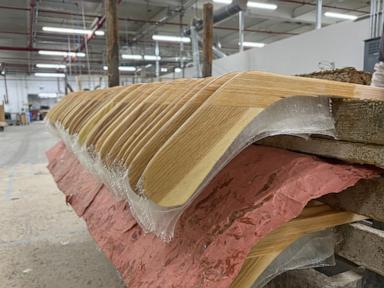
Production moved to Asia decades ago. Composite sticks, molded shins, and dual-density foam helmets are poured, baked, and assembled in Vietnam, China, and Taiwan. The raw materials—mostly carbon fiber tow and epoxy resins—are sourced globally. When a stick crosses the Canadian or US border, it is often just moving between regional distribution hubs or entering the destination market for final packaging and labeling.
If a tariff hits Canadian imports, what actually happens to a stick built in Asia and warehoused in Ontario before shipping to Chicago? Very little, because the primary value-add happened five thousand miles away from either country.
Yet, brands love the tariff panic. It provides a foolproof psychological cover to hike retail prices across the board. If CCM or Bauer wants to bump a top-end twig to three hundred and fifty dollars, they do not announce it as a margin expansion exercise. They wait for a trade dispute, point to the border, and let the media do the crying for them. You swallow the price hike because you think it is government greed, not corporate pricing power.
Why Premium Branding Controls The Ice
We need to talk about what you are actually paying for when you buy elite equipment. You are not paying for carbon fiber. Raw aerospace-grade carbon costs a fraction of what is baked into your stick. You are paying for athlete endorsements, multinational marketing machinery, and a century of brand equity.
The hockey equipment market operates as a strict duopoly. Two dominant players control the vast majority of locker rooms from the NHL down to mites. When a duopoly dictates the terms of engagement, pricing is inelastic.
If you are a competitive player, you do not buy gear based on rational cost-benefit analysis. You buy based on status, performance metrics dictated by pro-stock trends, and fear of missing out. Brands know this. They know that a parent spending fifteen hundred dollars a season on travel hockey will find the extra forty dollars for the latest stick model, regardless of tariffs, trade wars, or currency fluctuations.
Pretending that a border levy is the primary driver of these prices ignores the fundamental economics of luxury sports manufacturing. A hockey stick is a high-performance consumer discretionary item disguised as protective equipment. It is priced like a luxury good because the market will bear it, not because a customs official forced their hand.
The Real Threat To Your Wallet
If you want to worry about why your gear costs a fortune, look at supply chain fragility and logistics overhead, not cross-border protectionism.
Ocean freight rates fluctuate wildly. Warehouse labor shortages drive up handling costs. Last-mile delivery fees for oversized freight—try shipping a bundle of twenty senior sticks through standard carriers right now—have doubled over the last several years. These operational realities squeeze distributors quietly every single day.
Furthermore, product lifecycles have accelerated into an absurdity. Brands used to iterate gear every three to four years, allowing for genuine research and development amortized over a sensible window. Now, we get annual drops. A new colorway and a slightly altered kick-point every twelve months means tooling costs, marketing blitzes, and inventory write-offs happen at a manic pace.
Who pays for the inventory write-offs when last year's matte-black aesthetic goes out of style? You do. That markdown on clearance racks is subsidized by inflating the retail price of the flagship model on day one.
How To Beat The System
Stop playing the retail marketing game. The industry survives on your addiction to the latest catalog drop.
Pro-stock equipment is the ultimate market inefficiency. NHL teams and major NCAA programs receive gear in volumes they cannot possibly consume, leading to a secondary market of pro-stock gear that is structurally superior to retail offerings—often built with heavier-duty laminates and custom curves—selling at a fraction of retail price. Buy pro-stock twigs from reputable liquidators. You get a better tool for half the price, entirely bypassing the retail supply chain markup.
Look at secondary-tier price points. The performance delta between a three-hundred-and-fifty-dollar flagship stick and a two-hundred-dollar mid-tier stick has narrowed to almost zero. Brands put their trickle-down technology into the second tier within eighteen months of a flagship release. If you are paying top dollar for retail gear, you are paying a vanity tax.
Blaming tariffs is an easy out for people who do not want to look at how modern sporting goods conglomerates actually operate. The system is designed to extract maximum capital from your passion for the game, and no trade policy adjustment is going to fix a pricing model built on brand worship. Stop waiting for politicians to save your budget and stop buying retail at full price.