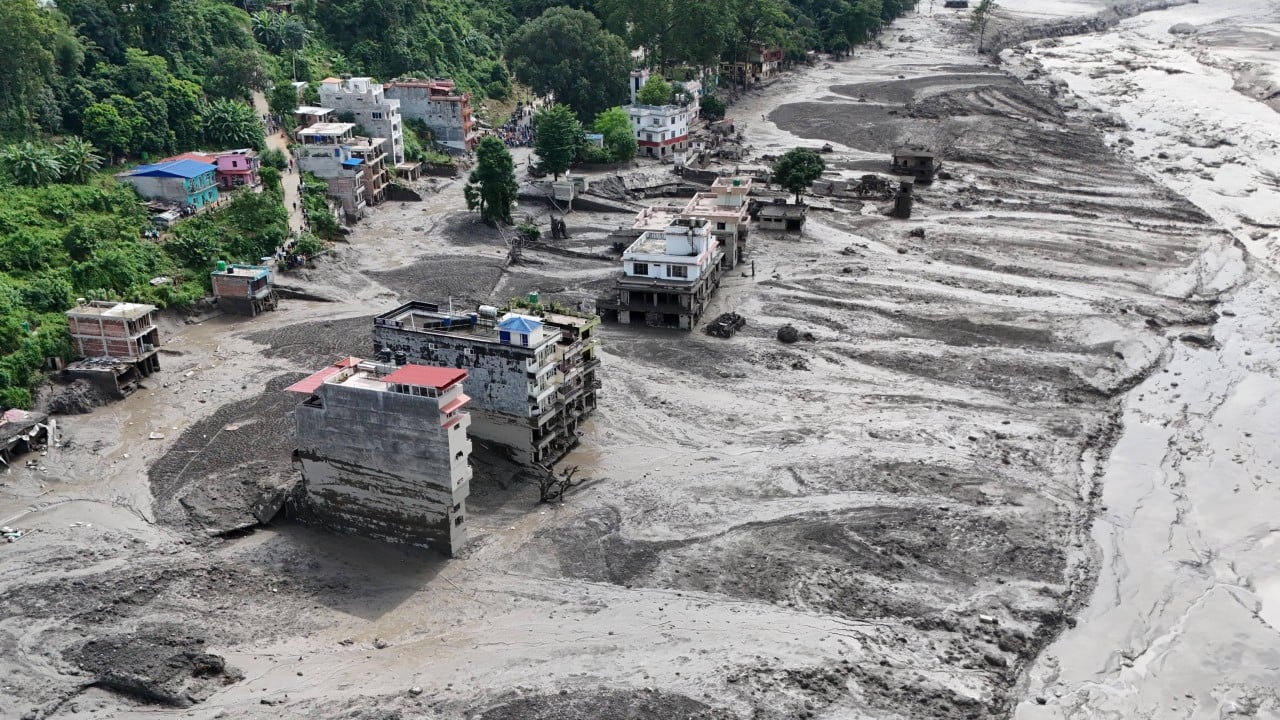
Every time a natural disaster strikes the Himalayas, a predictable script rolls out across international media desks. First comes the tragedy of the rising water, the displaced families, and the infrastructure wiped out in hours. Then comes the narrative machinery. Western pundits and regional commentators immediately pivot from meteorology to geopolitics, diagnosing every online rumor as a calculated disinformation campaign orchestrated by specific actors. When flash floods hit Nepal and conspiracy theories regarding blocked drainage channels or compromised infrastructure tied to Chinese construction projects flooded social media, the lazy consensus was locked in. The mainstream diagnosis blamed foreign bots and anti-China sentiment for poisoning the discourse.
That diagnosis is comfortable. It neatly categorizes a messy, localized ecological collapse into a tidy geopolitical thriller. It treats the internet as a battlefield where foreign influence operations pull the strings of naive local populations.
It is also profoundly wrong.
By framing the digital chaos entirely as an anti-China disinformation crisis, observers completely miss the structural decay, governance failures, and legitimate public anxieties fueling the online anger. I have spent years tracking infrastructure funding, geopolitical leverage points, and transboundary river management across South Asia. I have watched billions of dollars in bilateral aid turn into concrete projects that local communities never asked for, built with minimal environmental oversight, and defended with opaque contracts. When those projects face pressure from extreme weather events, local citizens do not need foreign bot farms to tell them something went wrong. They can see the mudslides burying their roads. They can measure the loss of their livelihoods.
To understand why the digital reaction took the shape it did, you have to discard the simplistic narrative of foreign-backed psychological operations and examine how regional infrastructure projects are actually planned, communicated, and executed.
The Convenience of the Geopolitical Scapegoat
Pointing the finger at coordinated disinformation campaigns serves a dual purpose for regional elites and international observers. For governments, it externalizes blame. If online fury over blocked rivers or fragile dams is just the product of malicious state-sponsored actors, authorities do not need to answer uncomfortable questions about lax environmental impact assessments or delayed disaster response protocols. For foreign policy analysts, it fits neatly into the grand chessboard framework of the new Cold War. Every local grievance becomes proxy warfare.
This framework assumes that local populations in nations like Nepal are passive sponges, absorbing external propaganda without critical thought. That assumption is insulting and factually bankrupt.
When a flash flood rips through a valley, the panic on social media is rarely manufactured in a state security office thousands of miles away. It is generated by a terrifying information vacuum. When local officials fail to provide real-time updates, when sirens do not sound, and when early warning systems malfunction, citizens fill the void with speculation, fear, and historical grievances.
If Chinese-funded hydropower plants, roads, or transmission lines are physically integrated into the landscape where disaster strikes, they become the focal point of public scrutiny. That scrutiny is not automatically disinformation just because it is angry or technically imprecise. It is a symptom of a profound trust deficit between communities, their governments, and foreign developers.
The Reality of Transboundary Vulnerability
The Himalayan ecosystem is arguably the most fragile, volatile terrain on the planet. Climate change has supercharged glacial melt, turning stable high-altitude lakes into ticking time bombs. Monsoons are no longer predictable seasonal shifts; they are erratic, high-intensity shockwaves capable of dropping a month of rain in a single afternoon.
Against this geological backdrop, large-scale construction projects face extreme engineering hurdles. Yet, speed and scale often take precedence over ecological resilience.
Transparency Deficits
- Contractual Secrecy: Major bilateral infrastructure agreements across South Asia are routinely negotiated behind closed doors, keeping local communities in the dark about safety features and environmental safeguards.
- Data Sharing Failures: Hydrological data sharing between upstream and downstream nations remains politicized, leaving vulnerable populations blind to sudden surges in river levels.
- Consultation Theater: Public hearings for massive construction projects are often treated as bureaucratic checkboxes rather than genuine engagements with indigenous populations who understand local watershed behavior better than any visiting engineer.
When a flash flood occurs, communities living downstream of these megaprojects look at altered riverbeds, constrained channels, and unstable slopes. They draw a straight line between the concrete structures altering their environment and the devastation washing away their homes. Whether a specific rumor about a dam bursting or a spillway being deliberately opened is technically true or false matters less than the underlying reality: the public does not trust the safety margins of the infrastructure dominating their valleys.
Calling that distrust an anti-China conspiracy is an evasion tactic. It protects investors and bureaucrats from accountability by rebranding local fear as foreign subversion.
Dismantling the Myth of the Coordinated Bot Net
A closer forensic look at the digital footprint following the Nepal floods reveals a decentralized mess rather than a disciplined influence operation.
During crisis events, social media platforms experience a surge in what communications experts call emotional amplification. People share old photos to grab attention, amplify unverified voice notes from WhatsApp groups out of panic, and channel generalized political frustration into specific local flashpoints. Anti-China sentiment in the region is not a niche product manufactured by hostile intelligence agencies; it is a persistent, organic political current shaped by years of border tensions, economic dependencies, and cultural friction.
When a crisis hits, these pre-existing currents act as a conductor for public outrage. Trying to scrub the internet of these reactions or dismissing them as foreign interference ignores the pressure cooker of domestic politics in a developing republic.
Governments that rely on foreign capital for infrastructure development often suppress domestic criticism during normal times. They crack down on local environmental activists, muzzle independent journalists, and restrict investigative reporting into construction flaws. When those suppressed warnings materialize in the form of a catastrophic flood, the anger does not find a calm, institutional outlet. It erupts online in chaotic, fragmented, and often inaccurate ways.
Suppressing the symptom while ignoring the disease guarantees that the next disaster will generate the exact same cycle of panic, denial, and scapegoating.
What Real Accountability Looks Like
If policymakers actually want to stop the wave of panic and rumor-mongering that follows natural disasters in vulnerable regions, they have to abandon the comforting fiction of the disinformation bogeyman and fix the systemic failures that create fertile ground for rumors in the first place.
Radical Transparency in Engineering
Developers and state planners must open their project books. Environmental impact assessments cannot remain classified state secrets. If a hydropower station or highway alters a river basin, the exact risk calculations must be publicly accessible to the communities living in the shadow of that project.
Real-Time Crisis Communication
Governments need to upgrade their emergency response apparatus to communicate faster than the rumor mill. When an information vacuum exists, malicious actors and panicked citizens will fill it. The best antidote to false rumors is hyper-responsive, brutally honest official communication that admits what is known and what is still uncertain.
Decoupling Infrastructure from Geopolitics
Local communities do not care about geopolitical balance sheets when their homes are underwater. Treating infrastructure projects purely as diplomatic wins or losses for global superpowers strips local residents of their agency. Projects must be judged solely on their ecological resilience and community consent, not on how well they project national prestige.
The next time a climate-driven catastrophe hits the region, the media coverage will likely default to the same old tropes about foreign actors and online manipulation. Do not buy it. Look past the digital noise and examine the riverbanks, the concrete, and the broken lines of trust. That is where the real story is happening.


