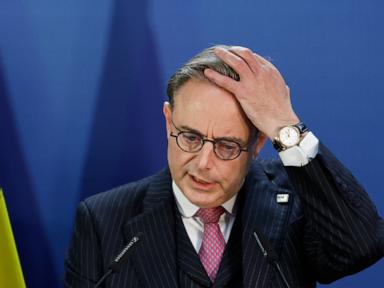
Belgium doesn't just have a budget problem. It has a structural paralysis problem that just forced Prime Minister Bart De Wever to march to the Royal Palace and hand in his resignation.
If you're following European politics from the outside, a government collapsing over a €10 billion budget gap might look like standard parliamentary chaos. It isn't. When Bart De Wever tendered his resignation to King Philippe in November 2026 after marathon weekend talks collapsed at 2:30 a.m., he exposed the exact fault line that makes Belgium nearly ungovernable. The monarch didn't immediately sign off on the exit, choosing instead to hold the resignation in reserve while summoning party leaders for one-on-one consultations.
You've probably seen headlines summarizing this as a simple disagreement over spending cuts.
Why the Belgian PM Resignation Over Budget Talks Actually Makes Sense
news
Belgium is famous for many things. Chocolate, beer, waffles, and governments that collapse when someone tries to balance a spreadsheet.
If you just saw the headlines about the Belgian PM quitting after budget talks failed, you might think Europe's capital is descending into chaos. It isn't. Honestly, if you've watched Brussels politics for more than five minutes, this kind of institutional brinkmanship is practically a national pastime. When a Belgian prime minister walks into the Royal Palace to offer their resignation because coalition partners can't agree on billions in spending cuts or tax hikes, the king doesn't panic. He holds his decision in reserve, starts consulting party leaders, and buys everyone a few days to cool off.
Understanding this requires looking past the dramatic headlines and seeing how Belgium's weirdly resilient political machinery actually operates under pressure.
What Really Happens When Budget Talks Collapse in Belgium
Most countries treat a prime minister's resignation as an immediate trigger for snap elections or a total power vacuum. Belgium plays by a completely different rulebook.
When a prime minister tenders their resignation to King Philippe, the monarch rarely accepts it on the spot. Instead, he keeps it in beraad—under consideration. That single constitutional pause button changes everything. It freezes the clock, keeps the current administration in a caretaker role so civil servants still get paid, and forces warring coalition parties back into a room without the immediate threat of facing angry voters at the ballot box.
Why did the budget talks hit a brick wall in the first place? Because Belgian coalitions aren't built out of two friendly parties that share a basic worldview. They are massive, sprawling alliances—often four, five, or even seven distinct political parties spanning Dutch-speaking Flanders and French-speaking Wallonia. You've got free-market liberals sitting across the table from hardline socialists, greens, and Christian democrats.
Trying to get that group to agree on how to plug a multi-billion-euro deficit is brutal.
The Core Friction Points in Every Belgian Budget Fight
Whenever federal budget negotiations blow up in Brussels, the fight almost always boils down to three stubborn realities that nobody wants to own publicly:
- Taxing wealth versus cutting spending. Socialist parties demand capital gains taxes or higher levies on big corporations to protect social security, while right-of-center Flemish nationalists and liberals insist that Belgium's tax burden is already among the highest in the OECD and demand deep spending cuts instead.
- Pension and labor market reform. Belgium has an aging population and an employment rate that lags behind neighbors like the Netherlands and Germany. Raising the effective retirement age or limiting unemployment benefits over time triggers instant pushback from powerful trade unions.
- The regional wealth transfer. Flanders is wealthier and leans more conservative; Wallonia and Brussels lean further left and rely heavily on federal redistribution. Every euro cut from social programs or regional transfers gets viewed through a linguistic and cultural lens.
When those three pressures collide against a hard European Union fiscal deadline, something has to give. Usually, it's the prime minister's patience.
Why the King Holds All the Cards Right Now
People outside Belgium often assume the monarchy is purely ceremonial, like cutting ribbons at museums or waving from balconies. During a government crisis, that assumption is dead wrong.
King Philippe is the constitutional shock absorber of the entire Belgian state. Because federal parties only run in their own linguistic regions—Flemish voters can't vote for Walloon parties, and vice versa—there is no single national politician who represents the whole country. The king is literally the only institutional figure tasked with keeping both sides talking.
When the PM offers to quit, the king uses his colloques singuliers—private, one-on-one meetings at the Palace of Laeken—to take the temperature of every party president. He isn't dictating policy. He's testing whether the coalition is genuinely dead or if the PM just pulled the emergency brake to scare stubborn ministers into signing a compromise.
Sometimes, the king appoints a royal mediator or informateur to test new combinations. Other times, after 48 or 72 hours of intense backchanneling, the prime minister walks back out of the palace, announces that the king has refused the resignation, and heads straight back to the negotiating table with fresh leverage.
It sounds theatrical because it is. In a system where every party holds a veto, threatening to blow up the government is often the only way a prime minister can force coalition partners to accept painful fiscal trade-offs.
The European Union Elephant in the Room
You can't separate a Belgian budget crisis from the buildings sitting just a mile away from the Belgian parliament. Brussels hosts the European Commission, and the EU's fiscal watchdogs have zero patience for member states ignoring deficit rules.
Under the European Union's updated economic governance framework, countries with public debt exceeding 60% of GDP and deficits above 3% face strict multi-year adjustment paths. Belgium's public debt sits well above 100% of its GDP, putting it in the same high-debt bracket as Italy, France, and Greece.
If a Belgian government fails to submit a credible draft budgetary plan to the European Commission on time, the consequences aren't just embarrassing headlines in the host city of the EU. Financial markets notice immediately. Borrowing costs on 10-year Belgian government bonds—known as OLOs—start creeping up compared to German Bunds. Rating agencies like Moody's, S&P, and Fitch issue warnings about fiscal slippage.
That external pressure is why Belgian budget talks always happen in marathon overnight sessions fueled by bad coffee and cold sandwiches. The politicians aren't just arguing with each other; they're racing against bond yields and EU Excessive Deficit Procedures.
Misconceptions About Belgium Being "Ungovernable"
If you search online whenever Belgian politics hits a snag, you'll immediately run into trivia about the 2010–2011 crisis, when Belgium went 541 days without a fully functioning federal government, or the 2019–2020 stretch that lasted nearly 500 days. Outsiders love to cite those numbers as proof that the country is broken.
Here's what most commentators miss: Belgium didn't fall apart during either of those stretches. In fact, during the 541-day caretaker period, Belgium's GDP actually grew faster than the Eurozone average, and the country successfully held the rotating presidency of the Council of the European Union.
Why? Because Belgium is heavily decentralized.
A massive chunk of daily governance—education, culture, regional economic development, environmental rules, and local infrastructure—doesn't sit with the federal prime minister at all. It belongs to the regional and community governments in Flanders, Wallonia, and Brussels. Even when the federal government is paralyzed over national taxes or pensions, schools stay open, hospitals run, and regional administrations keep signing checks.
The federal government's main jobs are social security, justice, defense, foreign affairs, and managing the national debt. Those are huge responsibilities, obviously, and prolonged deadlock hurts long-term economic reform. A caretaker government operates under strict "current affairs" rules, meaning it can't launch major new policies or pass sweeping tax overhauls. It can only keep the lights on using provisional twelfths—basically spending one-twelfth of the previous year's budget every month until a real budget passes.
How This Impacts Ordinary People and Markets
When a prime minister's resignation hangs in limbo, the immediate effects are quieter than you'd expect, though they hit specific groups fast.
First, automatic wage indexation keeps running. Unlike almost every other Western economy, Belgium legally links public and private sector wages, along with social benefits, directly to inflation. Even if the federal government collapses tomorrow, workers still get their inflation adjustments. That protects household purchasing power in the short term, though business groups constantly complain it hurts Belgian competitiveness abroad.
Second, big corporate investment decisions get paused. Companies looking for clarity on energy subsidies, corporate tax credits, or labor law changes hate caretaker governments. When ministers can only handle routine administrative tasks, major infrastructure approvals and regulatory updates sit in a drawer gathering dust.
Third, bond traders watch the spread. Institutional investors don't panic over Belgian coalition drama the way they might in countries with less institutional insulation, largely because Belgium has a massive pool of domestic household savings that helps absorb government debt. Still, prolonged uncertainty widens the yield spread over Germany, quietly increasing the interest bill taxpayers have to foot down the road.
What to Watch Over the Next 72 Hours
If you want to know whether this resignation turn into a full-blown election crisis or gets swept back under the rug by Monday morning, ignore the angry press conferences from party spokespeople. Politicians always sound uncompromising right after talks collapse because they have to reassure their base they didn't sell out.
Watch these three concrete signals instead:
- The King's Palace schedule. Check who gets summoned to Laeken and in what order. If King Philippe only meets with the existing coalition leaders, he's trying to patch the current government back together. If he starts calling in opposition party presidents, the current coalition is probably toast.
- The EU budget calendar. Look at whether Brussels requests a formal extension from the European Commission to submit its draft budgetary plan. The Commission routinely grants technical delays to member states experiencing political turbulence, which takes immediate pressure off the negotiating table.
- The silence of the vice-prime ministers. In Belgium, each coalition party has a designated deputy prime minister inside the inner cabinet. When a deal is dead, they go on television to blame each other. When a backchannel compromise is actually taking shape, they suddenly go radio silent and cancel their morning media appearances.
Keep your eye on the Palace of Laeken's official communiqués and the spread on Belgian 10-year bonds rather than the partisan noise on social media—those two indicators will tell you the exact moment a behind-the-scenes deal has been struck.