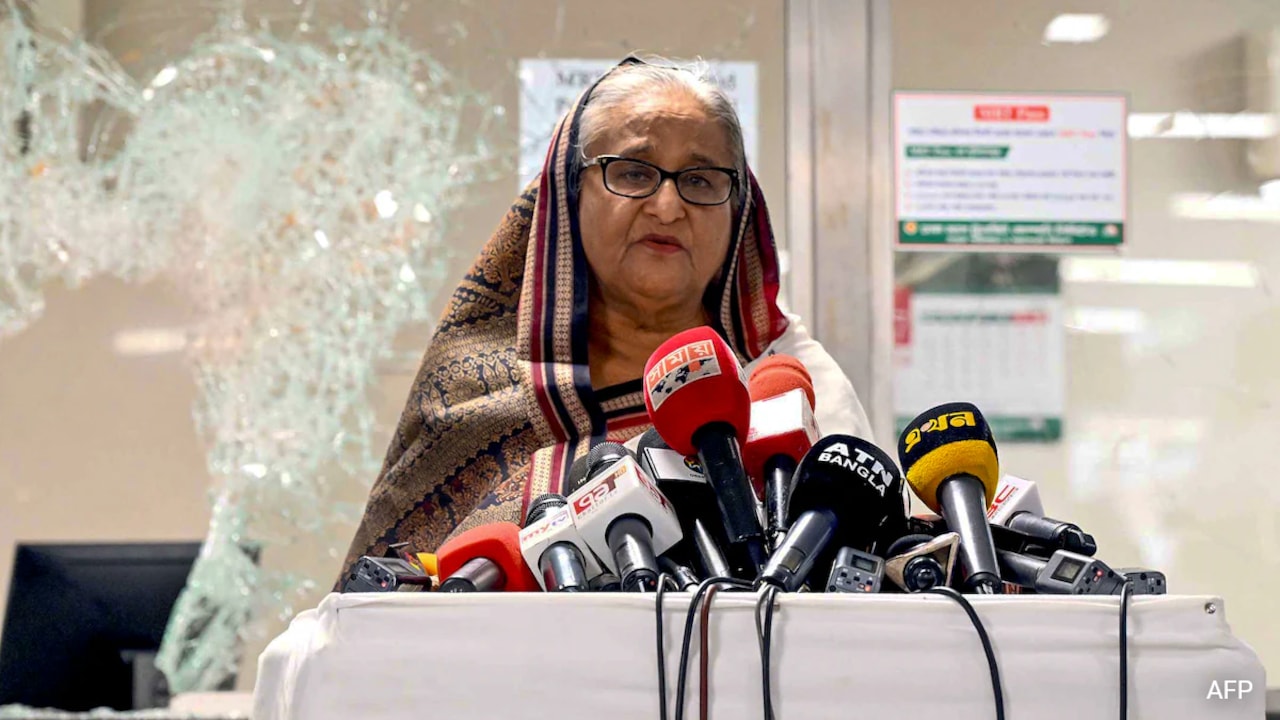
The courtroom in Dhaka smelled of old paper, sweat, and a tense anticipation that had been building for months. When the International Crimes Tribunal delivered its verdict sentencing seven former leaders of Sheikh Hasina's Awami League to death for crimes against humanity, it was not merely a legal judgment. It marked a profound political reckoning for a nation still gasping for air after a historic uprising.
Months earlier, the streets of Bangladesh had erupted. Students, laborers, and professionals marched against an entrenched administration that had ruled with an iron fist for over fifteen years. The protests met brutal force, leaving hundreds dead and thousands wounded. When Sheikh Hasina finally fled the country by helicopter, escaping to neighboring India, the machinery of her party fractured overnight. What followed was an inevitable scramble for accountability. The interim government, backed by widespread public anger and the moral weight of the student-led movement, empowered the tribunal to investigate the state-sponsored violence.
The verdicts handed down against the former ministers and loyalists center on the systematic suppression of dissent. Prosecutors laid out a trail of command responsibility, arguing that the leadership orchestrated targeted crackdowns, authorized lethal force against unarmed demonstrators, and attempted to cover up the scale of the carnage. Defense lawyers argued that the trials were politically motivated victor's justice, designed to permanently decapitate the Awami League and clear the political landscape for its rivals. That tension sits at the heart of the current crisis. Can a nation fractured by authoritarian rule achieve genuine reconciliation through the gallows, or does capital punishment for political leaders merely feed a continuous cycle of vengeance?
History suggests that transitional justice is rarely clean. In the aftermath of sweeping revolutions, the demand for immediate retribution often clashes with the slow, tedious requirements of international legal standards. Critics of the tribunal point out that rushing high-profile trials under intense public pressure risks compromising due process. Yet, for the families of those who died on the asphalt of Dhaka and Chittagong, legal technicalities feel like an insult to their grief. They watched loved ones cut down by security forces acting under direct political orders. To them, justice delayed is not just denied; it is an invitation for the old guard to regroup.
The sentencing of these seven figures leaves the Awami League in an existential vacuum. For decades, the party was synonymous with the liberation war and the identity of the state itself. By transforming the legacy of independence into a shield for authoritarian control, the leadership alienated a younger generation that has no living memory of 1971. Now, those who remain loyal to the party are driven underground, facing hostility, property destruction, and mass arrests.
International observers watch closely, balancing the legitimate demand for human rights accountability against concerns over the fairness of tribunal proceedings and the use of the death penalty. Western capitals have urged restraint and adherence to fair trial standards, mindful that a flawed judicial process could destabilize an already fragile democratic transition. Meanwhile, regional powers calculate the strategic fallout. A stable, democratic Bangladesh is in everyone's interest, but the path from dictatorship to rule of law is littered with landmines.
The verdict against the inner circle of the previous administration closes a tumultuous chapter, but it does not write the final page. The deeper challenge lies in dismantling the institutional architecture of abuse—the police forces, the intelligence apparatus, and the patronage networks that allowed impunity to flourish in the first place. Until those structural realities change, punishing a handful of fallen leaders remains only a symbolic victory against a deeply entrenched system.
As the convicts prepare their appeals and the interim government grapples with the immense task of scheduling free and fair elections, the nation remains on edge. The ghosts of the uprising are everywhere, painted on the walls of university campus buildings and whispered in the tea stalls of every district. The ultimate test for Bangladesh is whether it can build a future where political power is checked by law, rather than sustained by violence.


