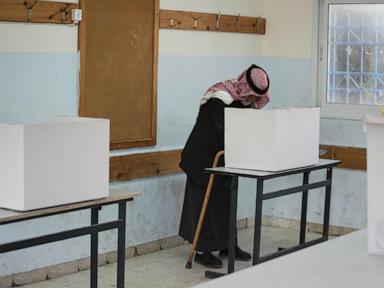
The ink on a thumb is a small thing. It is a purple smudge, a temporary blemish that fades after a few aggressive scrubs with soap and water. But in the West Bank and a small, defiant corner of Gaza, that stain felt like a heavy weight. It was the weight of a choice.
For years, the machinery of democracy in these territories has been rusted shut. Silence usually fills the space where debate should live. Yet, recently, the silence broke. The Palestinian Central Elections Commission announced that local elections across dozens of municipalities in the West Bank and a singular, symbolic community in Gaza were not just held—they were a success.
To a casual observer reading a news ticker, it sounds like administrative trivia. To the person standing in a dusty line in a village outside Ramallah, or a father in Gaza looking at a ballot for the first time in a generation, it was a heartbeat. A sign of life.
The Quiet Hunger for a Voice
Consider a man we will call Elias. He lives in a town where the roads are gouged with potholes that look like craters and the streetlights have been dark for as long as his youngest daughter has been alive. For years, Elias has complained to his neighbors. They have sat in plastic chairs, drinking tea, lamenting the trash piling up at the edge of the olive groves and the lack of a proper playground for the children.
Before this vote, Elias had no one to hold accountable. The local council was a collection of names appointed by decree, ghosts in suits who answered to a higher authority far removed from the smell of uncollected refuse.
When the call for local elections finally came, Elias felt a flicker of something he had suppressed: agency.
This was not about the grand, intractable geopolitics of the Middle East. It was not about the borders of a future state or the high-level negotiations in air-conditioned rooms in Cairo or Washington. This was about who decides where the new water pipe goes. It was about which neighbor is honest enough to manage the village budget without a few shekels vanishing into the ether.
The stakes were microscopic, which made them massive.
The Gaza Exception
While the West Bank saw dozens of communities participate, all eyes turned toward a solitary community in the Gaza Strip.
Gaza is often portrayed as a monolith—a singular block of ideology and hardship. But the human reality is far more fractured and complex. Since 2007, the democratic process there has been largely frozen, paralyzed by the internal split between Fatah and Hamas. To see a local election successfully executed in even one community feels like a crack in a dam.
Imagine the tension in that polling station.
It is a room filled with the scent of old paper and nervous sweat. There are observers from international organizations leaning against the walls, clipboards in hand, looking for the slightest hint of coercion. But the real story is in the hands of the voters. They are trembling. Not necessarily from fear, but from the novelty of the act. In a place where life is often dictated by forces beyond one's control—blockades, strikes, and political stalemates—the simple act of marking an 'X' on a piece of paper is a radical claim of existence.
The authorities called it a success because the turnout was high. They called it a success because the violence that many predicted never materialized. But for the people in that Gaza community, the success was simply the fact that the day happened at all. It proved that the logistical bones of a state still exist, even if they are brittle.
The Logistics of Hope
The Palestinian Central Elections Commission (CEC) operates in a reality that would make most Western bureaucrats quit within a week.
They have to navigate a geography carved up by checkpoints and separation walls. They have to coordinate with security forces that are often at odds with one another. They have to convince a skeptical, exhausted public that their vote actually matters.
The numbers tell a story of persistence. Over 70% turnout in some districts. Thousands of teachers and civil servants acting as poll workers, staying up until 3:00 AM to count ballots by the light of flickering bulbs or smartphone torches.
These are the facts. But the truth is found in the logistics. How do you transport ballot boxes through a landscape where a twenty-minute drive can take four hours depending on a soldier's mood? How do you ensure the digital registry stays secure when electricity is a luxury?
The CEC managed it. They did so because there is an underlying, desperate professionalism in the Palestinian civil service—a desire to show the world, and themselves, that they are capable of self-governance. It is a performance of statehood intended for an audience of millions.
The Skeptic at the Tea Shop
Not everyone was cheering.
Walk into any cafe in Nablus or Hebron and you will find the cynic. He is the man who refuses to stain his thumb. He will tell you that these elections are a distraction. A "theatre of the small," he might call it.
"They let us vote for the man who picks up the trash," he says, blowing smoke toward the ceiling, "so we forget that we cannot vote for the men who lead the nation."
He has a point. These were local elections, not legislative or presidential ones. The big chairs remain occupied by the same figures who have held them for nearly two decades. To the cynic, the success of a local vote is a pressure valve—a way for the authorities to let off the steam of public frustration without actually giving up the keys to the kingdom.
This tension is the emotional core of the Palestinian experience right now. It is the bridge between the need for a working sewer system today and the hunger for national self-determination tomorrow. The local election is a test of whether you can care about the small things while the big things remain broken.
The Invisible Stakes
Why does this matter to someone sitting thousands of miles away?
Because we often view conflict through the lens of the spectacular. We see the explosions, the protests, and the fiery speeches. We miss the slow, grinding work of building a society from the dirt up.
If these elections had failed—if the boxes had been burned or the results dismissed as fraudulent—it would have been another nail in the coffin of the "two-state solution" or any hope of a stable Palestinian future. It would have signaled that the institutions had finally collapsed.
Instead, the success of the vote acts as a quiet rebuttal to the idea of inevitable chaos.
It shows that there is a middle class, a working class, and a youth population that still believes in the procedure. They are willing to stand in line. They are willing to argue over candidate platforms. They are willing to believe, if only for an afternoon, that the person running the local clinic should be chosen by them, rather than forced upon them.
A Victory of Routine
There is a specific kind of beauty in the mundane.
In the wake of the announcement, life returned to normal. The posters of candidates—men and women with earnest smiles and promises of "Better Infrastructure" and "Transparency"—began to peel under the sun. The purple ink eventually wore off the thumbs of the voters.
But in those villages and that one Gaza community, something shifted.
The new council members took their seats. They faced the same old problems: limited budgets, restricted movement, and a landscape of uncertainty. But they sat there with a mandate. They could look their neighbors in the eye and say, "You put me here."
That is the human element that a dry news report misses. A mandate is a shield. It is a source of dignity for a people who have spent decades being told what to do by everyone but themselves.
The authorities called the elections a success because they were orderly and valid. The people called them a success because, for a brief moment, the power wasn't in the hands of the generals or the foreign donors or the aging politicians in their high offices.
The power was in a small slip of paper, dropped into a plastic box, in a quiet room, while the rest of the world wasn't even looking.
A child in the West Bank watches her father return from the polls. She asks why his finger is purple. He tells her it is a mark of a promise. It is a promise that one day, his voice, and eventually hers, will be loud enough to move mountains, even if today it only manages to fix a broken streetlight on a dark, quiet road.
The dust settles. The ink fades. The work remains.