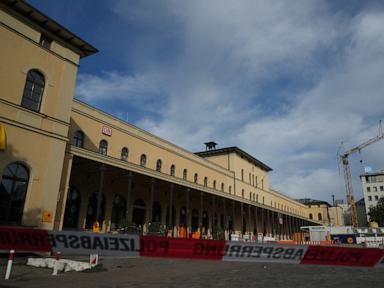
Early morning stillness in the southern German city of Augsburg shattered when an unknown object detonated in a building passageway, injuring two Ukrainian citizens aged 17 and 18. The blast, occurring shortly after three o'clock near a regional transport hub, triggered an immediate security lockdown. Hours later, the discovery of a suspicious object at the main railway station forced authorities to completely halt transit operations, leaving thousands stranded and reviving deep-seated anxieties over the protection of vital public infrastructure across Europe.
While local police later cleared the secondary object as harmless and reopened the station, the incident highlights a troubling vulnerability in open transit networks. Security analysts have long warned that the porous boundary between municipal commercial spaces and major railway arteries creates soft targets that resist traditional hardening strategies.
The Anatomy of Transit Vulnerability
Modern European rail systems are designed for high-volume flow rather than fortress-style containment. Millions of commuters pass through hubs like Augsburg daily without undergoing identity checks or bag screenings. This openness is essential for economic velocity, but it makes stations inherently difficult to secure against sudden attacks or targeted placements of explosive devices.
When an explosion occurs in an adjacent passageway rather than on the rail line itself, emergency response protocols must instantly balance public safety with mass disruption. Closing a vital transport node creates cascading delays across the broader European transit grid.
- Open architectural designs prioritize passenger flow over perimeter defense.
- Adjacent commercial zones provide cover for anonymous object placement.
- Rapid evacuation protocols inevitably strain municipal emergency services.
Security measures must evolve beyond reactive cordons. Yet, hardening every square meter of urban real estate surrounding major transport hubs remains financially and practically impossible.
The Broader Security Context
The timing of the Augsburg explosion compounds official unease. German authorities are already managing an elevated threat level following a series of infrastructure incidents. Only weeks prior, a suspicious object was discovered on railway tracks in the nearby Bavarian town of Treuchtlingen, forcing service suspensions and evacuations. Concurrently, federal investigators have been grappling with attempted drone sabotage targeting logistical nodes such as Leipzig-Halle Airport.
Government officials face intense pressure to determine whether isolated criminal acts share operational links with broader state-sponsored disruption campaigns. Western intelligence agencies have repeatedly accused Moscow of orchestrating covert sabotage operations across the continent to destabilize public morale and erode material support for Ukraine.
Targeting elements associated with Ukrainian nationals—such as the demographics of the injured teenagers in Augsburg—adds a chilling psychological dimension to these security breaches. Investigators have not officially confirmed a political motive, keeping all operational theories open as forensic evidence from the state criminal police office is processed.
Balancing Mobility and Safety
Reconciling open public access with comprehensive counter-terrorism measures presents an intractable dilemma for civil authorities. Heavy police presences and sudden station closures restore order temporarily, yet they also feed public anxiety.
As investigations into the Augsburg detonation continue, the incident serves as a stark reminder that Europe's interconnected civilian infrastructure remains a primary front in an invisible war of nerves


