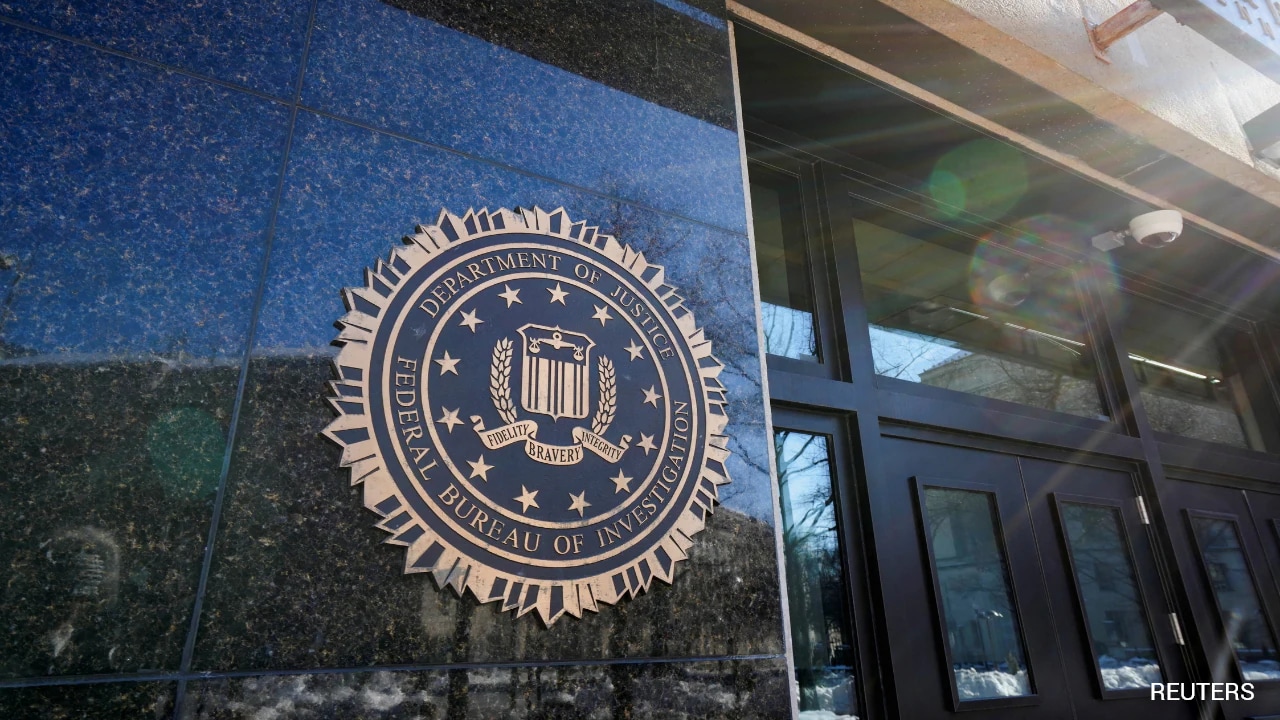
Threat actors do not wait for routine network stability to launch campaigns against high-value federal targets; they exploit the exact moments when incident response teams are saturated by unrelated infrastructure failures. When attackers targeted the US Department of Agriculture (USDA) and the Federal Bureau of Investigation (FBI) just days after widespread technology outages disrupted global communications and enterprise operations, the sequence demonstrated a fundamental principle of modern cyber conflict: operational distraction is an offensive force multiplier.
Standard news coverage treats sequential cyber incidents following major IT disruptions as isolated events or coincidental timing. That framing misses the structural mechanics of adversarial operations. To understand why state-sponsored groups and sophisticated criminal syndicates strike federal agencies immediately after systemic outages, defenders must analyze the intersection of cognitive load, supply chain dependency, and emergency change-management vulnerabilities. If you liked this piece, you might want to look at: this related article.
The Mechanics of Post-Outage Exploitation
Major technology outages—whether triggered by faulty software updates, cloud provider routing errors, or distributed denial-of-service events—force enterprise security operations centers (SOCs) into an immediate triage posture. During these windows, three distinct structural vulnerabilities emerge across federal and critical infrastructure networks.
1. The Attention Deficit and Alert Fatigue Vector
A functioning SOC relies on baseline telemetry to distinguish anomalous behavior from routine network noise. When a widespread outage occurs, monitoring dashboards flood with availability alerts, failed authentication logs, and automated failover notifications. Security analysts shift their cognitive bandwidth from threat hunting to service restoration. For another angle on this event, see the latest update from TechCrunch.
Adversaries monitor public outage trackers, Border Gateway Protocol (BGP) routing tables, and social media chatter to identify when target organizations enter this degraded monitoring state. Launching spear-phishing campaigns, credential harvesting operations, or lateral movement routines during the recovery phase ensures that malicious telemetry blends into the high volume of legitimate troubleshooting traffic. By the time engineering teams restore normal operations, initial access brokers have often already established persistence.
2. Emergency Change-Management Bypass
Enterprise security depends on strict configuration management and multi-stage testing before deploying patches or altering firewall rules. Widespread outages invert this priority: availability overrides confidentiality and integrity.
To bring critical systems back online quickly, administrators routinely implement temporary workarounds. These include:
- Relaxing strict firewall egress and ingress filtering to reroute traffic through backup gateways.
- Disabling endpoint detection and response (EDR) agents temporarily if they conflict with recovery scripts or boot processes.
- Issuing broad administrative credentials to third-party vendors and recovery contractors to accelerate system restoration.
- Pushing unvetted configuration updates directly to production environments without standard security review.
Each workaround expands the external attack surface. Threat actors targeting agencies like the USDA and the FBI capitalize on these temporary configuration drifts before security teams can audit and revert the emergency changes.
3. The Outage-Themed Social Engineering Hook
Technical disruptions create immediate organizational confusion, providing threat actors with high-conversion lures for social engineering. Employees expect urgent communications regarding system restoration, password resets, and multi-factor authentication (MFA) re-enrollment following an outage.
Attackers craft spear-phishing payloads that mimic internal IT helpdesks, cloud service providers, or federal cybersecurity advisories. Because users are actively experiencing service degradation, their skepticism toward unexpected login prompts or software update links drops significantly. A single compromised credential within a sprawling federal department provides the foothold necessary to pivot toward higher-security enclaves.
Target Selection Logic: Why the USDA and the FBI
The pairing of an agricultural agency and a premier domestic intelligence and law enforcement bureau illustrates the dual-track nature of modern cyber targeting: espionage and infrastructure disruption. While the specific threat actors, initial access vectors, and exact scope of compromise in any given incident depend on ongoing forensic investigation, the strategic value of both targets is well-established within threat intelligence frameworks.
The USDA as Critical Infrastructure and Economic Intelligence
The US Department of Agriculture oversees far more than domestic farming subsidies. Its operational mandate encompasses food safety inspection, forestry management, rural infrastructure financing, and global agricultural market forecasting.
From an adversarial perspective, compromising USDA systems yields two primary strategic advantages:
- Pre-Market Economic Intelligence: The USDA produces authoritative data on global crop yields, supply chain bottlenecks, and commodity reserves. Early access to these reports allows state-backed actors to anticipate global food price volatility, adjust sovereign purchasing strategies, and gain asymmetric advantages in international trade negotiations.
- Supply Chain Disruption Potential: Modern agriculture relies heavily on precision logistics, automated processing facilities, and cold-chain transportation. Disrupting the administrative or regulatory systems that coordinate food inspection and distribution creates cascading economic friction, directly impacting domestic stability without requiring kinetic military action.
The FBI as a Counter-Intelligence Prize
Targeting the Federal Bureau of Investigation represents a direct intelligence-collection effort aimed at understanding US investigative capabilities, ongoing counter-intelligence operations, and active cybercrime prosecutions.
Even when attackers target unclassified, public-facing, or administrative networks rather than air-gapped classified enclaves, the intelligence value remains substantial:
- Operational Security Mapping: Analyzing metadata, email headers, and administrative communications helps foreign intelligence services identify which domestic or international entities are under active investigation.
- Source and Method Exposure: Administrative systems often contain records of vendor contracts, specialized software procurement, and interagency liaison contacts, allowing adversaries to map the bureau's technical ecosystem.
- Psychological and Reputational Impact: Demonstrating the ability to penetrate or disrupt the communications infrastructure of the lead federal law enforcement agency undermines public confidence and forces the bureau to divert investigative resources inward to conduct internal damage assessments.
Separating Confirmed Operational Patterns from Analytical Hypotheses
Rigorous threat analysis requires strict separation between verified technical mechanics and strategic inference. When evaluating cyber campaigns occurring in the wake of major IT outages, analysts must distinguish between three tiers of certainty.
Verified Operational Realities:
- Federal agencies face continuous, automated reconnaissance and targeted intrusion attempts daily, regardless of broader internet stability.
- Major IT outages demonstrably increase global phishing volume, as cybercriminals rapidly register lookalike domains referencing the affected vendors or services within hours of an incident.
- Incident response timelines slow down when internal communication channels (such as enterprise email or messaging platforms) are degraded by upstream outages.
Supported Analytical Hypotheses:
- Sophisticated threat actors intentionally time high-risk intrusion phases—such as payload execution or data exfiltration—to coincide with recovery windows following major outages, calculating that detection probability is lower.
- Attacks against distinct federal agencies within a compressed timeframe may indicate either a single actor exploiting a shared underlying software vulnerability exposed during the outage, or multiple independent actors opportunistically reacting to the same global news cycle.
Unverified Speculation to Avoid:
- Assuming that an outage was intentionally engineered as a smokescreen for a specific intrusion, unless concrete forensic evidence links the root cause of the outage to malicious code. Treating accidental engineering failures as deliberate cyberattacks distorts defensive resource allocation.
The Structural Flaw in Conventional Incident Response
Most federal and enterprise incident response frameworks operate on a sequential assumption: contain the outage, restore availability, and then resume normal security monitoring. This model fails because it treats availability and security as separate operational phases rather than simultaneous requirements.
When an organization separates IT recovery from security operations, it creates a predictable blind spot. Network engineers focus exclusively on packet flow and server uptime, while security analysts wait for telemetry pipelines to stabilize before resuming active threat hunting. The gap between service restoration and telemetry verification is measured in hours or days—more than enough time for an automated intrusion framework to harvest credentials, map internal Active Directory structures, and establish encrypted command-and-control channels.
Furthermore, over-reliance on centralized cloud identity providers and monolithic endpoint agents introduces correlated failure modes. When a foundational software layer fails across thousands of enterprises simultaneously, attackers do not need to discover a novel zero-day exploit; they simply exploit the predictable human and procedural chaos that accompanies mass recovery.
Tactical Hardening for Post-Outage Environments
Eliminating the post-outage exploitation window requires restructuring how organizations manage recovery operations. Security controls must be embedded directly into disaster recovery workflows rather than paused until stability returns.
- Enforce Out-of-Band Communication Protocols: Maintain isolated, non-enterprise communication channels (such as dedicated mobile messaging platforms or secondary satellite/cellular networks) for incident response teams. When primary enterprise email or collaboration tools fail, staff must know precisely where to verify authentic IT instructions, neutralizing outage-themed phishing lures.
- Automate Emergency Configuration Audits: Require every temporary firewall exception, disabled security agent, or elevated administrative account created during an outage to carry an automated expiration timer (Time-to-Live). If an engineer bypasses a security control to restore service, the system must automatically revert the change or trigger a high-priority compliance alert within 24 hours.
- Deploy Continuous Threat Hunting During Recovery: Assign a dedicated sub-team within the SOC to monitor high-value identity assets—specifically domain controllers, identity providers, and VPN concentrators—exclusively during outages. While the broader team manages availability alerts, this isolated unit hunts specifically for anomalous authentication spikes and unauthorized privilege escalations.
- Segment Administrative Enclaves from Public-Facing Infrastructure: Ensure that compromises in public-facing web portals, external email relays, or contractor scheduling systems cannot laterally traverse into core investigative or economic data repositories. Zero-trust network architecture must enforce strict cryptographic verification between internal subnets, rendering initial footholds structurally isolated.
Strategic Trajectory for Federal and Enterprise Defenders
The convergence of fragile, monoculture IT infrastructure and opportunistic cyber operations guarantees that post-outage exploitation will become a standard tactic in adversarial playbooks. As enterprises and government agencies consolidate onto shared cloud providers, identity platforms, and kernel-level security tools, single points of failure will continue to generate synchronized global disruptions.
Defenders can no longer treat major IT outages purely as engineering or vendor-management issues. Every widespread technical disruption must be classified immediately as an elevated cyber-threat condition. Organizations that fail to synchronize disaster recovery with active threat hunting will repeatedly survive the initial infrastructure outage only to suffer a quiet, systemic compromise during the recovery phase.