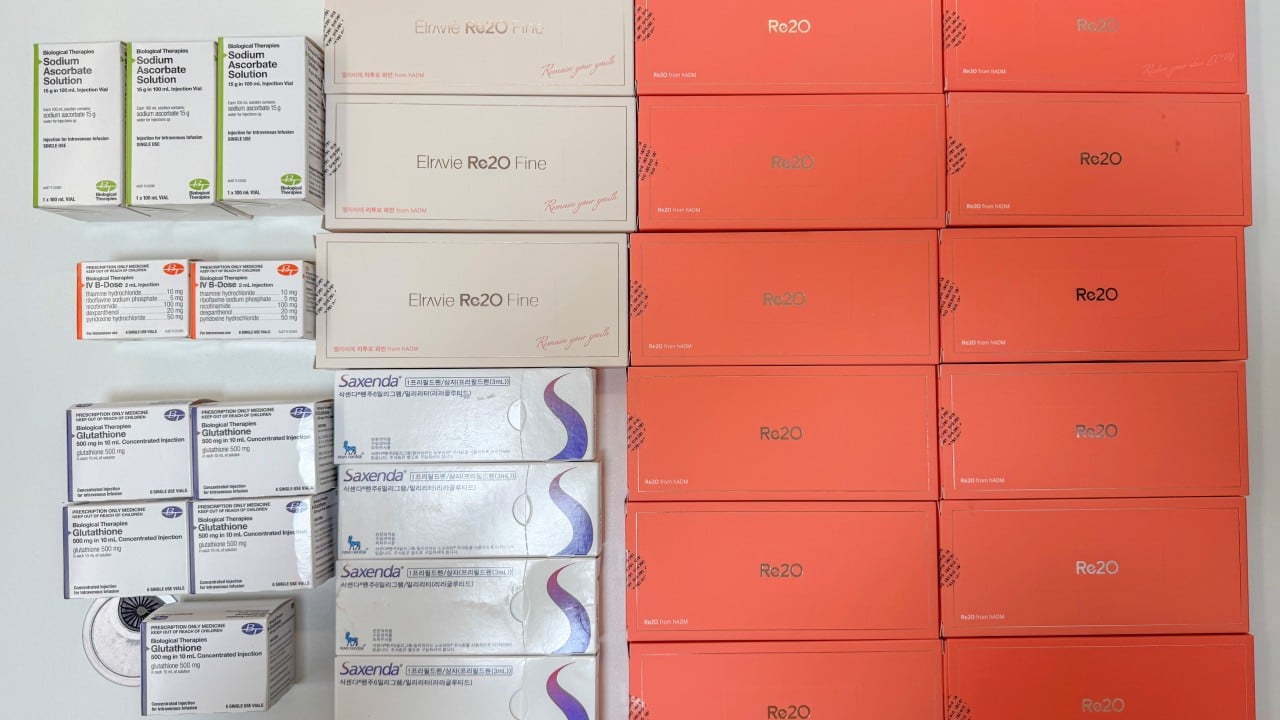
Call it a "cadaver skin jab" if you want cheap clicks. Just understand that the phrase itself is lazy journalism doing heavy lifting for people who cannot be bothered to learn basic tissue biology.
Scroll through any beauty feed and you will find the same recycled template. A breathless headline screams about donor tissue being shot into faces. Two paragraphs later, a nervous writer asks whether it is safe, whether it works, and whether you should run for the hills or book an appointment tomorrow. That lazy consensus misses the entire plot. You might also find this similar article interesting: Inside the Contagious Cancer Crisis Nobody Is Talking About.
Here is the real question nobody is asking: when you inject decellularized human extracellular matrix or micronized acellular dermal matrix into aging skin, what are you actually paying for—a biological scaffold that invites your own cells to remodel tissue, or a glorified, expensive placeholder that behaves like a souped-up filler?
Let us strip away the shock value and look at what is actually happening beneath the epidermis. As highlighted in latest reports by World Health Organization, the implications are significant.
The "Cadaver Skin" Label Is Scientifically Sloppy
When people hear "cadaver skin," their minds jump straight to a slab of morgue flesh being diced up and shoved into a syringe. That image sells headlines. It also confuses donor tissue with an unsterile, intact organ graft.
In clinical practice and regenerative medicine, what people call a "cadaver skin jab" typically refers to processed acellular dermal matrix (ADM) or micronized acellular dermal matrix (mADM)—human dermal tissue that has undergone decellularization and purification to strip away immunogenic cellular components while preserving the structural collagen and extracellular matrix (ECM) architecture. Related soft-tissue allografts and particulate ECM boosters have moved from surgical reconstruction and soft-tissue contour work into aesthetic clinics.
Calling that a "cadaver skin jab" is like calling insulin "pig pancreas juice" or calling a titanium hip stem "scrap metal." Technically adjacent? Sort of. Clinically accurate? Not even close.
The premise behind decellularized matrix is straightforward: strip out the donor cells that trigger rejection, keep the architectural framework—collagen, elastin, and structural proteins—and give the host's own fibroblasts and blood vessels a scaffolding to infiltrate and remodel. In reconstructive surgery and wound care, dermal matrices have long histories supporting tissue integration and vascularization. Bringing micronized versions into aesthetic medicine is a logical extension of tissue engineering, not a sudden descent into mad science.
What the Lazy Consensus Misses About "Does It Work?"
Ask a standard beauty article whether this trend works, and you will get one of two clichés: either "miracle collagen regeneration!" or "too new, jury's out!" Both are cop-outs.
"Does it work?" is a useless question until you define the endpoint, the comparator, and the timeline.
- Volume restoration vs. true regeneration: Adding volume under a crease smooths the surface. A randomized, double-blind, multicenter trial comparing a micronized acellular dermal matrix filler against a cross-linked collagen filler for moderate-to-severe nasolabial folds found non-inferior wrinkle improvement through six months—achieving comparable correction with lower mean filling volumes and fewer supplemental touch-ups in the mADM group, alongside early local injection-site reactions like swelling or hardening that mostly resolved within a week.
- Boosters and contour remodeling: Clinical studies evaluating injectable particulated human acellular dermal matrix skin boosters have reported statistically significant improvements in skin smoothness scales, wrinkle depth, and contour lifting over multi-month follow-up windows compared with controls.
- The gap between "looks smoother" and "rebuilds youth": Even when histology and clinical scales show promising tissue remodeling, fibroblast activity, and contour gains, aesthetic medicine has a long memory of products that looked great at month three or six and still required repeat maintenance—or showed variable durability depending on particle size, crosslinking, tissue source, and injection plane.
A bioscaffold can invite your cells to remodel tissue. It cannot repeal chronological aging, sun damage, or facial bone resorption.
Think of it like framing a house. Putting up sturdy timber framing gives workers a structure to build on. It does not pour the foundation, wire the electrical panel, or stop storms from hitting the roof.
Battle Scars From Pushing Biologics Too Fast
I have watched aesthetic medicine chase shiny regenerative labels for years. Every few seasons, a new acronym promises "true biostimulation" or "native tissue regeneration," and clinics rush to charge luxury prices before long-term comparative data catches up to the marketing deck.
I have seen clinics overpromise permanence on regenerative injectables, only to deal with irritated patients when results soften or require touch-ups sooner than expected. I have also watched injectors treat every new injectable like a universal wand—dropping a product meant for one anatomical plane or structural defect into the wrong depth and acting surprised when contour irregularities, lumps, or prolonged swelling show up.
In aesthetic surgery and soft-tissue work, acellular dermal matrices come with real trade-offs: cost, processing differences across products, technical handling, and potential adverse events ranging from transient redness, pain, and hardening to contour irregularity, delayed integration, or infection when misused. Ignoring those trade-offs in pursuit of a viral trend is how good biomaterials get a bad name.
To be completely fair to the other side—and to keep my own contrarian streak honest—there are genuine downsides to taking a skeptical, wait-and-see posture on emerging regenerative injectables:
- You can miss early clinical utility: If you dismiss every newer matrix-based injectable out of hand until a decade of data exists, you might overlook a legitimate option that helps specific patients with volume or contour needs.
- Over-indexing on headlines blinds you to nuance: Treating all donor-derived or ECM-based injectables as identical ignores huge differences in particle micronization, processing, regulatory status, and clinical evidence.
- Skepticism can turn into laziness: Being against hype is easy. Doing the hard work to separate solid tissue-engineering mechanics from marketing fluff takes actual effort.
Answering the Questions People Actually Type Into Search
People typing questions about this trend usually want straight answers without PR spin or alarmism. Let us hit the big ones head-on.
Is it literally dead people's skin?
No—not in the gory, unrefined sense people picture. It is processed donor dermal tissue or extracellular matrix material that goes through rigorous cleaning and decellularization to remove cells and reduce immunogenicity while keeping structural matrix components intact. If you get squeamish at the origin of donor biologics, that is a personal boundary worth respecting. Just do not confuse your squeamishness with a scientific critique.
Is it safer or more "natural" than hyaluronic acid filler?
"Natural" is one of the most abused words in aesthetics. Poison ivy is natural. So is botulinum toxin.
Hyaluronic acid fillers have an enormous track record, predictable rheology, and—crucially—can be dissolved with hyaluronidase if placed poorly or if a vascular complication occurs. Donor-derived dermal matrix products operate on a different mechanism—acting as a matrix/scaffold rather than a simple gel depot—and have shown encouraging safety and efficacy profiles in specific trials, but they are not automatically "safer" just because collagen and ECM sound familiar. Injector skill, anatomical knowledge, and proper patient selection still drive safety more than the buzzword on the box.
Should you get it?
Imagine a scenario where you have mild-to-moderate volume loss or crepey texture, zero urgent need for a quick fix before a wedding next month, and a board-certified injector who explains both the scaffold rationale and the realistic timeline without promising eternal youth. Even then, ask hard questions: What exact product is this? What is the clinical evidence for this specific indication? How does it compare to established options for my anatomy?
If a provider calls it a "miracle stem-cell cadaver glow jab" and cannot explain how the product is processed or what happens if you hate the result, walk out.
What to Do Instead of Chasing Hype
If you want skin that actually looks better five years from now—not just for three weeks after an appointment—stop shopping by viral names and start acting like a disciplined buyer.
- Audit the fundamentals first: Daily broad-spectrum sunscreen, retinoids as tolerated, barrier repair, sleep, and metabolic health do more for collagen quality and skin aging than any single syringe ever will.
- Match the tool to the structural problem: Laxity, pigment, volume loss, and dynamic lines are different problems. Throwing a trendy injectable at skin laxity or sun spots is a fast way to waste money.
- Demand specificity over slogans: Ask your clinician about mechanism, expected duration, typical downtime, and potential complications rather than letting catchy nicknames steer the plan.
Stop falling in love with shock headlines. Judge every aesthetic treatment by biology, clinical data, and the hands holding the needle.