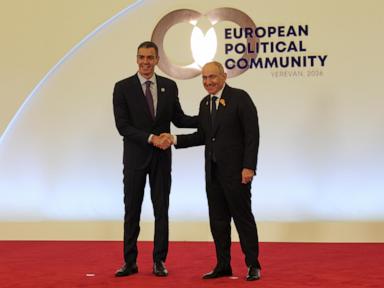
Armenia is tired of waiting for a protector that never showed up. For decades, the tiny nation in the South Caucasus looked to Moscow as its ultimate security guarantor. But after being left in the cold during the 2020 and 2023 Nagorno-Karabakh conflicts, Yerevan is done. Prime Minister Nikol Pashinyan isn't just flirting with the West anymore. He's effectively packing his bags. Hosting a historic EU summit in Yerevan is more than a diplomatic photo op. It's a loud, clear breakup text to the Kremlin.
The strategy is risky. It's also probably the only card Armenia has left to play. By inviting European leaders to its capital, Armenia is signaled that it no longer views itself as a Russian satellite. It wants to be a European democracy. If you look at the map, you'll see why this is a nightmare for Moscow and a massive opportunity for Brussels.
The myth of Russian protection is dead
Most people don't realize how deep the Russian-Armenian relationship used to go. Russia owns the rails. It owns the energy grid. It has a massive military base in Gyumri. For years, the logic was simple: "We stay with Russia so Azerbaijan and Turkey don't eat us."
That logic collapsed in 2020. When Azerbaijan launched a 44-day war, the Russian-led Collective Security Treaty Organization (CSTO) did exactly nothing. Russia, supposedly Armenia's big brother, watched from the sidelines. By the time the 2023 lightning offensive saw 100,000 ethnic Armenians flee their ancestral homes in Nagorno-Karabakh, the trust wasn't just broken. It was vaporized.
I've talked to analysts who say Pashinyan is "playing with fire." Maybe he is. But when your house is already burning, you don't stay inside because you're afraid of the wind. Armenia's decision to freeze its participation in the CSTO and invite the EU Mission in Armenia (EUMA) to monitor its borders is a direct middle finger to the old order.
Why the EU is actually showing up this time
Brussels isn't usually known for moving fast. But the war in Ukraine changed everything. The EU now sees the South Caucasus as a vital corridor for energy and trade that bypasses Russia. They need a stable Armenia.
The historic summit in Yerevan focuses on a few gritty, practical things:
- Visa liberalization: Making it easier for Armenians to travel to Europe.
- Economic diversification: Reducing the 80% dependence on Russian gas and grain.
- Security assistance: For the first time, using the European Peace Facility to help fund Armenian defense.
This isn't just about values. It's about infrastructure. The Black Sea undersea electricity cable project is a huge deal. It links the Caucasus directly to the European grid. It's a literal lifeline. Armenia wants in, and the EU wants them there to weaken Russia's grip on the region's throat.
The Kremlin is not going to make this easy
Don't think for a second that Vladimir Putin is just going to let Armenia walk away. Moscow has plenty of ways to squeeze Yerevan. They can hike gas prices tomorrow. They can block Armenian cognac at the border—a classic Russian move. They can even stir up internal unrest through the old-guard opposition that still has ties to the FSB.
The Russian Foreign Ministry has already started using its favorite word: "consequences." They claim the West is "dragging" Armenia into a geopolitical trap. Honestly, it's the other way around. Armenia is dragging itself toward the West because the "Russian peace" ended up being no peace at all.
The Azerbaijan factor
Here's the part that keeps diplomats awake at night. Azerbaijan is emboldened. President Ilham Aliyev knows that Russia is distracted in Ukraine. He also knows that the West needs Azerbaijani gas. This puts Armenia in a terrifying spot. While they try to integrate with Europe, they're still facing a neighbor that has a massive military advantage.
The EU summit isn't just about trade. It's a shield. Pashinyan is betting that the more European officials, monitors, and investors he has on the ground, the harder it is for Baku to launch another invasion without becoming an international pariah. It's a "tripwire" strategy.
A messy divorce with the old guard
Inside Armenia, the vibe is tense but hopeful. The younger generation in Yerevan doesn't speak Russian as their second language anymore—they speak English. They watch Netflix. They want to work in tech hubs that serve Berlin and Paris, not Novosibirsk.
But the "old guard"—the former presidents and the oligarchs who got rich during the post-Soviet years—are terrified. They know that EU integration means anti-corruption laws. It means transparency. It means they can't just call a buddy in Moscow to fix a legal problem. This internal friction is just as dangerous as the external threats.
The government is pushing ahead anyway. They're diversifying their weapons purchases, buying radars and missiles from France and India instead of waiting for Russian shipments that never arrive. They're rebuilding their entire state identity from scratch.
What happens if this fails
The stakes couldn't be higher. If Armenia pivots and the EU doesn't follow through with real security guarantees, Armenia is vulnerable. Russia could decide to "punish" them by greenlighting another Azerbaijani incursion.
But if it works? Armenia becomes a democratic island in a very tough neighborhood. It becomes a bridge between Europe and Central Asia. It proves that even a landlocked, resource-poor nation can choose its own destiny.
The summit in Yerevan is the point of no return. You don't host the entire European political elite if you're planning on crawling back to the CSTO next year. Armenia has burned the boats. Now they have to win the beachhead.
If you're watching this region, keep an eye on the border monitors. The EUMA presence is the most tangible sign of this shift. When those blue vests are patrolling the hills, it's a signal that Brussels has skin in the game. Watch the energy deals. Watch the trade routes. This is a country rewriting its DNA in real-time.
Armenia's next move is simple: stay the course. They need to fast-track every single bureaucratic requirement the EU throws at them. They need to diversify their energy imports through Georgia and Iran immediately. They don't have the luxury of a slow transition. The clock is ticking, and Moscow is watching.