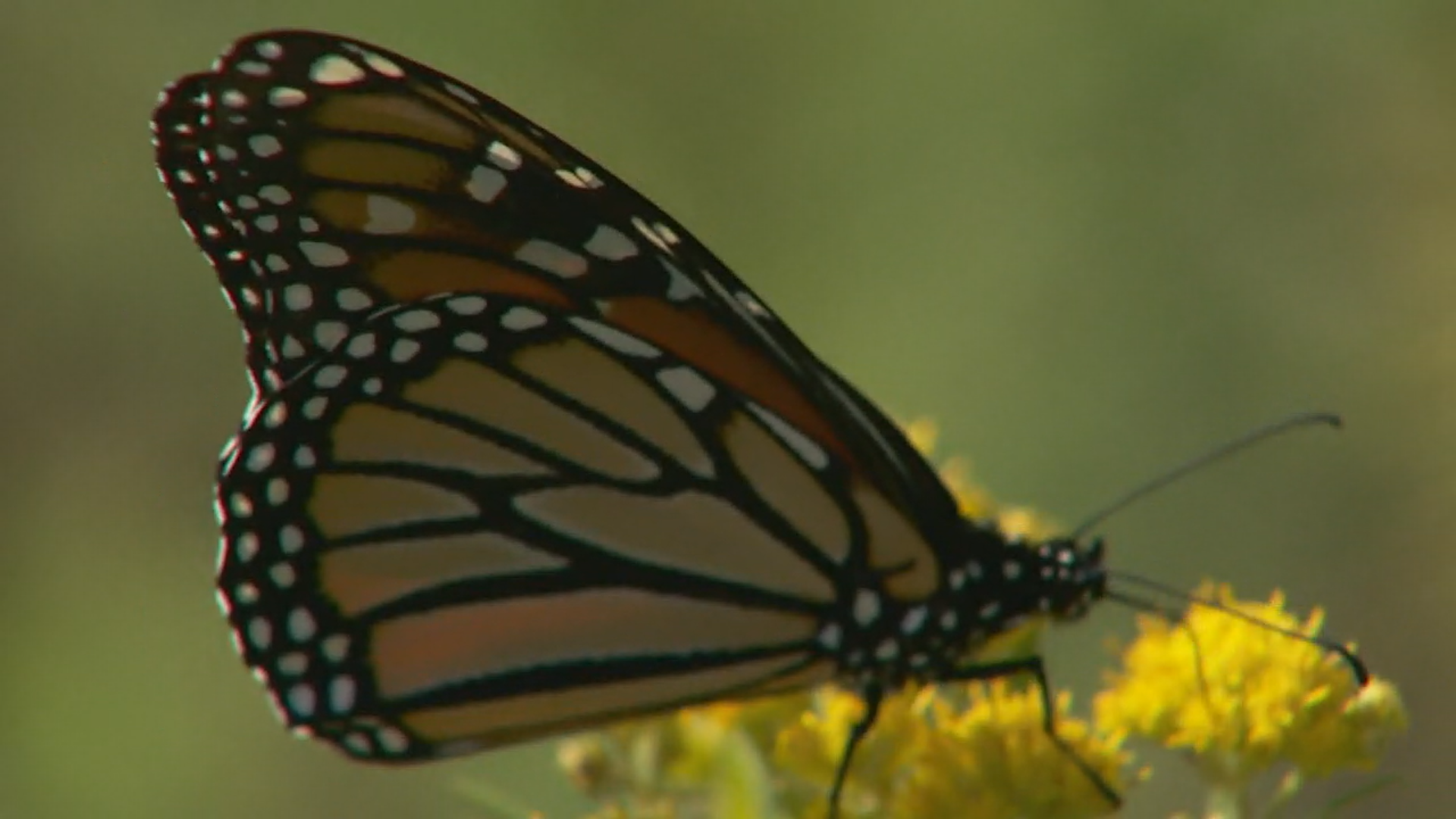
The evolutionary upgrade of sensory apparatuses typically requires a dual-step systemic overhaul: a structural modification in the peripheral sensing organ must coincide with an emergent neural processing capacity in the central nervous system. Traditional evolutionary models assume that adding a novel sensory channel—such as an expanded color spectrum—imposes a severe developmental bottleneck. Without pre-existing neural architecture to receive, route, and interpret incoming signals from a newly minted photoreceptor, any peripheral mutation should logically result in functional noise rather than adaptive advantage.
Recent findings from University of California San Diego researchers deconstruct this rigid orthodoxy by demonstrating how lepidopteran lineages bypassed the classic co-evolutionary constraint. By isolating the precise molecular mechanisms governing compound eye morphogenesis, researchers mapped how a single genetic switch duplicated an essential light-detecting cell without requiring concurrent, de novo neural innovations.
The Cellular Mechanics of Photoreceptor Expansion
The compound eye of insects is an array of modular units known as ommatidia. Standard dipteran models, such as Drosophila melanogaster, utilize a baseline configuration of eight photoreceptor cells (R1 through R8) within each ommatidial unit to capture environmental photons. Butterflies deviate from this ancestral template by incorporating an additional light-sensing element, effectively introducing a second R7 photoreceptor into the optical column to yield a nine-cell functional unit.
This structural divergence enhances spectral discrimination, particularly within the ultraviolet and short-wavelength bands essential for locating high-yield nectar sources and identifying conspecific mates. Mapping the developmental trajectories of sixteen distinct butterfly retinas revealed that this anatomical addition does not stem from a wholesale redesign of the visual pathway. Instead, the system co-opts existing developmental pathways by altering cell fate decisions.
Targeted genetic manipulations identified the transcription factor Lozenge as a primary operational lever. CRISPR-mediated disruption of Lozenge halts the standard differentiation of primary color-sensing cells, confirming its regulatory dominance over ommatidial patterning. When researchers manipulated signaling pathways—specifically combining Lozenge activity adjustments with the Notch cell-communication network—in model organisms, the experimental subjects successfully generated ommatidia containing the characteristic nine-photoreceptor configuration. This empirical validation establishes that peripheral optical expansion relies on rewiring an existing regulatory network rather than authoring novel genes from scratch.
Solving the Neural Accommodation Problem
A peripheral sensory upgrade introduces an immediate systemic vulnerability: an orphan signal. If an optical unit generates novel spectral inputs without a dedicated neural target, the organism experiences sensory overload or dead-end signaling. Evolutionary theory historically predicted that the central nervous system must undergo simultaneous mutations to provision matching interneurons.
The UC San Diego data resolves this paradox by uncovering a pre-adapted neural reserve. Insect neurogenesis systematically overproduces neuronal populations during larval and pupal development. Under standard developmental parameters, these surplus neurons undergo programmed cell death (apoptosis) if they fail to establish stable synaptic partnerships.
When the genetic switch forced the development of an extra R7 photoreceptor, the newly generated axonal projections encountered these transient, surplus neurons. Rather than degenerating, the excess neural cells formed functional synaptic connections with the novel photoreceptor outputs immediately. The central nervous system required zero compensatory genetic mutations to process the expanded chromatic input; the biological architecture maintained an unused processing capacity that absorbed the sensory upgrade by default.
Implications for Adaptive Radiation and Sensory Ecology
This discovery refines our understanding of phenotypic plasticity and evolutionary speed. Complex adaptations do not invariably demand millions of years of synchronized, multi-locus mutations across disparate tissue types. Instead, evolution exploits pre-existing developmental inefficiencies—such as overproduced embryonic neurons—as a ready-made buffer for sensory innovation.
By lowering the genetic cost function required to expand visual bandwidth, lineages can rapidly exploit ecological niches characterized by floral radiation and chromatic signaling. The system demonstrates that biological innovation often succeeds not by engineering complexity from a vacuum, but by capitalizing on the latent flexibility encoded within ancestral developmental programs.
Model the future trajectory of phenotypic research around this baseline: investigate whether analogous neural buffering mechanisms govern expansions in mechanoreceptive and chemosensory systems across other arthropod clades, utilizing targeted CRISPR activation to test for latent processing reserves before structural mutations occur.