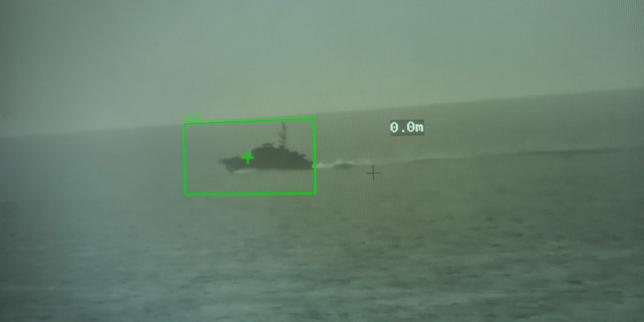
State-backed border enforcement in the Central Mediterranean operates through an intricate framework of jurisdictional outsourcing, structural incentives, and operational friction. Rather than a chaotic convergence of independent actors, contemporary maritime containment is a managed system. Understanding this regime requires stripping away rhetorical framing to examine the precise economic, legal, and operational mechanics that govern movement, interception, and deterrence between North African departure zones and Southern European arrival ports.
The Principal Agent Model of Border Externalization
European Union member states face a structural constraint: international maritime law, human rights obligations, and domestic jurisprudence prohibit direct refoulement. Under the principle of non-refoulement codified in international treaties, individuals cannot be returned to territories where their life or freedom would be threatened. Don't forget to check out our previous article on this related article.
To resolve this legal friction, states employ a principal-agent framework. The European Union and individual member states act as principals, while third-country authorities—most notably the Libyan coast guard and associated administrative entities—act as agents. This architecture achieves two objectives:
- Jurisdictional Displacement: Interceptions occur within territorial waters or designated search and rescue zones controlled by non-EU actors, circumventing direct jurisdiction of European courts.
- Cost Shifting: Financial and political liabilities associated with detention, processing, and human rights oversight are transferred to states with lower institutional compliance standards.
Subcontracting interception alters the legal geography of migration. By funding, equipping, and training proxy maritime forces, European states construct an outer tier of containment. The operational output is straightforward: intercept vessels before they enter international waters where rescue obligations trigger mandatory disembarkation in a safe port within the EU. If you want more about the history of this, The Guardian offers an informative breakdown.
The Economics of Operational Friction
The interaction between state containment strategies and non-state smuggling syndicates forms an economic feedback loop governed by supply, risk, and pricing mechanisms. As border enforcement density increases, smuggling networks adapt by altering asset utilization.
Traditional transit methods relied on high-volume, low-cost wooden vessels. As aerial surveillance, drone monitoring, and coordinated patrols increased the probability of interception, syndicates shifted toward high-speed rubber dinghies or low-cost metal hulls welded hastily in informal shipyards. These assets minimize capital expenditure while maximizing per-voyage revenue extraction.
The cost function for migrants is directly proportional to enforcement intensity:
- Risk Premium: Higher interdiction rates inflate the cost of passage, as smugglers factor potential asset loss into upfront fees.
- Vessel Degradation: To maintain profit margins under heightened enforcement, the quality of vessels decreases, raising the objective probability of structural failure, engine breakdown, and maritime distress.
Consequently, aggressive interdiction does not suppress demand; it alters the risk profile of the supply chain, concentrating high-risk crossings into compressed temporal windows dictated by weather patterns and patrol rotations.
The Institutional Role of Non Governmental Intermediaries
Humanitarian search and rescue organizations occupy an adversarial position within this institutional framework. Their operational presence introduces an unintended variable into state-managed containment models. Under maritime law, vessels are obligated to render assistance to persons in distress at sea. When humanitarian ships rescue stranded individuals, they disrupt the state-sponsored pipeline that channels intercepted migrants back to North African detention facilities.
To mitigate this disruption, states have implemented administrative and legal friction mechanisms targeting non-governmental operators:
- Port Allocation Constraints: Designating distant ports of safety for disembarkation increases transit times, effectively removing rescue assets from operational zones for days at a time.
- Administrative Detentions: Regulatory compliance audits, mandatory equipment upgrades, and safety inspections are utilized to immobilize vessels in port.
- Legal Scrutiny: Prosecutors frequently initiate inquiries regarding coordination between rescue assets and departure networks, shifting organizational resources toward legal defense.
These mechanisms systematically degrade the continuous spatial coverage of humanitarian monitoring, reducing the probability that distressed vessels in remote sectors of the Central Mediterranean will encounter independent verification or rescue.
Operational Execution and Strategic Forecasting
The structural trajectory of Central Mediterranean migration management indicates a persistent reliance on containment through proxy enforcement. Institutional incentives favor the status quo: externalized deterrence minimizes visible domestic political costs for European states while maintaining compliance with baseline non-refoulement prohibitions through technical legal separation.
Future operational adjustments will likely involve increased automation of border surveillance, tighter integration of intelligence-sharing between European agencies and North African coastal authorities, and expanded administrative frameworks to restrict third-sector maritime operations. The system functions not as a failed humanitarian initiative, but as a functioning mechanism of geopolitical risk management, where physical distance and jurisdictional boundaries are weaponized to regulate transnational movement.
Deploy automated aerial surveillance assets to map transit departure clusters prior to seasonal weather shifts, and calibrate interdiction resource allocation based on historical displacement metrics rather than reactive deployment.