The rain in California hits differently than it does in Berkshire.
Here, it comes in sudden, cinematic downpours that turn the sun-bleached canyons into steaming green valleys before vanishing just as quickly, leaving behind the heavy scent of eucalyptus and baked earth. In England, the rain is an old acquaintance. It settles in for days, a soft, persistent gray blanket that dampens the stone of Windsor Castle and clings to the manicured lawns of Eton.
For Prince Harry, that gray was the weather of his soul for nearly four decades.
We forget, easily, what it means to live behind glass. Not metaphorical glass, but the literal, shatterproof panes of a Range Rover moving at forty miles per hour through London traffic, surrounded by a detail of Metropolitan Police officers whose presence is both a shield and a cage. When you are born into an institution that treats human beings as public utilities, your life is not your own. Your grief is syndicated. Your marriage is a referendum. Your children are constitutional assets.
And then, you break the glass.
Millions in the bank. Multi-million-dollar production deals with streaming giants. A sprawling estate in Montecito framed by olive trees and the Pacific Ocean. By every traditional metric of human existence, the Duke and Duchess of Sussex won the lottery of modern capitalism. They have the wealth to buy absolute invisibility. They could have retreated into the quiet luxury of billionaire anonymity, sailing yachts in the Mediterranean or reading screenplays in a secluded compound in New Zealand.
Instead, they bought a microphone.
They keep showing up. On documentary screens, in bestselling memoirs, on magazine covers, and, crucially, in British courtrooms.
Why? That is the question that haunts the tabloid columns of Fleet Street and the dinner parties of Belgravia. It is posed with a mixture of bewilderment and calculated malice: You wanted privacy, so why are you still talking?
To understand the answer, you have to look past the bank accounts and into the architecture of exile. Because leaving a place physically is the easy part. The harder task is extracting that place from your nervous system.
Consider what happens when an institution that has defined your entire identity becomes your adversary.
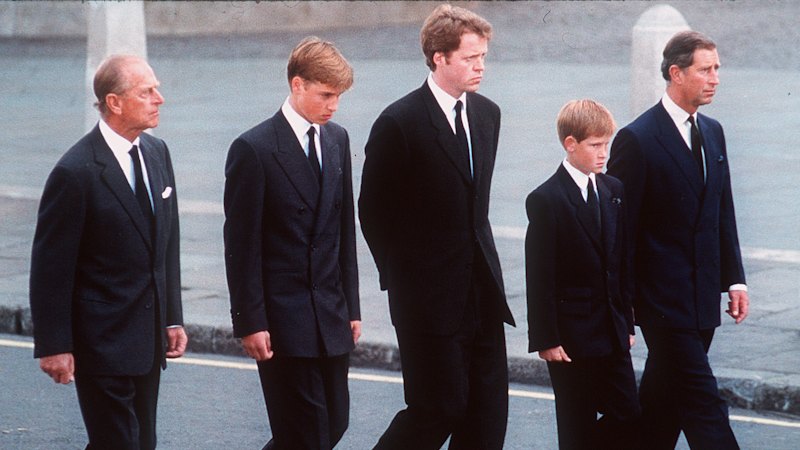
For Harry, the British media was not merely a collection of newspapers; it was an omnipresent ecosystem that he held morally and causally responsible for the death of his mother. When Diana Spencer's car crashed in the Pont de l'Alma tunnel in Paris in 1997, the flashing bulbs of the paparazzi were trapped in the glass. The trauma was not historical; it was a living, breathing tenant in his mind.
When he met Meghan Markle—an American actress whose introduction to Windsor brought a sharp, xenophobic, and racialized collision with the British press—the alarm bells didn't just ring; they deafened. The history was rhyming. The machinery was grinding.
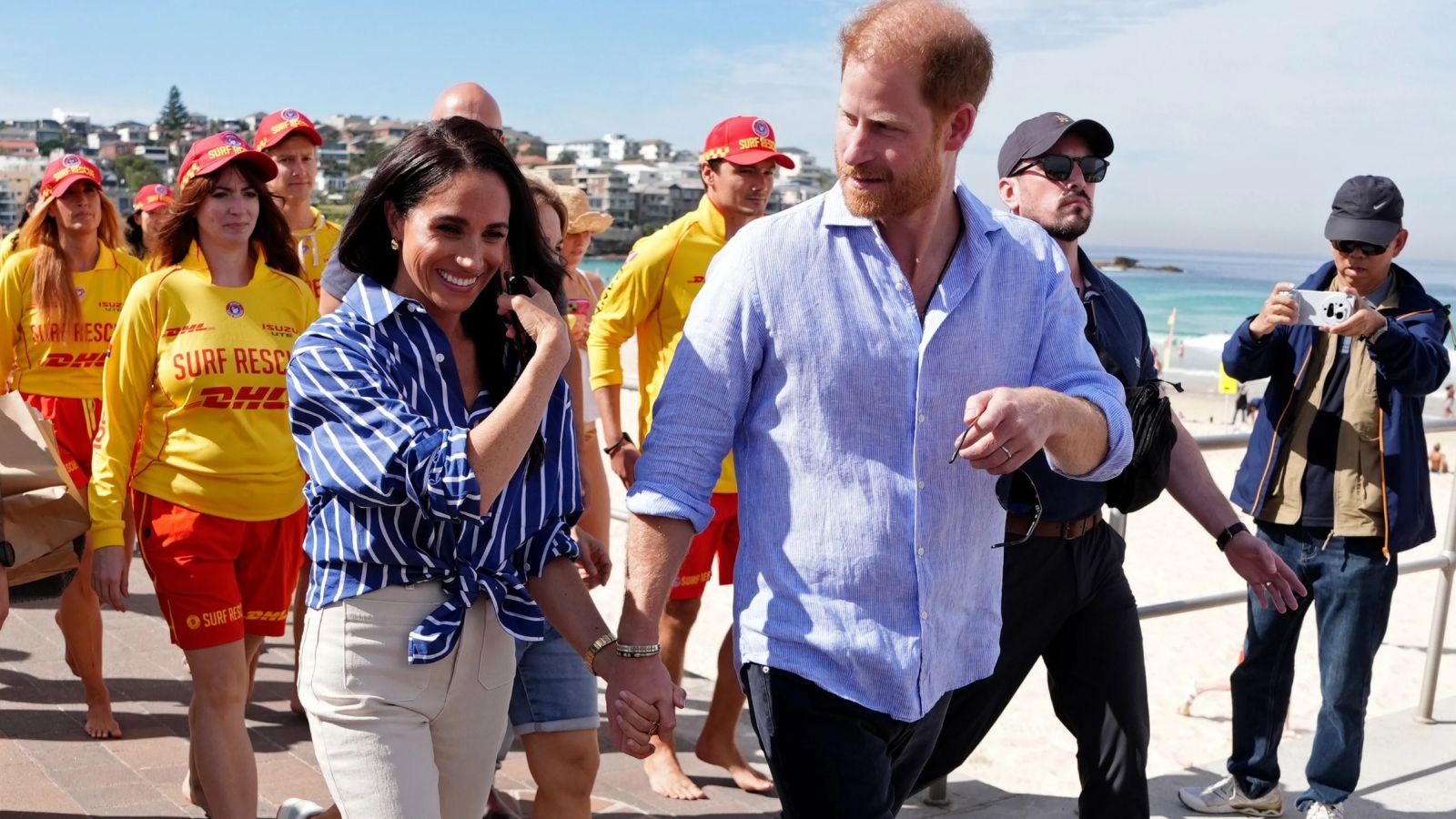
So they left. They packed their lives into boxes, loaded Archie into a car, and crossed an ocean.
In the language of fairy tales, that should have been the end. The prince slays the dragon, rescues the princess, and they retire to the countryside to live happily ever after. But real life is not a fairy tale. Real life has bills, reputations, legal fees, and, most dangerously, unresolved grievances.
Montecito offered physical safety, but safety does not equal peace. Peace requires resolution. And when you believe—with every fiber of your being—that an institutional machine is still operating against you, silence is not golden. Silence is surrender.
This is where the public figure paradox begins.
To protect your family, you must build a brand. To build a brand, you must monetize your story. To monetize your story, you must surrender the very privacy you fled across the Atlantic to secure. It is a terrible, looping ouroboros. Every time Harry steps into a witness box in London to testify against mirror-group newspapers or security downgrade decisions, he is feeding the beast he is trying to starve. Every time a new trailer drops for a Netflix project, the tabloids have fresh chum for the waters.
Critics call it hypocrisy. They look at the platform-building, the high-profile interviews, the strategic philanthropic announcements, and they see a contradiction. If you want to be left alone, stop talking about yourself.
This critique misses the fundamental human engine driving the behavior.
Harry is not fighting for privacy in the traditional sense—the right to sit on a beach unbothered. He is fighting for control. There is a vast, tectonic difference between the two. Privacy is being left alone by strangers. Control is the ability to write your own narrative after a lifetime of having your biography dictated by men in gray suits who leaked stories to Sunday newspapers to protect the brand of the Crown.
For forty years, Harry was a character in a play written by someone else. Now, for the first time in his life, he is holding the pen, even if the ink is expensive and the paper is scrutinized by the entire planet.
There is also the matter of the British public sphere—a unique, hyper-stratified ecosystem that cannot seem to quit the Sussexes, even as it professes exhaustion with them.
The relationship between the British monarchy and its subjects is deeply psychological. It is a co-dependent domestic partnership played out on a national stage. When a member of the family walks away, it is not viewed merely as a resignation; it is experienced as a betrayal of the national myth. How dare you reject the life we funded for you? How dare you suggest our institutions are flawed?
In the UK, to remain a public figure from afar is viewed as an act of aggression. It is seen as an ongoing raid on the national consciousness. Every time Harry’s face appears on the BBC news app discussing security arrangements or charity initiatives, it acts as a pebble dropped into the pond of national nostalgia and resentment.
Why do they want to be public figures there?
Because you cannot divorce yourself from a history that shaped your bones. Harry’s entire sense of duty, forged by a grieving mother and a stoic grandmother, demands relevance. A prince without a cause is just a wealthy man with a title, and wealth alone has never satisfied the Windsor constitution. They are wired for public service, even when that service has been violently divorced from the state that once commanded it.
Meghan, too, understands the modern currency of attention. In America, visibility is agency. To be seen is to be viable; to be viable is to have leverage. In the ruthless landscape of modern media, fading into the background means losing the protection that only a massive, vocal audience can provide. High-profile visibility is their armor. If they are famous, if they are watched, if their foundation has global reach, they are harder to crush.
It is a fortress built of spotlights.
We stand at a strange cultural intersection. We live in an era that claims to champion mental health, trauma recovery, and the breaking of generational cycles. We applaud the young corporate worker who quits a toxic job, moves across the country, and sets hard boundaries with an overbearing boss.
Yet when a literal prince does the exact same thing on a global scale—stepping away from a toxic environment, refusing to sacrifice his wife's mental health to the institution, and attempting to build a new life on his own terms—we demand that he do it quietly, humbly, and ideally, invisibly.
We want our royals to suffer for our entertainment, and when they refuse, we call them ungrateful.
The reality is messier, more human, and far more tragic than the headlines suggest. Harry and Meghan are neither saints nor villains. They are two people navigating the scorched earth of a public decoupling, trying to figure out who they are when the gold braid and the titles are stripped away.
They are wealthy, yes. They are privileged beyond measure. But money cannot buy the feeling of safety when you believe the world's most powerful media apparatus has your family in its crosshairs.
As the California rain clears and the sun breaks over the Santa Ynez mountains, the tension remains. They cannot go back, and they cannot fully let go. They are suspended between two worlds—the ancient, stone-cold certainty of Windsor and the sun-drenched, relentless glare of Hollywood.
They wanted out of the fishbowl, but they found out something profound about the modern world: once you have been seen by billions, you can never truly turn off the light. You can only choose the terms under which you stand in its glow.