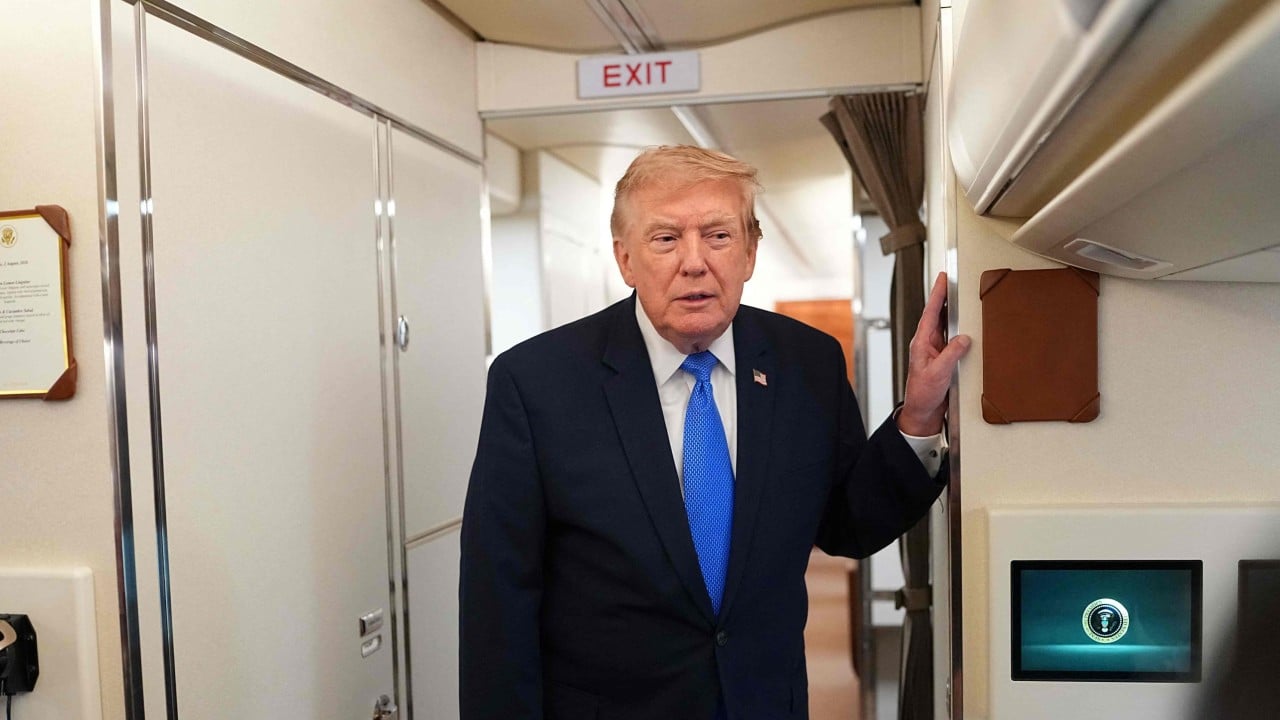
The decision by United States leadership to halt an impending military campaign against Iran, coupled with the immediate scheduling of bilateral and multilateral negotiations, exposes the complex calculus governing modern geopolitical friction points. When state actors step back from the threshold of kinetic action to re-engage diplomatic machinery, the shift is rarely accidental. It represents a precise recalculation of risk profiles, economic exposure, and regional coalition dynamics.
Deconstructing this event requires moving past standard media summaries to examine the underlying mechanical variables: maritime chokepoint control, energy infrastructure vulnerability, regional alliance pressure, and the shifting utility of force as a diplomatic instrument.
The Structural Mechanics of Maritime Leverage
The operational pivot point anchoring the current crisis is the Strait of Hormuz. For Tehran, physical or functional control over this maritime chokepoint functions as its primary economic and strategic equalizer. When diplomatic frameworks collapse—such as the deterioration of prior interim understandings regarding transit safety—Iran's deployment of military pressure against shipping lanes serves to disrupt global hydrocarbon flows, imposing immediate economic costs on importing nations.
The proposed diplomatic framework rests on two non-negotiable variables demanded by Washington and its partners:
- The immediate, verified reopening of the Strait of Hormuz to unrestricted commercial transit.
- A structural rollback or cessation of the Iranian nuclear weapons development track.
From a game-theoretic perspective, the United States and Israel held a dominant kinetic position, capable of inflicting catastrophic damage on Iranian state and energy infrastructure. However, kinetic supremacy does not automatically translate into strategic utility. Annihilating energy assets eliminates any near-term possibility of stabilizing regional commodity markets, while simultaneously triggering asymmetric blowback via proxy networks across the region.
Coalition Friction and Regional Risk Mitigation
The intervention of Gulf partners—specifically Saudi Arabia, the United Arab Emirates, and Qatar—highlights the divergence in risk tolerance between primary belligerents and regional neighbors. While Washington possesses geographic insulation from the immediate fallout of localized escalation, Gulf monarchies exist within direct operational range of Iranian retaliatory capabilities.
The calculus communicated to Washington by regional leaders, notably Saudi Crown Prince Mohammed bin Salman, centered on downside risk minimization:
- Asymmetric Spillover: A massive aerial campaign risks igniting secondary conflicts, including renewed disruptions by aligned militias targeting regional energy facilities or alternative maritime corridors like the Bab al-Mandab.
- Economic Stability: Regional development visions depend entirely on a predictable security environment. Kinetic escalation introduces severe market volatility and deters foreign direct investment.
- The Utility of Windows: Regional intermediaries recognized that Tehran's willingness to engage in talks stems directly from the credible, imminent threat of force. Halting the strikes preserves the diplomatic opening created by that pressure without absorbing the systemic costs of actual warfare.
The Cost Function of Kinetic Action
Evaluating the decision to scrub the operation requires analyzing the military cost function. Public statements from American leadership characterized the aborted engagement as an unprecedented projection of force. Executing a strike package of that magnitude carries high expenditures not only in ordnance and logistical sustainment, but also in strategic bandwidth.
A sustained campaign against deeply buried and hardened nuclear facilities requires continuous operational tempo. More critically, it removes all intermediate rungs on the escalation ladder. Once the threshold of a massive, regime-threatening bombardment is crossed, the adversary loses any incentive for restrained behavior. By pausing at the precipice, leadership retained the option value of force. The military apparatus remains positioned for rapid employment should upcoming talks stall, while Tehran is forced to calculate the ongoing risk of an unexecuted, highly credible threat.
Assessing the Negotiating Baseline
As delegations prepare to convene, the probability of reaching a sustainable, long-term accord remains bound by structural contradictions. Tehran views its nuclear program and regional proxy alignment as existential security guarantees against regime change. Conversely, Washington and its allies view those exact mechanisms as intolerable threats to regional stability.
An interim arrangement centered strictly on maritime access and temporary nuclear freezes offers a functional workaround. It decouples immediate commercial necessities—such as oil transit and export normalization—from intractable ideological disputes. However, historical precedent indicates that without rigorous verification mechanisms and continuous enforcement architecture, such pacts remain inherently unstable.
To transition from a temporary tactical pause to a durable strategic equilibrium, the upcoming diplomatic sessions must establish verifiable metrics for compliance rather than relying on verbal assurances. The burden rests on establishing clear enforcement triggers: any infraction regarding maritime transit in the gulf must be met with an automated, proportional economic or kinetic response, eliminating the ambiguity that fueled the current crisis.