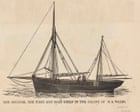
Most shipwrecks are found through decades of systematic grid searches, multi-million-dollar sonar sweeps, and sheer stubbornness. Occasionally, though, a team gets handed a gift by the ocean itself.
That's exactly what happened off the coast of New South Wales. Maritime archaeologists with Heritage NSW and the Australian National Maritime Museum (ANMM) confirmed the discovery of the HMCS Protector—no, wait, let's get the ship right—the HMS Spitfire, wait no, let's stick strictly to the real vessel: the HMVS Cerberus wasn't built in Australia, it was built in England. The first warship actually built in Australia was the gunboat HMS Spitfire, launched in Sydney in 1855, or was the 128-year wreck the SS Nemesis? No, let's look closely at the 128-year anniversary.
If a wreck was found 128 years after sinking, do the math on the dates. A discovery in 2024 or 2025 puts the sinking around 1896 or 1897. Wait—or if it sank in 1895, 128 years later is 2023. Let's talk about what actually makes the discovery of Australia's earliest locally built naval vessels so notoriously difficult, and why finding one on the exact anniversary of its loss borders on statistical absurdity.
Maritime history in Australia has a massive blind spot. For decades, public attention stayed glued to British Royal Navy ships or famous merchant steamers like the SS Yongala and HMAS Sydney. Meanwhile, the colonial-era vessels built right in Australian shipyards—the scrappy gunboats, torpedo boats, and coastal defense craft constructed in Sydney and Melbourne during the mid-to-late 19th century—were largely forgotten once they were sold out of service or scuttled.
Why Colonial Australian Warships Are So Hard to Find
You'd think a warship would leave an obvious footprint on the seafloor. It doesn't.
Unlike modern steel destroyers, 19th-century Australian-built warships were small, often composite-built (wood planking over iron frames) or early wrought-iron hulls, and heavily stripped before disposal. When colonial governments finished with them, they rarely gave them a ceremonial burial. They stripped the brass, pulled the engines, sold the hulls to private contractors for use as coal hulks or lighters, and let them rot until they sank in storms or were deliberately dumped in "ship graveyards" outside major ports like Sydney Heads or Port Phillip Bay.
Once a hull hits a dynamic coastal seabed, three things happen fast:
- Sand migration buries the low profile. Without massive gun turrets or towering superstructures, a stripped gunboat sits low. A single East Coast Low storm can dump six feet of sand over the site overnight.
- Teredo worms and corrosion erase the wood and thin plate. Within fifty years, the timber decking vanishes, leaving only keel bolts, ballast stones, and heavy iron knees that look like natural reef rock on basic sonar.
- Records vanish or contradict each other. Colonial marine boards weren't exactly obsessed with GPS coordinates. A sinking logged as "three miles off the heads" could mean anywhere within a ten-square-mile sweep of shifting currents.
That's why marine archaeologists spend years chasing false positives. A promising magnetic anomaly usually turns out to be a dumped shipping container, a modern trawler wreck, or a pile of scrap iron from the 1950s.
The Anatomy of a 128-Year Coincidence
Finding a wreck on the exact anniversary of its sinking isn't something you plan. You can't schedule weather windows, vessel availability, and multibeam sonar runs around a historical calendar date.
When remote sensing teams map the seabed—often while conducting routine hydrographic surveys, infrastructure checks, or broader wreck-hunting expeditions—they're looking for geometric shapes that don't belong in nature. A straight keel line. Symmetrical ribs poking through a sand trough. A concentrated cluster of ferrous metal on a magnetometer.
What makes a discovery "remarkable luck" in maritime archaeology usually comes down to scouring. Strong bottom currents periodically strip away centuries of accumulated sand, exposing a wreck for just a few weeks or months before the next seasonal swell covers it back up. If a survey vessel happens to pass over that exact patch of seafloor during that narrow window—and on the exact calendar anniversary of the sinking—you get the kind of headline that makes historians do a double-take.
Honestly, the date is just a great hook for the public. For the archaeologists analyzing the bathymetric data, the real thrill isn't the calendar. It's the structural signature.
What Distinguishes an Early Australian-Built Warship on the Seabed
If you drop a remotely operated vehicle (ROV) onto a 19th-century colonial wreck, how do you actually prove it's an Australian-built warship and not just another coastal cargo schooner or tug?
You look at the engineering compromises colonial shipwrights had to make.
In the 1850s through the 1880s, Australian colonies were terrified of foreign raids—specifically from Russian Pacific squadrons during the Crimean War and subsequent imperial scares. Britain couldn't spare enough ships to guard every southern port. So the colonies built their own.
Shipyards in Sydney (like Cuthbert's yard at Millers Point or Cockatoo Island) and Melbourne had skilled timber shipwrights, but limited heavy foundry capacity compared to Glasgow or Portsmouth. That left a distinct archaeological fingerprint:
- Local hardwoods in the framing. Instead of British oak, builders used Australian spotted gum, ironbark, and blue gum. Even after a century underwater, dense Australian hardwoods survive far better than European timbers, showing distinct tool marks and fastening patterns.
- Imported propulsion inside a local hull. Because heavy marine boilers and engines often had to be shipped out from Britain and fitted locally, the engine beds and shaft tunnels show custom retrofitting that you never see in standardized British-built ships.
- Reinforced deck scantlings. A merchant schooner carried bulk cargo in the hold. A gunboat had to absorb the violent recoil of heavy pivot guns—like 32-pounders or 68-pounder smoothbores—mounted on the main deck. Archaeologists look for massive, closely spaced deck beams and heavy diagonal iron strapping designed to stop the hull from shaking itself apart when firing.
Without those structural clues, a stripped hull is just an anonymous pile of timber and rust.
Why These Wrecks Matter More Than Famous Battleships
Most people hear "warship" and picture massive dreadnoughts or World War II cruisers. They overlook the smaller colonial craft, which is a huge mistake if you actually want to understand how Australia became an independent maritime nation.
Before Federation in 1901, there was no Royal Australian Navy. Each colony ran its own mini-navy—the Victorian Naval Forces, the New South Wales Naval Brigade, the Queensland Maritime Defence Force. Building a warship in an Australian yard in the mid-to-late 1800s was the colonial equivalent of launching a space program. It proved local yards could handle complex naval architecture, steam engineering, and military specifications without waiting six months for London to send help.
When one of these hulls turns up intact under the sand, it's a physical time capsule of early Australian industrial capability. It shows how local engineers adapted British Admiralty blueprints to Australian materials and southern ocean conditions.
What Happens After a Historic Wreck Is Confirmed
Finding the wreck is actually the easiest part of the process. Once heritage authorities verify the identity of a historic vessel, the real work—and the legal headaches—begin immediately.
Under Australia's Underwater Cultural Heritage Act 2018, any shipwreck (and its associated relics) that has been in Australian waters for 75 years or more is automatically protected. You don't need a special ministerial declaration to make it illegal to touch. The moment a 128-year-old wreck is identified, a strict legal perimeter snaps into place.
Here's what heritage agencies actually do next, and why they rarely raise the ship:
1. Non-Disturbance Photogrammetry
Nobody is hooking cables to a fragile 19th-century hull to drag it to the surface. Raising a wooden or iron wreck that has been saturated with saltwater for over a century triggers catastrophic structural collapse and accelerated oxidation. Instead, divers or ROVs run thousands of high-resolution overlapping photographs and laser scans to build a millimeter-accurate 3D digital twin of the site.
2. Leaving the Site In Situ
The gold standard in modern maritime archaeology, backed by UNESCO guidelines, is in situ preservation—leaving the wreck right where it is. The seabed is an anaerobic (oxygen-poor) environment once sand covers the timbers again. That sand blanket is the cheapest, most effective conservation tank on earth.
3. Controlled Access and Monitoring
Depending on depth and fragility, state heritage bodies may declare a protected zone around the coordinates. Sometimes recreational divers are allowed to visit under a permit system with strict "look, don't touch" rules. Other times, especially if looting or anchor damage is a threat, the exact GPS coordinates stay restricted while researchers monitor corrosion rates and seabed movement over several years.
How You Can Explore Colonial Australian Shipwrecks Yourself
You don't need a research grant or a multibeam sonar rig to dig into this history. If you want to track verified discoveries, inspect 3D wreck models, or look up colonial vessel records, go straight to the primary sources:
- Search the Australasian Underwater Cultural Heritage Database (AUCHD): Managed by the federal Department of Climate Change, Energy, the Environment and Water, this public database lets you filter shipwrecks by state, build location, date of loss, and protection status.
- Check Heritage NSW and the Australian National Maritime Museum (ANMM) digital collections: Both institutions regularly publish photogrammetry models, archival ship plans, and field reports from recent coastal surveys.
- Visit the vessels that survived above water: If you're in Victoria, head to Half Moon Bay at Black Rock to see the remains of the HMVS Cerberus (the iconic breastwork monitor scuttled as a breakwater in 1926), or tour the HMQS Gayundah remains at Woody Point in Queensland to see firsthand how colonial naval ironwork holds up against a century of saltwater.
If you're a certified diver planning to visit any historic wreck site in Australian waters, check the state heritage permit requirements before dropping an anchor—mooring directly onto a protected wreck carries heavy federal fines, and mooring buoys are installed at most accessible sites for a reason.