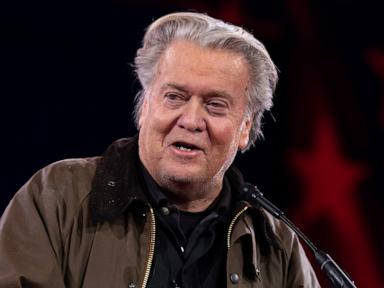
When the Department of Justice moves to dismiss a finalized criminal conviction, it executes a rare structural override of the judicial pipeline, subordinating finalized jury verdicts to executive branch policy priorities. In the case of Steve Bannon's contempt of Congress conviction, the renewed motion to dismiss is not merely a procedural footnote; it is a systemic recalibration of the boundary between legislative oversight power and executive privilege. Standard media coverage reduces this event to partisan theater, missing the underlying legal mechanics, institutional incentives, and downstream constitutional risks that dictate why this motion exists and how it alters the balance of power in Washington.
The Structural Mechanics of Contempt Dismissal
To understand the weight of a Department of Justice motion to dismiss a conviction post-verdict, one must separate the political narrative from the Federal Rules of Criminal Procedure. Under Rule 48(a), the government may, with leave of court, dismiss an indictment, information, or complaint. While prosecutors possess near-absolute discretion before a trial begins, attempting to vacate a conviction after a jury has rendered a verdict, a sentence has been imposed, and appellate review is underway introduces severe friction into the judicial system. You might also find this similar story useful: The Heavy Silence of Shuhada Street and What Happens When a City Stops Breathing.
The legal architecture of this reversal rests on three distinct variables:
- The Executive Privilege Doctrine: The core substantive dispute in the Bannon prosecution centered on whether a former White House advisor can invoke executive privilege to defy a congressional subpoena, even after the sitting president waives that privilege. The trial court excluded this defense, ruling that Bannon's reliance on advice of counsel regarding executive privilege did not negate the mens rea—the willful intent—required under 2 U.S.C. § 192. A DOJ reversal signals a departmental re-evaluation of how broadly executive privilege shields former aides from legislative compulsion.
- Selective Prosecution and Institutional Parity: The Department of Justice operates under internal guidelines requiring consistent application of the law across administrations. When a new leadership structure within the DOJ reviews a high-profile prosecution initiated by its predecessors, it evaluates whether the prior enforcement action deviated from historical norms. Historically, the DOJ rarely prosecuted executive branch officials for contempt of Congress when privilege claims were asserted, favoring civil accommodation processes over criminal indictments.
- The "Leave of Court" Standard: Rule 48(a) does not grant the DOJ unilateral authority to erase a conviction; it requires judicial approval. Under Supreme Court precedent, specifically Rinaldi v. United States, a district judge's discretion to deny a government motion to dismiss is narrow, primarily restricted to instances where the dismissal is clearly contrary to the manifest public interest or motivated by bad faith. The DOJ's filing must therefore construct a legal rationale compelling enough to satisfy a federal judiciary inherently skeptical of executive interference with finalized verdicts.
Deconstructing the DOJ's Strategic Calculus
A renewed motion to dismiss indicates that initial procedural attempts or appellate maneuvers failed to resolve the case cleanly, forcing the department to deploy direct prosecutorial intervention. This decision is governed by an institutional cost-benefit analysis that weighs immediate political backlash against long-term executive branch autonomy. As highlighted in recent coverage by The Washington Post, the effects are notable.
The Erosion of Legislative Compulsion
Congressional oversight relies entirely on the credibility of its enforcement mechanisms. Because Congress abandoned its inherent contempt power—the ability to arrest and detain uncooperative witnesses directly—nearly a century ago, it depends on the Department of Justice to prosecute criminal contempt referrals under 2 U.S.C. § 192.
By moving to dismiss Bannon's conviction, the DOJ effectively neutralizes the deterrent effect of criminal contempt referrals for executive-adjacent figures. If witnesses calculate that a criminal conviction for defying a House or Senate subpoena can be vacated simply by waiting out an administration change, the rational strategy for any subpoena recipient becomes delay and defiance. The transaction cost of non-compliance drops to the price of legal defense fees, while the institutional cost to Congress is the functional collapse of its compulsory investigative power.
Protecting the Office of the Presidency
From an institutionalist perspective within the Justice Department, the primary client is not the current administration, nor is it Congress; it is the enduring constitutional authority of the executive branch. Career attorneys and political appointees alike frequently align on preserving the President's ability to receive candid advice without fear of future legislative interrogation.
The prosecution of Bannon established a precedent that weakened the insulation around presidential advisors. Even though Bannon had left government service years prior to the January 6 committee's subpoena, the conviction narrowed the scope of permissible defenses for individuals operating within the orbit of the White House. Reversing the conviction restores the traditional buffer zone that the Office of Legal Counsel (OLC) has spent decades constructing through formal opinions asserting broad immunity for presidential aides.
The Procedural Bottleneck: Judicial Review and Appellate Friction
Moving to dismiss a case after conviction is vastly more complex than dropping charges prior to arraignment. The case is no longer solely within the domain of the executive branch; the judicial branch has invested substantial resources into adjudicating the matter, and appellate courts may already have jurisdiction.
When a conviction is on appeal, the district court lacks jurisdiction to grant a Rule 48(a) motion without a remand from the appellate court. This creates a multi-stage procedural sequence:
- Abeyance and Remand: The DOJ must first petition the appellate court—in this instance, the D.C. Circuit—to hold the appeal in abeyance and remand the case back to the district court for the specific purpose of considering the motion to dismiss.
- The District Court Hearing: Once remanded, the original trial judge reviews the motion. Given that the trial judge previously rejected Bannon's privilege defenses and sentenced him to prison, the court will scrutinize the DOJ's rationale for sudden reversal. While the judge cannot force the executive branch to prosecute a case, the court can demand a transparent record explaining why the public interest is served by vacating a valid jury verdict.
- The Amicus Curiae Intervention: In high-profile reversals where the government abandons its own prosecution, federal judges frequently appoint an independent amicus curiae—a friend of the court—to argue against the dismissal. This mechanism ensures the adversarial process continues even when the prosecution and defense align, forcing the DOJ to defend its institutional pivot against rigorous legal counterarguments.
Limitations of the Dismissal Strategy
The Justice Department's attempt to unwind the conviction faces severe structural constraints that prevent a clean resolution. No legal maneuver in this context is without significant friction or unintended consequences.
First, a Rule 48(a) dismissal does not erase the historical or legal record of the trial. While it vacates the conviction and eliminates the criminal penalty, the trial court's pre-trial rulings on the invalidity of Bannon's executive privilege defense remain on the books as persuasive authority, even if stripped of binding appellate force. Future prosecutors or congressional committees can still cite the underlying legal reasoning used to secure the initial indictment.
Second, this strategy introduces extreme volatility into the rule of law. When criminal liability becomes contingent on election cycles, public trust in the impartiality of federal law enforcement degrades rapidly. This perception imposes a hidden tax on the DOJ: career prosecutors face diminished credibility in front of federal judges and juries in unrelated cases, as courts begin to view Justice Department representations as transient policy positions rather than fixed legal principles.
Third, the dismissal does not resolve the underlying constitutional conflict between Article I legislative oversight and Article II executive privilege. Because the Supreme Court is deprived of the opportunity to issue a definitive ruling on the merits of Bannon's appeal, the legal ambiguity persists. Both Congress and future administrations remain locked in an unresolved standoff, guaranteeing that identical constitutional crises will recur during subsequent shifts in political power.
The Downstream Impact on Federal Enforcement
The mechanics of this dismissal extend far beyond a single political operative. They establish an operational blueprint for how future administrations will handle politically sensitive prosecutions inherited from predecessors.
In organizational theory, when an institution demonstrates that its enforcement rules are elastic based on leadership transitions, compliance across the entire system declines. White-collar defendants, political operatives, and corporate entities facing federal investigation will increasingly incorporate political timeline modeling into their litigation strategies. Instead of seeking early plea agreements or cooperating with federal investigators, defense counsel will prioritize procedural stalling—filing endless interlocutory appeals and collateral challenges—to push final adjudication past the next federal election.
Simultaneously, congressional committees must adapt to a reality where criminal contempt referrals are no longer reliable enforcement tools. Relying on the DOJ to punish non-compliance is a failed strategy when the executive branch retains the unilateral power to abort the prosecution years later.
Strategic Mandate for Institutional Actors
To navigate the destabilized landscape created by prosecutorial reversals of contempt convictions, institutional actors must execute immediate structural adjustments rather than relying on legacy norms.
For congressional oversight bodies, the reliance on criminal contempt statutes under 2 U.S.C. § 192 must be abandoned in favor of direct civil enforcement and institutional leverage. Committees should immediately bypass DOJ referrals and file civil enforcement actions directly in federal court, utilizing expedited declaratory judgment procedures to compel testimony before political cycles turn. Simultaneously, Congress must weaponize its Article I appropriations power—specifically targeting administrative budgets and executive office funding—to impose immediate, non-reversible financial costs on executive agencies that facilitate subpoena defiance.
For legal practitioners and compliance officers advising clients in politically exposed sectors, litigation strategy must shift from substantive defense to duration management. Because the durability of federal convictions in politically adjacent cases is now inversely correlated with the time remaining in a presidential term, maximizing appellate delay is no longer a secondary tactic—it is the primary mechanism for securing total exoneration.