Global supply chains operate on the assumption of infinite maritime throughput until geography and meteorology impose a hard physical ceiling. When meteorological anomalies disrupt the hydrological cycle of an artificial waterway, the economic shockwaves transcend regional shipping lanes and recalibrate international pricing structures. The recurring water deficits in the Panama Canal illustrate a fundamental vulnerability in modern logistics: maritime transit capacity is ultimately a function of watershed management rather than vessel availability. Analyzing this crisis requires deconstructing the operational mechanics of the canal, the economic cost functions imposed on carriers, and the structural adaptations required for modern transoceanic trade.
The Hydrological Economics of a Gravity Fed System
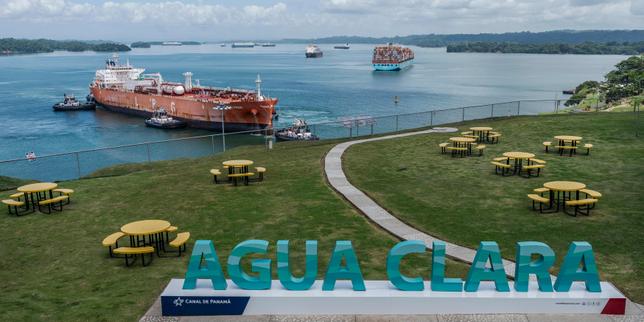
The Panama Canal functions not as a sea level channel, but as an elevated water bridge powered entirely by gravity and rainfall. Two artificial lakes, Gatun and Alajuela, serve as the primary reservoirs that feed the lock chambers. Every single transit requires discharging approximately 52 million gallons of freshwater from these lakes into the ocean to raise and lower ships across the continental divide.
The economic model of the canal assumes a closed-loop hydrological balance where annual precipitation replenishes the volume lost during lockage cycles. When El Niño Southern Oscillation phases alter regional weather patterns, precipitation drops significantly while evaporation rates climb due to elevated temperatures.
$$\text{Net Reservoir Volume} = \text{Precipitation} + \text{Inflows} - (\text{Lockages} + \text{Evaporation} + \text{Hydroelectric Generation}}$$
When this equation turns negative, the operating authority faces a zero-sum constraint. Water retained for lock operations cannot be drawn down below safe navigational thresholds without exposing submerged infrastructure or grounding deep-draft vessels. Consequently, the maximum allowable draft for transiting ships must be adjusted downward.
Draft restrictions directly curtail the revenue-generating capacity of a container ship or bulk carrier. A vessel operating at a reduced draft cannot carry its maximum deadweight tonnage. Carriers must either offload cargo at origin ports—a process known as light loading—or transship excess weight across the isthmus via rail before reloading on the other side. Both alternatives introduce operational friction, extend transit times, and inflate unit economics.
The Cost Function of Transit Restrictions
Water scarcity transforms the Panama Canal from a reliable infrastructure asset into a scarce commodity market. To manage dwindling capacity, the canal authority implements slot allocation restrictions, reducing the total daily number of transits allowed. This artificial supply restriction triggers an immediate economic reaction among carriers accustomed to predictable scheduling.
The resulting market distortion is characterized by a dual-cost penalty. First, the reduction in available slots creates a queuing bottleneck at both the Atlantic and Pacific anchorages. Vessels waiting for days or weeks incur substantial daily operating expenditures, including fuel consumption for idling engines, crew wages, and capital holding costs for delayed cargo.
Second, the scarcity of transit slots has given rise to a secondary auction market where carriers bid exorbitant premiums for priority passage. These auction fees have occasionally reached millions of dollars per transit for high-priority container lines seeking to bypass the multi-week queue. This mechanism shifts the canal from a regulated utility to a dynamic pricing model that favors high-value cargo while pricing out lower-margin bulk commodities such as grain, coal, and liquefied petroleum gas.
Bulk carriers operate on tight margins where freight rate volatility can eliminate profitability entirely. When Panama Canal transit becomes cost-prohibitive or operationally unfeasible due to draft limits, these vessels are forced to execute long-distance diversions. The alternative routes—circumnavigating Cape Horn or the Cape of Good Hope, or routing via the Suez Canal—impose massive mileage penalties.
A diversion from the US Gulf Coast to Asia via the Cape of Good Hope instead of the Panama Canal adds thousands of nautical miles to the voyage, extending transit times by weeks and dramatically increasing bunker fuel consumption. This systemic rerouting absorbs global shipping capacity, as ships are tied up at sea for longer durations, effectively tightening effective vessel supply worldwide and driving up global freight rates.
Systemic Vulnerabilities and Mitigation Mechanics
The structural dependence of the canal on freshwater management points to deep-seated engineering challenges that cannot be resolved through short-term operational tweaks. Addressing the underlying fragility requires examining the structural measures available to the operating authority and the limits of engineering interventions.
Deepening reservoirs or constructing new water-storage infrastructure involves severe environmental, social, and financial costs. Proposals to dam additional rivers within the Panama watershed face intense local opposition, ecological displacement concerns, and lengthy regulatory hurdles. While water-saving basins introduced during the construction of the third set of locks reuse a portion of the water from each lockage cycle, they remain insufficient during severe multi-year droughts where base reservoir levels are already severely depleted.
Intermodal integration represents another partial mitigation strategy. The Panama Canal Railway Company, which runs parallel to the canal, provides a land bridge for containerized cargo. However, rail infrastructure lacks the volumetric throughput capacity of the lock system. Shifting millions of containers from maritime transits to rail cars creates bottlenecks at port terminals and overburdens terrestrial infrastructure that was never designed to absorb diverted bulk shipping volumes.
Carriers are consequently forced to re-evaluate their long-term supply chain network designs. Global logistics networks are transitioning away from single-route optimization toward redundant, multi-path topologies. Rather than relying on the assumption that the Panama Canal will remain an open, low-cost artery between the Atlantic and Pacific basins, corporate supply chain planners are redesigning inventory buffers, establishing dual-sourcing strategies, and accepting higher baseline transportation costs as an insurance premium against climate-induced disruptions.
Long-Term Strategic Outlook
The structural constraints observed in the Panama Canal are indicative of a broader vulnerability shared by critical global trade choke points. As meteorological volatility increases, historical weather patterns cease to serve as reliable baselines for infrastructure design and capacity planning.
The economic burden of these hydrological shocks is ultimately absorbed by end consumers through inflationary pressures on manufactured goods and commodities. As water availability dictates maritime throughput, the distinction between environmental policy, infrastructure management, and macroeconomic stability dissolves. Future network resilience depends on recognizing that water is not an infinite input for global trade, but a finite resource whose allocation will dictate the cost and speed of international commerce.
Prioritize network diversification by establishing multi-ocean routing agreements and securing secondary intermodal capacity contracts before seasonal draft restrictions force reactive spot-market deployment.