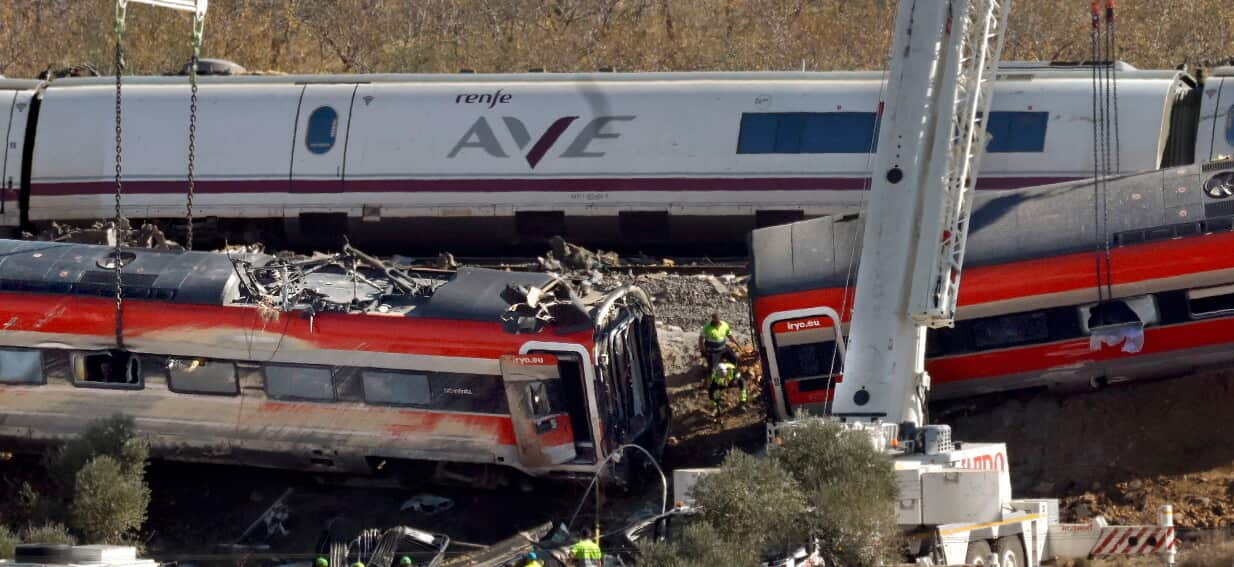
High-speed rail accidents involving international passengers expose a structural collision between kinetic physics, fragmented infrastructure governance, and cross-border consular logistics. When a derailment or collision occurs on a European high-speed corridor—such as Spain's Alta Velocidad Española (AVE) network—and claims the lives of foreign nationals, including Australian citizens, standard news reporting focuses on immediate casualty counts and diplomatic expressions of sympathy. That surface narrative obscures the operational mechanics governing how rail systems fail, how emergency triage prioritizes victim identification, and how foreign ministries execute repatriation under international law.
To understand the true scope of a fatal rail incident in Spain involving Australian victims, one must evaluate three distinct operational layers: the physical and engineering failure modes of high-speed rail corridors, the forensic bottlenecks of mass-casualty victim identification (DVI), and the bilateral legal frameworks dictating consular intervention.
Kinetic Failure Modes in High-Speed Rail Infrastructure
High-speed rail operates on narrow engineering tolerances where minor deviations in track geometry, signaling integrity, or rolling stock maintenance compound exponentially with velocity. Unlike aviation, where catastrophic failures typically stem from aerodynamic loss of control or propulsion breakdown at altitude, high-speed rail accidents are governed by ground-level kinetic energy dissipation ($E_k = \frac{1}{2}mv^2$). At operating speeds exceeding 250 kilometers per hour, a trainset weighing several hundred metric tons carries kinetic energy equivalent to tactical ordnance.
Signaling and Train Control Architectures
Spain’s high-speed network utilizes a dual-tier signaling environment that creates distinct risk profiles depending on the specific corridor:
- ERTMS (European Rail Traffic Management System): Deployed on primary modern corridors, Level 1 and Level 2 ERTMS enforce continuous speed supervision via ETCS (European Train Control System). If a driver exceeds a braking curve, the onboard computer overrides human input and applies emergency braking automatically.
- ASFA (Anuncio de Señales y Frenado Automático): An older, intermittent cab-signaling system still present on transitional segments and conventional-gauge interfaces. ASFA relies on trackside balises (beacons) that transmit discrete signal states rather than continuous speed-distance profiles.
Historical accident data across European networks demonstrates that catastrophic derailments rarely occur on pure ERTMS Level 2 segments unless triggered by external track obstruction, catastrophic structural failure of an axle, or sabotage. Instead, risk concentrates at transition zones—points where rolling stock shifts from high-speed standard gauge (1,435 mm) to Iberian gauge (1,668 mm) via gauge-changing installations, or where trains transition from ERTMS supervision to legacy ASFA control. In these transition zones, a failure to decelerate prior to entering a fixed-radius curve produces lateral centrifugal forces that exceed the flange-climb threshold of the wheelset, resulting in immediate derailment.
Crashworthiness and Secondary Collision Dynamics
Modern European rolling stock adheres to EN 15227 crashworthiness standards, which mandate energy-absorbing crumple zones at vehicle ends and rigid survival spaces within passenger cabins. However, EN 15227 is calibrated for specific collision scenarios—such as impact with a heavy road vehicle at a level crossing or a low-speed buffer stop collision—at reference speeds up to 36 km/h to 110 km/h depending on the obstacle class.
When a derailment occurs at cruising speeds above 200 km/h, kinetic energy far exceeds structural absorption capacities. The primary cause of passenger fatality is rarely the initial deceleration alone; rather, lethality is driven by secondary collision dynamics:
- Articulation Jackknifing: Individual coaches detach or buckle laterally, striking trackside civil engineering structures such as concrete viaduct walls, tunnel portals, or overhead catenary masts.
- Loss of Survival Volume: Lateral impact against rigid infrastructure shears the aluminum or stainless-steel bodyshell, intruding directly into the passenger seating envelope.
- Unrestrained Projectile Trauma: Luggage, interior fittings, and unrestrained passengers become high-velocity projectiles inside the cabin during multi-axis rotational deceleration.
The Forensic Bottleneck in International Victim Identification
When Australian nationals are among the deceased in a foreign rail disaster, the immediate operational challenge shifts from emergency rescue to Disaster Victim Identification (DVI). Standard journalism treats confirmation of fatalities as a binary event—either authorities know who died, or they do not. In reality, DVI in high-kinetic transport accidents is a multi-stage forensic pipeline governed by Interpol standards, often delayed by severe physical trauma and cross-jurisdictional data verification.
The Three Primary Identifiers
Under Interpol DVI protocols, visual recognition by surviving travel companions or family members is legally insufficient for issuing a death certificate in mass-casualty incidents due to the high rate of psychological misidentification and physical disfigurement. Spanish forensic authorities—operating through the Instituto de Medicina Legal y Ciencias Forenses (IMLCF)—require at least one of three primary scientific identifiers before formally confirming a fatality to a foreign embassy:
- Friction Ridge Analysis (Fingerprints): Rapid if antemortem prints exist in national databases, though Australian citizens without criminal records or specific security clearances rarely have fingerprints on file with domestic police, requiring retrieval from biometric passport records or latent prints lifted from personal residences in Australia.
- Forensic Odontology (Dental Records): Requires postmortem dental radiography compared against antemortem charts transmitted from private dental practitioners in Australia. Time-zone differences between Madrid (CET) and Australian cities (AEST/AWST), combined with privacy laws governing medical record release, routinely introduce 24-to-72-hour delays.
- DNA Profiling: The definitive fallback when thermal damage or severe mechanical fragmentation precludes fingerprint or dental matching. Extraction, amplification, and comparison against reference samples from biological relatives in Australia require secure chain-of-custody transport via diplomatic pouch or accredited laboratory networks.
Jurisdictional Friction Between Local Courts and Foreign Embassies
In Spain, a fatal transport accident immediately triggers a judicial investigation led by an investigating magistrate (Juez de Instrucción). The magistrate assumes absolute legal authority over the crash site, the physical wreckage, and all human remains. Neither the Spanish Ministry of Foreign Affairs nor the Australian Embassy in Madrid can accelerate the release of remains or dictate the sequence of autopsies.
This legal hierarchy creates a predictable communication lag. Consular officials may possess strong circumstantial evidence that specific Australian citizens were aboard the train—based on manifest data, mobile phone location pings, or survivor accounts—yet remain legally prohibited from publicly confirming deaths until the Juez de Instrucción signs off on the formal forensic match.
Bilateral Consular Architecture and Crisis Execution
The presence of Australian fatalities activates a structured response protocol managed by the Department of Foreign Affairs and Trade (DFAT) in Canberra, working in tandem with the Australian Embassy in Madrid and local honorary consuls. Understanding this mechanism requires separating diplomatic signaling from ground-level operational execution.
The DFAT Consular Emergency Center (CEC) Pipeline
Once initial alerts reach Canberra via Spanish civil protection authorities or survivor calls to the 24-hour Consular Emergency Centre, DFAT deploys a dual-track response:
- Manifest Cross-Referencing: Unlike international aviation, where Advanced Passenger Information (API) systems mandate passport numbers at booking, European domestic rail operators (such as Renfe, Ouigo España, or Iryo) historically required minimal identity verification for ticket purchases, often limited to a name and partial ID number. Consequently, consular officers cannot simply pull a complete, verified list of Australian passengers from the rail operator. Instead, they must cross-reference missing-person reports submitted by families in Australia against hospital admission logs, hotel check-out records, and telecom roaming data.
- Forward Consular Deployment: Embassy personnel deploy directly to the regional emergency coordination center (Centro de Coordinación Operativa Integrada, or CECOPI) and designated triage hospitals. Their mandate is strictly defined: verify the welfare of injured nationals, act as an interpretive and bureaucratic bridge between Spanish medical staff and next-of-kin, and ensure Spanish judicial authorities adhere to bilateral notification obligations under the Vienna Convention on Consular Relations (1963).
Repatriation Logistics and Financial Liabilities
A persistent misconception in public reporting is that national governments automatically fund and execute the repatriation of citizens killed abroad. Under Australian consular policy, DFAT provides logistical facilitation, documentation authentication, and liaison with international funeral directors, but the financial cost of embalming, zinc-lined hermetically sealed coffins (mandated by IATA regulations for air cargo transport of human remains), and commercial air freight falls entirely on the deceased’s travel insurance provider or estate.
If a victim traveled without comprehensive insurance, families face immediate out-of-pocket expenses ranging from AUD 15,000 to AUD 30,000 before remains can be cleared for departure from Madrid-Barajas Airport. Furthermore, Spanish judicial authorities frequently impose a temporary hold on repatriation if toxicology screens or secondary autopsies are deemed necessary for ongoing criminal negligence proceedings against rail operators or infrastructure managers (such as ADIF, Administrador de Infraestructuras Ferroviarias).
Systemic Risk Factors in Liberalized European Rail Markets
Analyzing the broader context of rail safety in Spain requires examining the structural transformation of its high-speed network over the past decade. Spain possesses the longest high-speed rail network in Europe and the second longest globally, exceeding 3,900 kilometers of dedicated track. Following the European Union's Fourth Railway Package, Spain liberalized its passenger rail market, introducing direct competition between state incumbent Renfe and private or foreign-backed operators, including Iryo (backed by Trenitalia) and Ouigo (operated by SNCF).
Capacity Utilization vs. Maintenance Windows
Market liberalization drove ticket prices down by over 40 percent on major corridors like Madrid–Barcelona and Madrid–Valencia, surging passenger volumes to record highs. However, higher train frequency directly compresses the overnight maintenance windows required by infrastructure manager ADIF to inspect track geometry, ultrasonic-test rails for micro-fractures, and calibrate signaling transponders.
While increased competition has not demonstrably degraded baseline safety compliance, it introduces operational complexity:
- Rolling Stock Heterogeneity: Multiple distinct trainset architectures (e.g., Talgo Avril, Siemens Velaro, Alstom Euroduplex, Hitachi-Bombardier Frecciarossa) now share identical track infrastructure, each exhibiting unique dynamic wheel-rail interaction profiles and braking characteristics.
- Communication Silos: Incident command during an emergency now requires real-time coordination between ADIF traffic controllers, private operator control centers, regional emergency services (112), and national police forces (Guardia Civil or Policía Nacional). Any latency in cross-operator telemetry sharing delays emergency power cutoffs to overhead catenary lines—a critical prerequisite before first responders can safely extract trapped passengers from derailed carriages.
Evaluating the Analytical Gaps in Standard News Coverage
Conventional reporting on foreign fatalities in overseas transport accidents suffers from three predictable structural failures:
- Conflation of Missing and Deceased Statuses: Journalists frequently treat unlocated travelers as confirmed casualties prior to forensic verification, creating reputational and emotional damage when individuals are later located alive in regional hospitals under temporary "John/Jane Doe" admission codes due to head trauma or lack of identification documents.
- Omission of Infrastructure Ownership Splits: News accounts routinely attribute systemic fault to "the train company" without distinguishing between the rolling stock operator (who manages crew training and train maintenance) and the infrastructure manager (who controls track integrity, switches, and signaling). In European rail law, liability and root-cause analysis split cleanly along this boundary.
- Misrepresentation of Consular Authority: Media narratives often imply that diplomatic intervention can override local judicial timelines. In rule-of-law jurisdictions like Spain, consular officers operate strictly as observers and facilitators; attempting to pressure an investigating magistrate to expedite forensic release violates judicial independence and risks compromising legal admissibility in future civil or criminal litigation.
Strategic Imperatives for Risk Mitigation and Crisis Response
For organizations managing international personnel mobility, travel risk analysts, and policy planners, high-speed rail incidents in developed jurisdictions demonstrate that advanced infrastructure does not eliminate tail-risk exposure. Mitigating the operational and human impact of these events requires targeted adjustments across three domains:
- Mandate Granular Itinerary Tracking for Rail Transit: Corporate and institutional travel risk systems heavily monitor commercial aviation via Global Distribution Systems (GDS) while treating European rail bookings as low-risk ancillary transit. Organizations must enforce mandatory PNR (Passenger Name Record) capture and real-time itinerary logging for all high-speed rail segments to eliminate the manifest blind spot during initial crisis triage.
- Pre-Stage Antemortem Biometric and Medical Directives: For executives, diplomats, and frequent international travelers operating globally, security teams should maintain encrypted, rapidly accessible records of dental providers, blood types, and emergency next-of-kin authorizations. Reducing antemortem data retrieval from 72 hours to under 4 hours directly accelerates Interpol DVI verification.
- Audit Travel Insurance Repatriation Clauses: Standard corporate and retail policies frequently cap repatriation expenses or contain exclusions for delays caused by judicial holds. Risk managers must verify that policies cover unlimited repatriation of remains, emergency family travel to the incident site, and specialized legal representation to interface with foreign investigating magistrates.