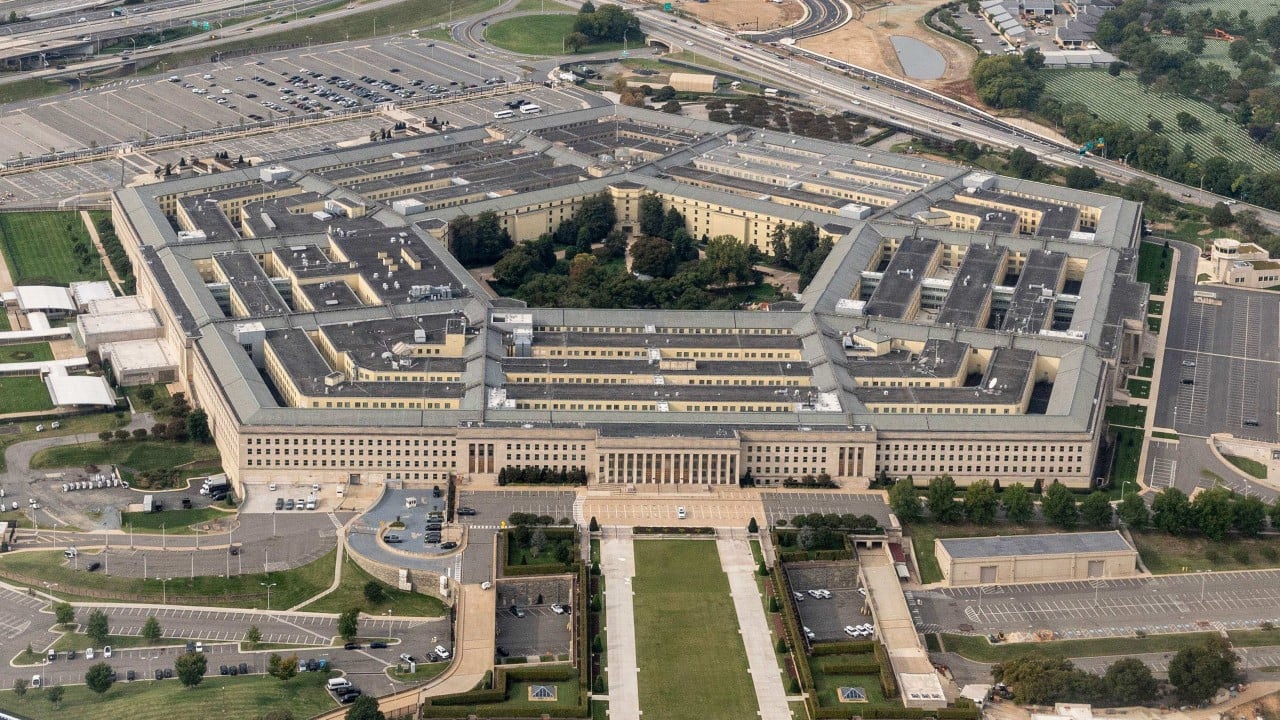
When the Pentagon publicly accuses a dismissed general officer of disclosing sensitive information, the event represents far more than an isolated personnel failure or a routine security breach. It exposes the friction between executive command authority, statutory classification frameworks, and the structural vulnerabilities inherent in senior military transitions. Standard news coverage typically frames these incidents around personality clashes or political intrigue, missing the underlying institutional mechanics that govern how high-level defense secrets move, how breaches are detected, and what happens when the chain of command fractures at the flag-officer level.
To understand the operational reality behind such accusations, one must examine the architecture of defense information control, the legal thresholds required to substantiate a leak allegation, and the institutional incentives driving public disclosure by the Department of Defense. If you enjoyed this piece, you might want to check out: this related article.
The Structural Architecture of Sensitive Defense Information
Defense information is not monolithic. In operational practice, the Pentagon categorizes sensitive material along two distinct axes: statutory classification and administrative control. Conflating these two categories is the primary error made in surface-level reporting.
Statutory Classification (Executive Order 13526)
Information classified as Confidential, Secret, or Top Secret is governed by strict legal criteria based on the measurable damage unauthorized disclosure would cause to national security. For a four-star or three-star general, daily decision-making relies almost entirely on Top Secret/Sensitive Compartmented Information (TS/SCI) and Special Access Programs (SAPs). Access to SAPs is granted on a strict "need-to-know" basis, separate from standard clearance levels. When a senior officer is relieved of command, their programmatic read-offs—formal debriefings that legally terminate access to specific compartments—occur immediately. However, operational knowledge retained in memory cannot be wiped by an administrative signature. For another perspective on this development, see the recent coverage from The New York Times.
Controlled Unclassified Information (CUI) and Deliberative Process Material
A significant percentage of high-level Pentagon "leaks" do not involve technical weapons specifications or intelligence sources and methods. Instead, they involve pre-decisional policy drafts, internal force-posture debates, or dissenting operational assessments. While not always bearing a Top Secret stamp, disclosing internal deliberative material violates non-disclosure agreements (NDAs), DoD Directive 5230.09 (Clearance of DoD Information for Public Release), and the Uniform Code of Military Justice (UCMJ).
The Transition Vulnerability Window
The risk profile of a senior officer changes radically at the exact moment of termination. During active command, a general operates within a hardened digital and physical ecosystem—using Secure Compartmented Information Facilities (SCIFs), SIPRNet (Secret Internet Protocol Router Network), and JWICS (Joint Worldwide Intelligence Communications System). Upon dismissal, the officer is abruptly severed from this infrastructure while retaining complete cognitive awareness of ongoing operational plans, force readiness gaps, and strategic vulnerabilities. The period between termination and formal retirement processing creates an acute counterintelligence vulnerability, particularly if the departure is contentious.
The Four Mechanisms of Leak Attribution
When the Department of Defense moves from internal investigation to public accusation, it rarely relies on guesswork. Attribution in modern defense networks follows a rigorous forensic and investigative sequence, typically led by the Defense Counterintelligence and Security Agency (DCSA), the service-specific criminal investigative organizations (such as Army CID, NCIS, or AFOSI), and the DoD Office of Inspector General (OIG).
Digital Forensics and Endpoint Auditing
Every document accessed on classified networks generates immutable metadata. User Activity Monitoring (UAM) systems track file opens, print jobs, and data transfers across SIPRNet and JWICS. If a specific operational slide deck or intelligence assessment surfaces in the media, investigators query the access logs. At the flag-officer level, the pool of individuals authorized to view high-level strategic assessments is exceptionally small—often fewer than twenty people. Narrowing the suspect pool is a matter of basic set theory rather than complex detective work.Canary Traps and Information Compartmentalization
When senior leadership suspects an ongoing leak from the upper echelons, counterintelligence teams deploy variation tracking, operationally known as canary traps. Different versions of a sensitive briefing document—containing subtle alterations in troop numbers, timeline estimates, or phrasing—are distributed to specific principals. When those exact metrics appear in a press report, the leak vector is mathematically isolated to a single recipient.Communication Pattern Analysis
While investigators cannot arbitrarily wiretap senior officers without judicial or FISA warrants, metadata analysis of government-issued devices and visitor logs at the Pentagon provides clear behavioral baselines. Sudden spikes in contact between a dismissed officer's personal channels and defense correspondents, juxtaposed against the publication timeline of sensitive details, establish probable cause for deeper subpoena-backed scrutiny.Pre-Publication Review Violations
Retired and dismissed general officers remain bound by lifetime non-disclosure agreements (Standard Form 312). Any public statement, op-ed, or book manuscript touching on defense matters must pass through the Defense Office of Prepublication and Security Review (DOPSR). Bypassing DOPSR and sharing operational details directly with third parties constitutes an immediate, verifiable breach of administrative protocol, independent of whether the underlying data was classified at the Top Secret level.
The Legal and Administrative Framework: UCMJ vs. Title 18
A critical distinction in any Pentagon leak accusation lies in the jurisdictional mechanism chosen for enforcement. Because a fired general officer typically holds a commission until formal retirement is approved by the Secretary of Defense (and, for three- and four-star officers, confirmed by the Senate regarding their retirement grade), they remain subject to military law.
The Uniform Code of Military Justice (UCMJ)
Under the UCMJ, prosecuting a senior officer for unauthorized disclosure does not require proving espionage or intent to harm the United States. Investigators can utilize:
- Article 92 (Failure to Obey Order or Regulation): Violating DoD security directives or NDAs carries severe administrative and punitive penalties without requiring proof of national security damage.
- Article 133 (Conduct Unbecoming an Officer and a Gentleman): A broad statutory tool used to penalize senior leaders whose actions compromise institutional integrity or good order and discipline.
- Article 134 (The General Article): Encompasses offenses prejudicial to good order and discipline, including the negligent handling or unauthorized release of sensitive defense materials.
Title 18 of the U.S. Code (The Espionage Act)
If the leaked material involves national defense information (NDI) and the disclosure was willful, the Department of Justice can pursue felony charges under 18 U.S.C. § 793. The evidentiary bar here is substantially higher. Prosecutors must demonstrate that the information was closely held by the government, that its disclosure could potentially damage the United States or aid a foreign adversary, and that the accused acted willfully. Because high-profile Espionage Act trials risk exposing even more classified material during discovery—a phenomenon known as "graymail"—the Pentagon frequently prefers administrative or UCMJ remedies over federal criminal indictment.
Grade Determination Boards
For a dismissed general, the most immediate financial and reputational consequence is not prison, but a Secretary of the Military Department Grade Determination Board. Under 10 U.S.C. § 1370, a general officer does not automatically retire at their highest held rank; they must have served "satisfactorily" in that grade. A substantiated accusation of leaking sensitive information triggers a review that can strip the officer of their third or fourth star upon retirement, resulting in a permanent reduction in pension payouts exceeding tens of thousands of dollars annually and a permanent stain on their service record.
Institutional Incentives Behind Public Accusations
Usually, the Pentagon handles senior officer misconduct behind closed doors to preserve public trust in the apolitical nature of the military. When the department takes the extraordinary step of publicly accusing a fired general of leaking sensitive information, specific institutional incentives are at play.
Deterrence Across the Senior Ranks
Civil-military relations depend on strict adherence to the chain of command. When a high-profile firing occurs—whether due to policy disagreements, loss of confidence, or operational failures—other senior officers observe how the institution responds. A public accusation serves as a stark warning to the broader flag-officer corps: dissent must remain internal, and taking institutional grievances to the press after dismissal will trigger aggressive retaliation.
Narrative Control and Preemptive Inoculation
When a dismissed general possesses damaging information regarding executive decision-making, resource shortages, or strategic miscalculations, that officer holds substantial narrative power. By publicly branding the officer as a leaker of sensitive information before or immediately after those details surface, the Pentagon shifts the public debate from the substance of the leaked policy critique to the legality and ethics of the disclosure itself. It reframes a potential whistleblower or dissenting strategist as an untrustworthy security risk.
Allied Reassurance
Modern military operations rely on intelligence-sharing alliances, most notably the Five Eyes partnership (United States, United Kingdom, Canada, Australia, New Zealand) and NATO. When senior U.S. commanders appear to be leaking sensitive operational details, foreign intelligence services become reluctant to share raw intelligence with Washington. A public, aggressive stance by the Pentagon signals to international partners that the U.S. defense establishment takes compartment security seriously, regardless of rank.
Limitations of the Pentagon's Deterrence Model
While the Department of Defense possesses overwhelming legal and investigative tools to punish unauthorized disclosures, its containment strategy faces severe structural limitations when applied to senior commanders.
First, the classification system suffers from chronic over-classification. Because defense officials routinely stamp routine operational updates and politically inconvenient assessments as Secret or Top Secret, the moral authority of the classification system is diluted. Senior officers who have spent decades operating inside the system often view unauthorized disclosures of policy debates not as treason, but as necessary corrections to flawed civilian or military leadership. Administrative threats rarely deter individuals who believe they are acting out of institutional duty.
Second, prosecuting senior officers creates severe political and operational blowback. Dragging a former general through a court-martial or federal trial guarantees months of media scrutiny, forces active-duty leaders to testify under oath about internal deliberations, and risks exposing the exact intelligence sources the Pentagon aims to protect. Consequently, the threat of maximum legal punishment is often a bluff; most cases resolve through quiet administrative reprimands, security clearance revocations, and quiet retirements at a reduced grade.
Third, information velocity outpaces investigative timelines. A digital leak takes seconds to execute and minutes to propagate globally. By contrast, a formal DoD Inspector General or counterintelligence investigation takes between six and eighteen months to reach a substantiated conclusion. By the time the Pentagon can legally prove the leak and impose sanctions, the strategic damage to ongoing operations or diplomatic negotiations has already occurred and cannot be reversed.
Strategic Forecast and Operational Imperatives
The public collision between Pentagon leadership and a dismissed general officer signals a breakdown in internal civil-military conflict resolution. As defense operations become increasingly reliant on real-time information dominance and fragile coalition alignments, the tolerance within the Department of Defense for post-termination disclosures will drop to zero.
For defense leadership and institutional risk managers, mitigating this vulnerability requires shifting from reactive punishment to structural containment:
- Implement Immediate Cognitive Offboarding Protocols: Security debriefings for relieved flag officers must go beyond signing Standard Form 312. Legal counsel and counterintelligence officers must conduct itemized, program-by-program reviews with the departing officer, explicitly mapping which active operational plans remain under strict statutory embargoes and establishing clear timelines for when those compartments expire.
- Decouple Policy Dissent from Operational Security: Senior commanders resort to external leaks when internal channels for registering formal operational dissent are blocked or ignored. Institutionalizing protected, documented dissent mechanisms—allowing theater commanders to formally record strategic objections directly into the National Security Council record without career reprisal—removes the primary psychological driver behind unauthorized disclosures.
- Enforce Automatic Grade-Review Triggers: Rather than treating retirement grade reductions as discretionary political tools, defense policy should mandate automatic grade-determination reviews whenever a substantiated DOPSR or NDA violation occurs within twenty-four months of leaving command. Removing discretion makes the financial penalty predictable, automatic, and entirely detached from political narratives.
Ultimately, the Pentagon's accusation is a symptom of a deeper systemic strain: when senior military leaders lose faith in internal decision-making channels, classification firewalls alone cannot contain the fallout.