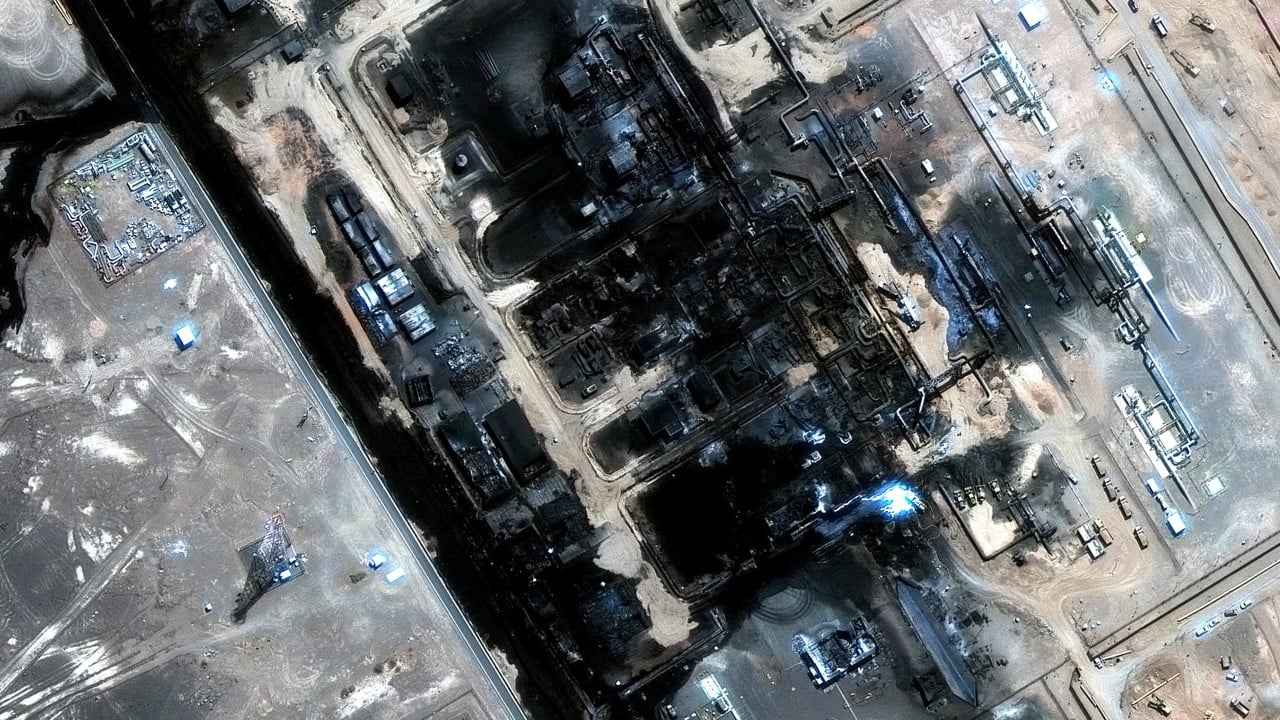
The physical security of international crude flows depends entirely on system redundancies that assume localized disruptions rather than synchronized infrastructure targets. When state-backed or proxy actors successfully interdict primary overland trunk lines, the structural deficit propagates instantaneously through regional refining margins. The Saudi Aramco decision to halt October crude allocations to specific European refiners following drone impacts on the East-West pipeline illustrates the fragility of modern hydrocarbon logistics when maritime and overland bypass routes face simultaneous constraints.
The Dual-Artery Architecture and Redundancy Collapse
Saudi Arabia's export architecture relies on a binary routing logic designed to mitigate single-point-of-failure risks in the Persian Gulf. Meanwhile, you can explore similar developments here: The Myth of Beijing Panic: Why China Welcomes the American Whirlwind.
[Eastern Province Fields (Abqaiq)]
       |
       +---> Maritime Route: Strait of Hormuz ---> Global Export
       |
       +---> Overland Route: East-West Pipeline (Petroline) ---> Red Sea (Yanbu)
The primary maritime vector forces tankers through the Strait of Hormuz, a narrow geographic chokepoint vulnerable to regional state actions and naval blockades. To bypass this bottleneck, the Kingdom constructed the 1,200-kilometer East-West Pipeline (Petroline), connecting Abqaiq in the Eastern Province to the Red Sea terminal at Yanbu. Petroline possesses a designed capacity of approximately 7 million barrels per day, moving roughly 4 to 5 million barrels daily prior to the outage.
The structural vulnerability exposed by the recent drone strikes lies in the simultaneous degradation of both vectors. When regional conflicts impede free passage through the Strait of Hormuz, Petroline transitions from a strategic secondary option to the primary load-bearing artery for European-bound crude. An operational shutdown of the pipeline eliminates this redundancy. Saudi Aramco faces an immediate routing crisis: crude trapped in the eastern fields cannot move westward, and maritime evacuation options through the Gulf remain constrained by concurrent geopolitical hostility. To see the bigger picture, check out the excellent article by Bloomberg.
The Refiner Cost Function and Regional Allocation Shocks
Long-term supply contracts (term contracts) between national oil companies and European refiners operate on strict volume guarantees tied to specific loading schedules and official selling prices (OSPs). When an infrastructure failure interrupts pipeline feeds to export terminals like Yanbu or Sidi Kerir (via the SUMED pipeline integration), producers must choose between three sub-optimal capital allocation strategies:
- Force Majeure and Allocation Zeroing: Canceling scheduled liftings outright, protecting physical inventory at the expense of downstream client relationships.
- Spot Market Re-routing: Sourcing alternative barrels from uncompromised storage hubs or utilizing costly ship-to-ship (STS) transfers (such as operations off Oman’s Sohar port).
- Margin Absorption: Compensating affected buyers by offering spot cargoes at steep discounts relative to official selling prices once partial infrastructural capacity returns.
European refiners—particularly complex configurations in the Mediterranean designed for specific Middle Eastern sour grades (Arab Light, Arab Medium, and Arab Heavy)—cannot substitute these feedstocks instantly. North Sea Brent-linked crudes or West African sweet grades present technical incompatibilities that reduce refinery throughput efficiency and compress cracking margins. Consequently, an upstream pipeline outage shifts the economic burden directly onto the downstream sector, forcing plant operators to either idle distillation units or secure spot replacement barrels at inflated market premiums.
Tactical Mitigation Mechanisms and Market Rebalancing
National oil companies mitigate structural export losses through operational agility rather than immediate structural fixes. When pumping stations suffer physical damage, repair timelines dictate the duration of the market shock. Initial triage involves diverting unaffected crude volumes via maritime alternatives, utilizing secondary storage inventories in Egypt, and recalibrating spot offerings.
As partial pipeline capacity returns—accompanied by discounted spot allocations from terminals like Sidi Kerir or Yanbu—differential pricing structures rebalance. Incremental spot supply dampens regional price spikes, normalizing term contract executions for subsequent production cycles. However, the underlying risk premium remains embedded in forward curves because the incident proves that overland infrastructure is as susceptible to asymmetric aerial threats as maritime tanker lanes.
Prioritize capital expenditure toward subterranean pipeline hardening and decentralized tactical storage buffers at strategic Red Sea discharge points to decouple export continuity from surface-level infrastructure vulnerabilities.