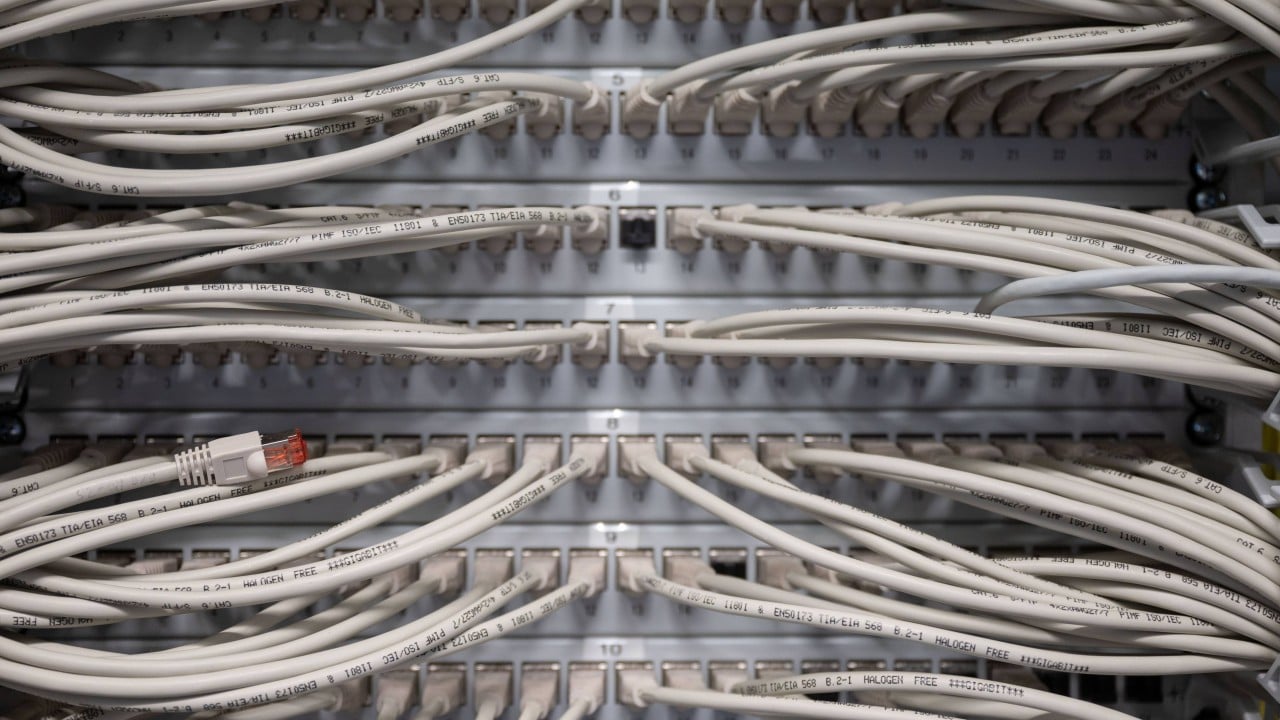
America’s largest hyperscale data centers are consuming electricity on a scale that matches entire sovereign nations, turning digital infrastructure into one of the fastest-growing sources of carbon emissions in the United States. While tech executives promise carbon neutrality, the physical reality on the electrical grid tells a different story. Driven by artificial intelligence training clusters and nonstop cloud expansion, single facilities now demand hundreds of megawatts of continuous power—forcing utility companies to delay the retirement of coal plants and build new natural gas turbines just to keep the servers from going dark.
The cloud was never weightless. For two decades, the technology industry sold the public on an illusion of clean, ethereal computing, where files floated in some abstract digital ether rather than sitting on racks of silicon humming inside windowless concrete warehouses. That illusion has collapsed under the weight of modern compute demands. When a single campus draws as much electricity as a mid-sized city or a developing nation, the environmental bill comes due in megatons of carbon dioxide and billions of gallons of evaporated water. Expanding on this theme, you can find more in: What Most People Get Wrong About Big Money and Existential Risks.
The Physics Behind the Power Surge
To understand why emissions from American data centers are climbing so sharply, you have to look at the hardware inside the racks. Traditional cloud computing—hosting websites, streaming video, storing corporate databases—relied on central processing units that sipped power relatively efficiently and experienced predictable peaks and troughs throughout the day. Modern artificial intelligence has broken that model entirely.
Training and running large foundation models requires tens of thousands of specialized graphics processing units wired together in tight clusters. Unlike standard servers, these chips run near maximum thermal capacity for weeks or months at a time without pause. A standard server rack a decade ago might have drawn 5 to 7 kilowatts of power. Today, high-density AI racks routinely pull 40 to 100 kilowatts, and next-generation liquid-cooled configurations are pushing past 120 kilowatts per cabinet. Observers at Gizmodo have also weighed in on this situation.
Power goes in. Heat comes out. Every watt of electricity fed into a processor eventually converts into thermal energy that must be stripped away before the silicon melts.
This creates a compounding energy penalty known in the industry through a metric called Power Usage Effectiveness, or PUE. A PUE of 1.0 would mean every single watt entering the building goes directly to computing. In practice, operators spend massive amounts of additional electricity running industrial chillers, pumps, fans, and uninterruptible power supplies. Even efficient facilities lose between 10 and 20 percent of their total power draw just to keeping the building cool and conditioning the electrical current. When you multiply that overhead across a 300-megawatt campus, the cooling system alone consumes enough electricity to power tens of thousands of suburban homes.
Why Carbon Accounting Hides the Real Emissions
If you read corporate sustainability reports from the largest cloud providers, you would think these facilities run almost entirely on sunshine and wind. Tech giants routinely claim they match 100 percent of their annual electricity consumption with renewable energy. On paper, the math works. In the physical grid, it is largely an accounting trick.
The discrepancy comes down to how Renewable Energy Certificates and power purchase agreements operate. A tech company can build a massive data center in Northern Virginia—a region heavily reliant on natural gas and coal—while buying solar credits generated in Texas or wind credits from Iowa. At the end of the year, the company subtracts the clean megawatt-hours generated in the Midwest from the dirty megawatt-hours burned in Virginia and declares the facility carbon neutral.
Electrons do not travel from a wind farm in Amarillo to a server rack in Ashburn, Virginia. The physical data center pulls whatever power is spinning on the local transmission lines at that exact second. Because data centers require flat, uninterrupted 24/7 baseload power—and because wind and solar fluctuate with the weather—local utilities must keep fossil fuel generators spinning on standby to balance the load.
Consider a hypothetical example of how this plays out at 2:00 AM on a windless Tuesday in July. Solar panels across the region are producing zero power, and wind turbines are barely turning. Yet a 200-megawatt AI training cluster inside a data center continues drawing maximum current without a millisecond of interruption. To prevent voltage drops across the regional grid, the local utility ramps up combined-cycle natural gas turbines and legacy coal units. The data center operator still claims green status because its solar farm generated excess power at noon the previous day, even though its nighttime operations were powered almost entirely by fossil fuels.
The Diesel Backup Problem
Beyond daily grid consumption lies a quieter, hyper-local source of pollution that rarely makes headlines. Every major data center is legally and operationally required to maintain days of backup power in case the main electrical grid fails. For almost every facility in the United States, that backup comes in the form of massive rows of industrial diesel generators.
A single hyperscale campus can house between 50 and 150 multi-megawatt diesel engines, each backed by underground storage tanks holding tens of thousands of gallons of fuel. While these generators rarely run during actual blackouts, federal and state regulations require operators to test them regularly—often monthly—to ensure they will fire up in an emergency. During routine maintenance cycles, testing blocks of these engines releases concentrated plumes of nitrogen oxides, particulate matter, and carbon dioxide directly into surrounding neighborhoods. Air quality regulators in Northern Virginia and Oregon have repeatedly flagged data center generator permits as major contributors to local smog precursors, turning quiet suburban corridors into industrial emissions zones.
Grid Bottlenecks and the Return of Fossil Fuels
The sheer speed of data center construction has blindsided regional grid operators. Building a massive server warehouse takes 18 to 24 months. Building high-voltage transmission lines, substations, and utility-scale power plants takes seven to ten years. That mismatch has created an acute power crunch across America’s primary data center hubs.
In Virginia’s Data Center Alley—Loudoun and Prince William counties—data centers now consume roughly a quarter of the entire state’s electricity supply. Dominion Energy, the regional utility, has struggled to build transmission lines fast enough to keep pace with connection requests. Similar bottlenecks have hit Silicon Valley, Phoenix, Dallas, and Columbus, Ohio.
Faced with sudden, massive spikes in demand, utilities have abandoned long-standing decarbonization timelines. Across the Midwest and Southeast, power companies have postponed the scheduled closures of aging coal-fired power plants specifically to maintain grid reliability for incoming tech campuses. Elsewhere, utilities are fast-tracking dozens of new natural gas plants, locking in decades of future carbon emissions to satisfy immediate compute shortages.
Some tech operators have grown tired of waiting in utility interconnection queues altogether and are turning to behind-the-meter generation. Instead of drawing power from the public grid, developers are striking deals to build dedicated natural gas power plants directly adjacent to data center campuses, or tapping directly into existing nuclear reactors before the electricity ever reaches the public transmission network. While nuclear co-location avoids direct carbon emissions, siphoning existing clean baseload power away from the public grid forces utilities to burn more fossil fuels to serve residential and commercial customers who were previously powered by that nuclear plant.
The Water Footprint Nobody Measures
Carbon emissions are only half of the environmental ledger. Keeping millions of high-wattage processors from overheating requires staggering quantities of water, often in regions already suffering from severe drought.
Most large data centers rely on evaporative cooling towers. Warm water from the server halls is pumped to the roof and sprayed over giant pads while fans blow air across them. As a portion of the water evaporates, it pulls heat out of the remaining water, which is then recirculated back down to cool the racks. It is cheap and thermally effective, but it destroys the water supply. Roughly 80 percent of the water fed into an evaporative cooling system disappears into the atmosphere as steam, never returning to the local watershed.
A single large data center can evaporate between one million and five million gallons of potable municipal water every single day. Multiply that across dozens of facilities clustered in water-stressed regions like Maricopa County, Arizona, or the Salt Lake Valley in Utah, and the municipal impact becomes severe.
Tech companies have responded to public pushback by shifting toward closed-loop liquid cooling systems, which circulate coolant directly over hot chips without evaporating water into the air. That solves the water problem on site, yet it introduces a classic engineering trade-off. Closed-loop chillers require significantly more electricity to reject heat into warm ambient air than evaporative towers do. Saving water in the desert directly increases electricity consumption—and therefore carbon emissions—at the power plant.
The Counter-Argument Efficiency Gains vs Jevons Paradox
Defenders of the industry argue that focusing on raw power consumption misses the bigger picture. They point out that modern hyperscale facilities are vastly more efficient than the fragmented, poorly cooled corporate server closets they replaced. Fifteen years ago, thousands of companies ran their own inefficient on-premise data centers operating at a PUE above 2.0. Consolidating that workload into modern hyperscale warehouses cut the energy required per unit of computation by orders of magnitude.
Furthermore, proponents argue that artificial intelligence and cloud analytics will ultimately reduce global emissions by optimizing supply chains, discovering new battery materials, predicting extreme weather, and managing smart electrical grids more efficiently.
Both points contain truth, yet both ignore a fundamental economic law known as Jevons Paradox. First observed during the 19th-century coal boom, the paradox states that as technological progress increases the efficiency with which a resource is used, total consumption of that resource rises rather than falls because falling costs unlock massive new demand.
Every time chipmakers double compute efficiency per watt, software engineers respond by building models ten times larger. Making computation cheaper and faster has not reduced total electricity demand; it has triggered an exponential explosion in usage. Promises that AI will eventually solve climate change remain speculative, while the megatons of carbon being pumped into the atmosphere today to train those models are immediate, measurable, and cumulative.
What Actually Forces Change
Voluntary corporate pledges will not rein in data center emissions because competitive pressure in the AI arms race overrides sustainability targets every time. When market survival depends on deploying the largest compute cluster first, executives will sign whatever power contract gets servers online fastest, regardless of the carbon intensity.
Real decarbonization requires structural changes in how power is bought, regulated, and metered:
- 24/7 Hourly Carbon-Free Matching: Replacing annual renewable energy credits with strict hourly accounting forces tech companies to match their electricity consumption with carbon-free generation on the same local grid during the exact hour the power is burned. This drives real investment in utility-scale battery storage, geothermal energy, and grid upgrades rather than cheap paper offsets.
- Mandatory Emissions and Water Disclosure: Most states still treat data center water usage and localized emissions data as proprietary trade secrets. Requiring facility-level public reporting of hourly power draw, backup generator runtime, and municipal water consumption removes the veil of secrecy and allows local regulators to price externalities accurately.
- Grid Interconnection Reform: Utilities must require large-load customers to fund upfront transmission upgrades and bring new, dispatchable clean generation onto the grid before approving multi-hundred-megawatt hookups, preventing tech giants from cannibalizing existing clean power or forcing ratepayers to subsidize fossil fuel extensions.
- Heat Reuse Mandates: In colder climates, waste heat captured from liquid-cooled server racks can be piped directly into municipal district heating networks to warm nearby homes, greenhouses, and commercial buildings—a standard practice in parts of Northern Europe that remains virtually nonexistent in the United States.
Until regulators tie data center expansion directly to verifiable, local, round-the-clock clean power generation, the digital economy will continue to run on an analog fossil fuel backbone. Every prompt, every cloud backup, and every automated video stream carries a physical weight measured in tons of coal and cubic feet of natural gas burned miles away out of sight.