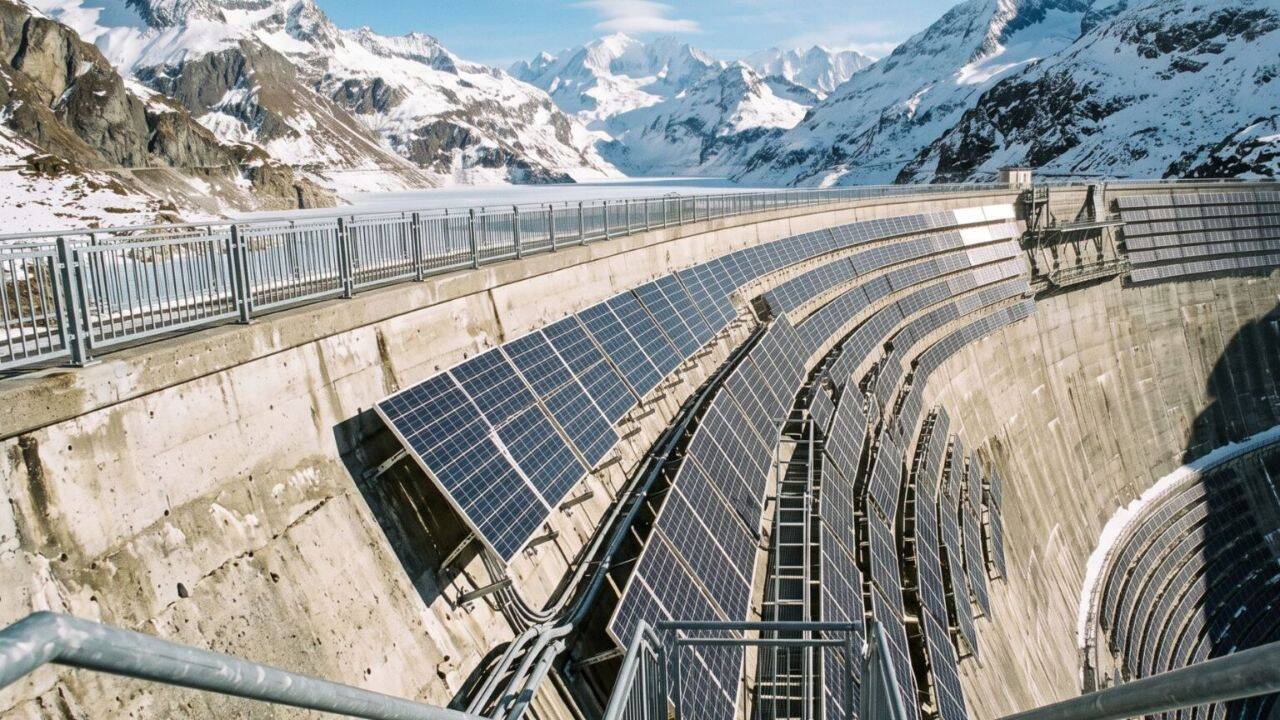
The tech media is currently swooning over a glossy press release: 5,000 solar panels bolted to an Alpine dam wall or a jagged peak, supposedly pumping out three times more winter electricity than their flatland cousins. The narrative is neat. The cold air keeps the silicon chilled and highly conductive. The pristine white snow acts as a massive natural mirror, bouncing sunlight back onto the panels via the albedo effect.
It sounds like a clean-energy fairy tale. It is actually an engineering disaster, an economic joke, and an environmental tragedy wrapped in a green public relations bow.
For years, I have analyzed utility-scale energy projects and watched developers burn through millions of dollars in capital just to prove they can defy gravity. High-altitude solar is the latest iteration of this ego-driven folly. The physics of snow reflection are real. The economics of building and maintaining high-voltage infrastructure on a frozen vertical cliff face are completely detached from reality.
If we want to decarbonize the grid, we need massive, cheap, reproducible power. Alpine solar is none of these things. It is expensive boutique engineering masquerading as a systemic solution.
The Alpine Mirage: Deconstructing the "3x" Winter Claim
The headline claim of the alpine solar lobby is that high-altitude plants generate up to three times more electricity during the winter months than lowland systems. Let's look at the actual physics.
Yes, snow has an albedo coefficient of up to 0.85, meaning it reflects up to 85% of solar radiation. Yes, solar panels operate more efficiently at colder temperatures; the temperature coefficient of silicon means efficiency drops by roughly 0.4% for every degree Celsius above $25^\circ\text{C}$, so freezing alpine air does keep the panels in their sweet spot.
But these theoretical lab conditions ignore the practical realities of high-altitude meteorology.
The Snow Cover Problem
Snow does not just sit neatly on the ground acting as a mirror. It falls from the sky. It drifts. It sticks.
When a blizzard hits an alpine array, the panels do not benefit from reflection; they are buried under three feet of heavy, wet snow. To slide the snow off, panels must be mounted at incredibly steep angles—often near-vertical (60 to 75 degrees). While this helps shed snow, it severely limits the total surface area you can pack into a given footprint without the front rows casting massive shadows on the back rows.
If you do not clear the snow, you get zero power. If you wait for the wind to clear it, you are at the mercy of unpredictable weather. If you install active heating elements to melt the ice, you end up consuming a massive chunk of the electricity you just generated.
Extreme Weather Degradation
An alpine peak is not a friendly environment for sensitive electrical equipment. You are exposing glass, aluminum, and copper to:
- Rime ice accumulation: Ice that freezes instantly on impact, weighing down structures and snapping mounts.
- Avalanche risks: Requiring millions of dollars in heavy-duty steel barriers and specialized anchoring systems driven deep into granite.
- High-velocity winds: Alpine winds regularly exceed 150 km/h, requiring ultra-thick glass and reinforced framing that doubles the weight and cost of the panels.
The Brutal Economics of Helicoptering Concrete
To understand why alpine solar is a financial black hole, you have to look at the Levelized Cost of Energy (LCOE).
In a flat desert or a rolling field, building solar is incredibly boring. Flatbed trucks roll in, pile-drivers ram steel posts directly into the dirt, and low-cost laborers clip panels into place. The capital expenditure (CapEx) is rock bottom.
Now, let's look at what it takes to build a 5,000-panel array at 2,500 meters above sea level:
| Cost Component | Lowland Utility Solar | Alpine Peak Solar |
|---|---|---|
| Site Preparation | Minimal grading, easy truck access | Heavy rock drilling, avalanche deflector construction |
| Logistics | Standard flatbed trucks | Specialized heavy-lift helicopters (e.g., Kamax or Super Puma) costing up to $10,000 per flight hour |
| Foundation Work | Driven steel piles ($10–$20 per post) | Concrete foundations poured into hand-drilled granite sockets |
| Labor Costs | Standard local contracting rates | Specialized high-altitude technicians, mountaineers, and safety riggers |
| Transmission | Short connection to existing medium-voltage lines | Miles of underground armored cable laid through solid rock |
To get a single ton of concrete, steel, or silicon up to an alpine peak, you must fly it up. A heavy-lift helicopter can carry about two to four tons per trip. A single megawatt of solar requires roughly 50 to 80 tons of structural materials. The carbon footprint of the aviation fuel burned just to construct these "green" mountain arrays is an awkward truth developers prefer to leave out of their promotional videos.
The Grid Connection Nightmare
Generating electricity is only half the battle. You have to get that power to the people who actually use it. High-altitude peaks are, by definition, far away from industrial centers and major cities.
This brings us to the grid connection bottleneck. Power lines built in mountain passes are highly vulnerable to storms, falling rocks, and ice loads. If you want to run the cables underground to protect them, you have to trench through solid alpine granite. The cost of trenching a single mile through mountainous rock can easily exceed the entire cost of the solar panels themselves.
Furthermore, high-voltage transmission over long distances suffers from resistance losses. By the time that "triple-efficiency" winter alpine electron travels down the mountain, through the valleys, and into an urban grid, a significant portion of its energy has been lost as heat in the wires.
Dismantling the "People Also Ask" Consensus
When people search for information on alpine solar, they are often fed a diet of optimistic industry talking points. Let's answer these common queries with brutal honesty.
Does solar work better in the mountains?
On a purely physical, panel-by-panel level during a clear winter day, yes. The combination of high elevation (less atmospheric filtering of UV light), cold temperatures, and snow reflection increases instantaneous power output.
But on a system level, no. The increased output is offset by massive transmission losses, frequent weather-induced outages, heavy snow-shading, and astronomical maintenance costs. A panel that is 20% more efficient but costs 400% more to install and maintain is a massive net loss.
Can alpine solar solve Europe's winter energy gap?
Absolutely not. The winter energy gap in northern and central Europe is measured in tens of gigawatt-hours. To plug this gap with alpine solar, you would need to cover entire mountain ranges with industrial glass and steel.
The logistical constraints make scaling this technology impossible. There are not enough heavy-lift helicopters, specialized high-altitude workers, or investment dollars on earth to build alpine solar at a scale that would make a dent in national energy grids.
Is alpine solar environmentally friendly?
This is perhaps the biggest lie of all. The alpine ecosystem is incredibly fragile. High-altitude flora and fauna live on a knife-edge.
Building these arrays requires blasting rock, pouring tons of carbon-intensive concrete into pristine soils, and disrupting wildlife habitats. Helicopters screaming through mountain valleys during construction shatter the peace of local ecosystems. To call this "environmentally friendly" is greenwashing of the highest order.
The Real Alternative: Where the Capital Should Actually Go
Am I saying we should stop building solar? Of course not. Solar is one of the cheapest, most reliable forms of new energy generation on earth—when you build it in the right places.
If you have $50 million to spend on clean energy, you have two choices:
- The Alpine Vanity Project: Build a 2-megawatt solar array on a Swiss peak. It will look beautiful in photographs, generate a high-profile puff piece in tech magazines, and produce highly expensive winter power that barely covers the cost of the helicopter flights needed to repair the first winter's wind damage.
- The Boring Flatland Reality: Build a 30-megawatt tracker array in an industrial wasteland, a dry agricultural valley, or over existing parking lots. It will not have the benefit of snow albedo, but it will produce fifteen times more total annual energy, cost a fraction of the price to maintain, connect directly to existing urban grids, and require zero helicopter flights.
If we want to address winter energy deficits, we do not need solar panels on peaks. We need to invest that capital into over-building lowland wind power—which naturally peaks in winter—and scaling up long-duration pumped hydro storage in existing mountain reservoirs, without turning the peaks themselves into industrial parks.
The obsession with high-altitude solar is driven by a desire for a visual spectacle. It is a monument to green hubris. It is time to stop building monuments and start building practical, unglamorous, cost-effective energy infrastructure where it actually belongs: on the ground.