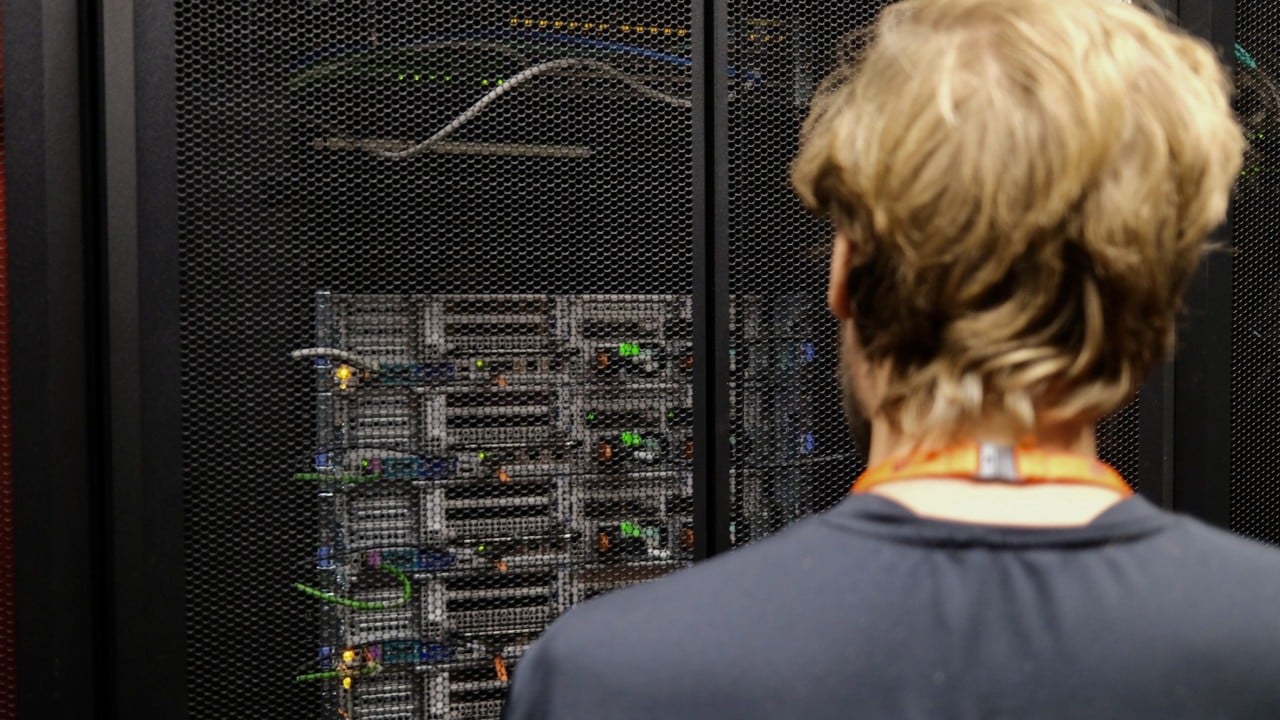
The lazy consensus in Washington and Beijing is simple. Write a treaty, hand the compliance keys to agile software startups, and let algorithms verify that neither side is training unauthorized models on hidden server clusters. It is a comforting narrative. It assumes that software can police software, that code can inspect code, and that bureaucratic agreements can outpace silicon evolution.
It is completely, dangerously wrong.
I have spent the last decade watching policy wonks try to slap international arms control frameworks onto digital infrastructure built for exponential scaling. They want to treat neural network weights like nuclear warheads. They want to count chips the way inspectors count uranium centrifuge tubes. They treat verification as a logistics problem.
It is not a logistics problem. It is an architectural impossibility.
Startups pitching cryptographic auditing tools to governments are selling snake oil to people who do not know how a forward pass works. You cannot inspect a black box by asking it nicely to prove it is honest. Let us tear apart why the current rush toward verification startups is a monumental waste of capital and how the race for artificial intelligence supremacy will actually be fought.
The Mirage of Algorithmic Transparency
The core fallacy of the verification movement is the belief in zero-knowledge proofs and hardware enclaves as diplomatic silver bullets. The pitch goes like this: a company or a sovereign state can run its training runs inside a secure, tamper-proof hardware bubble, and cryptographic proofs will verify compliance without exposing proprietary secrets.
This sounds brilliant in a venture capital pitch deck. In practice, it collapses under the weight of hardware control.
When a superpower controls its own domestic semiconductor supply chain, foreign auditors lose all leverage. If a government decides to bypass secure enclaves, it can simply etch custom logic directly onto silicon wafers in a domestic fabrication plant that no foreign entity will ever set foot inside. You cannot audit silicon at the atomic level across hostile borders.
Furthermore, training runs do not look like secret laboratories. They look like electricity consumption, cooling fluid flow, and minor variations in regional power grids. If a state wants to hide a cluster, it buries it underground, taps a dedicated hydroelectric dam, and obfuscates network traffic. Startups building software wrappers for cloud clusters cannot audit infrastructure they cannot see, on hardware they did not manufacture, powered by grids they cannot monitor.
The Open Source Escape Hatch
Another favorite delusion of the treaty crowd is that we can somehow lock up open source development. They point to centralized frontier labs as the control points of the industry. If we regulate the top five players, the logic goes, we have secured the ecosystem.
This ignores the fundamental democratization wave happening right now. Weights leak. Architectures get published on arXiv within hours of discovery. Fine-tuning an open-weight model on cheap hardware requires a fraction of the capital used to pre-train the original base model.
Imagine a scenario where two governments sign a binding bilateral agreement capping compute clusters at ten thousand specialized accelerators. Within forty-eight hours, distributed developer networks around the globe begin optimizing smaller, highly efficient mixtures-of-experts architectures that match frontier performance at one-tenth of the compute cost.
The regulators are looking at the heavy artillery while the entire battlefield has shifted to guerrilla warfare. You cannot verify a treaty when the weapon can be compiled on a laptop in a basement. The tooling being built by compliance startups is designed for an industrial era of computing that ended the moment open-weight models reached parity with proprietary APIs.
The Wrong Questions Everyone Is Asking
Policy forums and tech blogs are currently obsessed with a specific set of questions. Let us look at them and dismantle them honestly.
Can we watermark generated content to prove origin?
No. Watermarking text, audio, or video at the generation level is mathematically fragile. It can be stripped out by a secondary open-source model running locally in a few milliseconds. Relying on provenance markers for national security is like locking your front door with a piece of string.
Will international oversight committees prevent an escalation spiral?
No. Oversight committees move at the speed of diplomacy. Algorithms move at the speed of hardware clocks. By the time a committee drafts a subpoena to investigate an anomalous compute spike, the target model has already completed its fine-tuning run and deployed via an encrypted peer-to-peer network.
Are hardware export controls enough to maintain a technological moat?
Temporarily, yes. Permanently, no. Export controls do not stop innovation; they merely force architectural efficiency. When hardware is scarce, researchers invent better algorithms to do more with less. Restricting high-end accelerators has historically backfired by forcing competitors to master optimization techniques that make them less dependent on raw hardware scale in the long run.
What Actually Happens Next
If compliance startups and bilateral treaties are dead ends, what does the future look like?
The reality is that technological dominance is zero-sum, and superpowers know it. Instead of relying on software startups to audit their rivals, governments are shifting toward infrastructure resilience, domestic semiconductor autarky, and offensive cyber deterrence.
We are moving away from the illusion of mutual verification and straight into a posture of continuous, high-stakes reconnaissance. Intelligence agencies are no longer looking for compliance certificates; they are mapping supply chains, tracking specialized chemical shipments for cooling systems, and monitoring power grid anomalies.
The companies wasting millions of dollars trying to build enterprise verification software for international treaties are solving for a world that does not exist. They are trying to write traffic laws for a supersonic jet race.
Stop funding compliance theatre. Start building resilience.