Five years. That is how long the international news cycle has managed to largely look away while an entire population gets slowly starved of its basic rights, its economy, and its daily bread. When the Taliban rolled back into Kabul in August 2021, cameras flashed, pundits argued, and analysts predicted immediate economic ruin. Then the spotlight dimmed.
Yet reality didn't pause because the cameras left. Millions of Afghans wake up every single day facing a humanitarian disaster of catastrophic proportions. Women are erased from public life, children go to sleep with empty stomachs, and an entire generation of girls is locked out of secondary schools and universities. If you think the situation stabilized after the initial chaotic evacuation, you are deeply mistaken.
The Economic Freefall Nobody Talks About
Afghanistan did not just experience a political regime change; it suffered an immediate, brutal financial amputation. Overnight, billions in foreign central bank reserves were frozen. International aid, which previously accounted for roughly three-quarters of the public expenditure, dried up like a puddle in July.
Prices for wheat, cooking oil, and fuel skyrocketed past the purchasing power of average households. People started selling their household furniture just to buy flour. Some families took desperate measures, selling their livestock or even their personal belongings piece by piece.
The banking sector stalled. Salaries stopped flowing to civil servants, doctors, and teachers. When teachers don't get paid, schools close. When doctors don't get paid, hospitals run out of basic medicines. The collapse wasn't a sudden explosion; it was a slow-motion crushing of everyday survival mechanisms.
The Systematic Erasure of Women
You cannot rebuild a society while locking half of it inside four walls. The current administration in Kabul promised a moderate approach early on. That promise evaporated almost immediately.
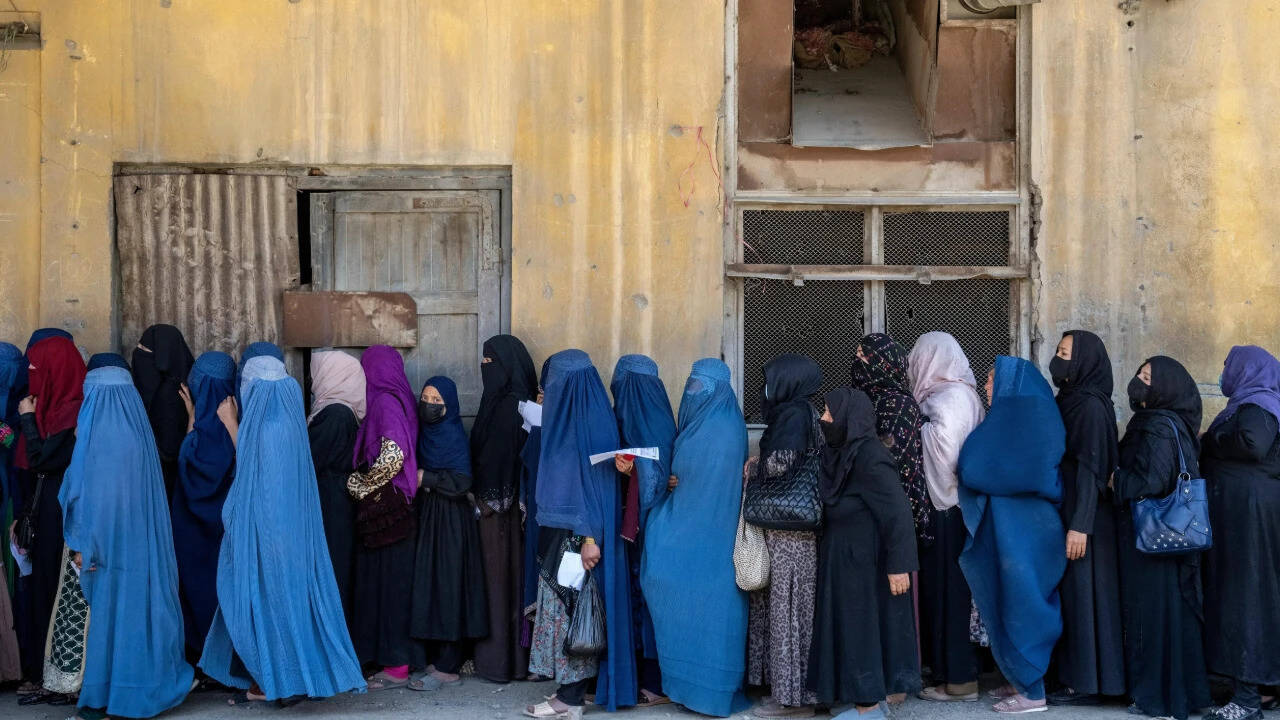
Women have been systematically stripped of their right to work in almost all sectors, barring a few essential health roles and primary education slots. Offices, beauty salons, NGOs, and public spaces emptied of female employees. The economic impact of this exclusion is devastating. According to estimates by the United Nations Development Programme, restrictions on female labor have lopped billions off the country's potential gross domestic product.
Think about what that means on the ground. Widows who are the sole breadwinners for their children suddenly find themselves legally barred from earning a living. Female entrepreneurs who spent a decade building small tailoring shops or tech startups had to lock their doors permanently.
It is not just about employment. It is about dignity, safety, and basic humanity. Teenage girls are denied education beyond the sixth grade. That means millions of future doctors, engineers, scientists, and leaders are being forced into educational stagnation.
Hunger as a Daily Reality
Numbers in humanitarian reports often blur together, but let's look at the raw facts compiled by the World Food Programme. Over half the population relies on humanitarian food assistance just to get through the month. Acute malnutrition rates among young children remain dangerously high.
Climate shocks have made things infinitely worse. Afghanistan is on the frontlines of global climate change, suffering through recurring, brutal droughts. Wells dry up. Crops fail. Farmers who have worked the same arid land for generations watch their harvests turn to dust.
When you combine a shattered national economy, international isolation, and severe climate shocks, you get a population trapped in a corner. Parents routinely skip meals so their children can eat a small portion of rice or flatbread.
Why Turning Away Fails Everyone
It is easy to suffer from compassion fatigue. The world has wars in Europe, conflicts in the Middle East, and domestic economic pressures at home. Looking away from Afghanistan feels convenient.
It also fails strategically. Ignoring a humanitarian catastrophe of this magnitude creates a breeding ground for desperation, extremism, and mass migration waves that ripple across borders. More importantly, it abandons millions of brave citizens—journalists, activists, teachers, and ordinary people—who fought for decades to build a more open society.
We need to keep the spotlight on. That means supporting local and international NGOs that find ways to deliver aid directly to those in need without propping up oppressive structures. It means amplifying the voices of Afghan women who refuse to be silenced, even at immense personal risk.
Human rights are not a Western luxury. They are universal. Five years of lost progress is a tragedy, but accepting it as permanent is a choice. We can choose to pay attention, support grassroots resistance, and refuse to let the world forget.