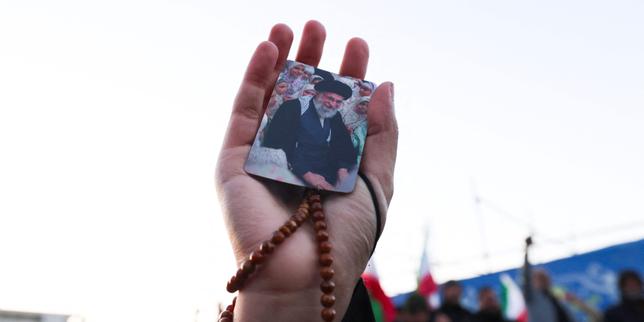
Ali Khamenei is 86. He’s outlasted countless rumors of his demise, but the clock is ticking on the most consequential power transition in the Middle East. When the Supreme Leader dies, it won't just be a funeral. It'll be a scramble for the soul of a nuclear-threshold state. Most people think the transition is a simple vote by a bunch of clerics. It's not. It’s a messy, high-stakes collision between constitutional law and the sheer muscle of the Revolutionary Guard.
The answer to who takes over depends on whether you follow the book or the boots on the ground. Constitutionally, the Assembly of Experts—88 elderly clerics—decides the next Guide. In reality, the Islamic Revolutionary Guard Corps (IRGC) holds the keys to the armory and the economy. They won't let a candidate they don't like anywhere near the throne.
The Assembly of Experts and the Secret List
The official process kicks off immediately. The Assembly of Experts is legally mandated to choose a successor. They’ve reportedly already narrowed it down to a "secret list" of three names. We don’t know those names for sure, but the selection process is more about consensus than a wide-open primary.
If they can’t agree on one person, the Constitution technically allows for a "Leadership Council." This would be a committee of three or five people running the show. It’s a nightmare scenario for stability. Committees don't rule well in revolutionary autocracies. They invite infighting. Most insiders believe the system will do everything to avoid a council and pick a single face to project strength.
The Assembly isn't as independent as it looks. Every member was vetted by the Guardian Council, which Khamenei largely controls. It’s a closed loop. They aren't looking for a reformer. They're looking for a safe pair of hands who won't dismantle the system that keeps them wealthy and powerful.
Mojtaba Khamenei and the Dynasty Question
You can’t talk about the succession without talking about Mojtaba Khamenei. He’s the Supreme Leader’s second son. For years, he’s been the gatekeeper. He’s got deep ties to the intelligence apparatus and the IRGC. In a system built on "neither East nor West" and a rejection of the Pahlavi monarchy, a father-to-son handoff is a tough sell. It looks like a throne.
Critics within the religious establishment in Qom hate the idea. They argue the revolution was meant to end hereditary rule. But Mojtaba isn't just a "son of." He’s a political operator. If the IRGC decides he’s the best bet for continuity, the clerics will find a religious justification to make it happen. He’s recently been elevated to the rank of Ayatollah in some circles, which is a necessary resume builder for the job.
But here’s the catch. If he takes over, the "Republic" part of the Islamic Republic officially dies. It becomes a religious monarchy. That could be the spark that brings people back into the streets. The regime knows this. They’re weighing the stability of a known quantity against the PR disaster of a dynasty.
The IRGC Is the Real Kingmaker
Forget the robes for a second. Let's talk about the fatigues. The IRGC has spent the last three decades becoming a state within a state. They control the missiles, the borders, and massive chunks of the GDP, from construction to telecommunications. They don't want a Supreme Leader who’s going to "reform" them out of business.
The IRGC needs a Leader who provides ideological cover for their operations. They want a figurehead who stays out of their way while they manage regional proxies and the nuclear program. If the Assembly of Experts picks someone the IRGC views as weak or too conciliatory toward the West, expect a "soft coup." They won't need to roll tanks into Tehran—they already have them there. They’ll just dictate the terms of the vote.
The Guard’s biggest fear is a vacuum. They saw what happened in the Arab Spring. They saw the 2022 protests. They know that the moment Khamenei dies is the moment of maximum vulnerability. You should expect a total internet blackout and a massive deployment of the Basij (paramilitary) the second the news breaks.
Why Ebrahim Raisi’s Death Changed Everything
Before his helicopter hit a mountain in May 2024, Ebrahim Raisi was the clear frontrunner. He was the perfect candidate for the hardliners. He was loyal, he was a "judge" who’d proven his willingness to execute dissidents, and he was the sitting President. His death threw a massive wrench into the gears.
With Raisi gone, the field is wide open and much more dangerous. There’s no obvious "Plan B" that everyone agrees on. This increases the chance of a dark horse candidate—someone like Alireza A'afi or even a return to a more "centrist" hardliner if the regime feels it needs to lower the temperature. But don't hold your breath for a moderate. The system has spent the last five years purging anyone who isn't a true believer.
The Qom Factor and Religious Legitimacy
The city of Qom is the religious heart of Iran. The Grand Ayatollahs there hold significant moral weight. While they don't have the military power of the IRGC, their silence or vocal opposition can delegitimize a new Leader.
Khamenei was never a top-tier religious scholar when he took over in 1989. He had to be fast-tracked to "Ayatollah" status. The next guy will likely face the same legitimacy gap. If the senior clerics in Qom refuse to recognize the new Leader's religious authority, it creates a fracture that the regime can't easily fix with batons and tear gas. This is why the behind-the-scenes lobbying in the seminaries is just as intense as the lobbying in the IRGC barracks.
What Happens on Day One
The first 48 hours will be a choreographed display of grief and power. The state media will run 24/7 loops of Khamenei’s speeches. Behind the scenes, the Supreme National Security Council will be in permanent session.
- Security Lockdown: The IRGC will seal the borders and secure the capital.
- Emergency Session: The Assembly of Experts will meet, likely in a secret location.
- The Announcement: A name will be broadcast. This is the moment of truth. If the streets stay quiet, the transition succeeded. If the crowds gather, the new Leader starts his reign with a bloodbath.
It's a mistake to look for a "Gorbachev" in this mix. The Iranian system is designed to prevent a Gorbachev from ever rising. Anyone who makes it to the final round of the succession lottery is a man who has already signed off on the regime's most brutal policies.
The real shift won't be toward democracy. It’ll be a shift in how the regime manages its survival. A younger, more IRGC-aligned Leader might be more pragmatic about the economy but even more aggressive about regional influence and the nuclear program. They’ll be looking to secure their position, and in Tehran, you secure your position by being the toughest guy in the room.
To track this effectively, watch the promotions within the IRGC's top brass over the next few months. See who's getting the lucrative government contracts and who's being invited to speak at the major Friday prayers. The movement of money and microphones tells you more than the official press releases ever will. Be skeptical of any reports claiming a "moderate" is in the running. In the current Iranian political climate, "moderate" is just another word for "exiled."
The transition is coming. It’s no longer a matter of "if" but a very imminent "when." The world’s energy markets and regional security frameworks aren't ready for the volatility that’s about to hit the Persian Gulf. Focus on the internal security reports and the statements coming out of the Office of the Supreme Leader’s chief of staff. That’s where the real transition is being scripted right now.


