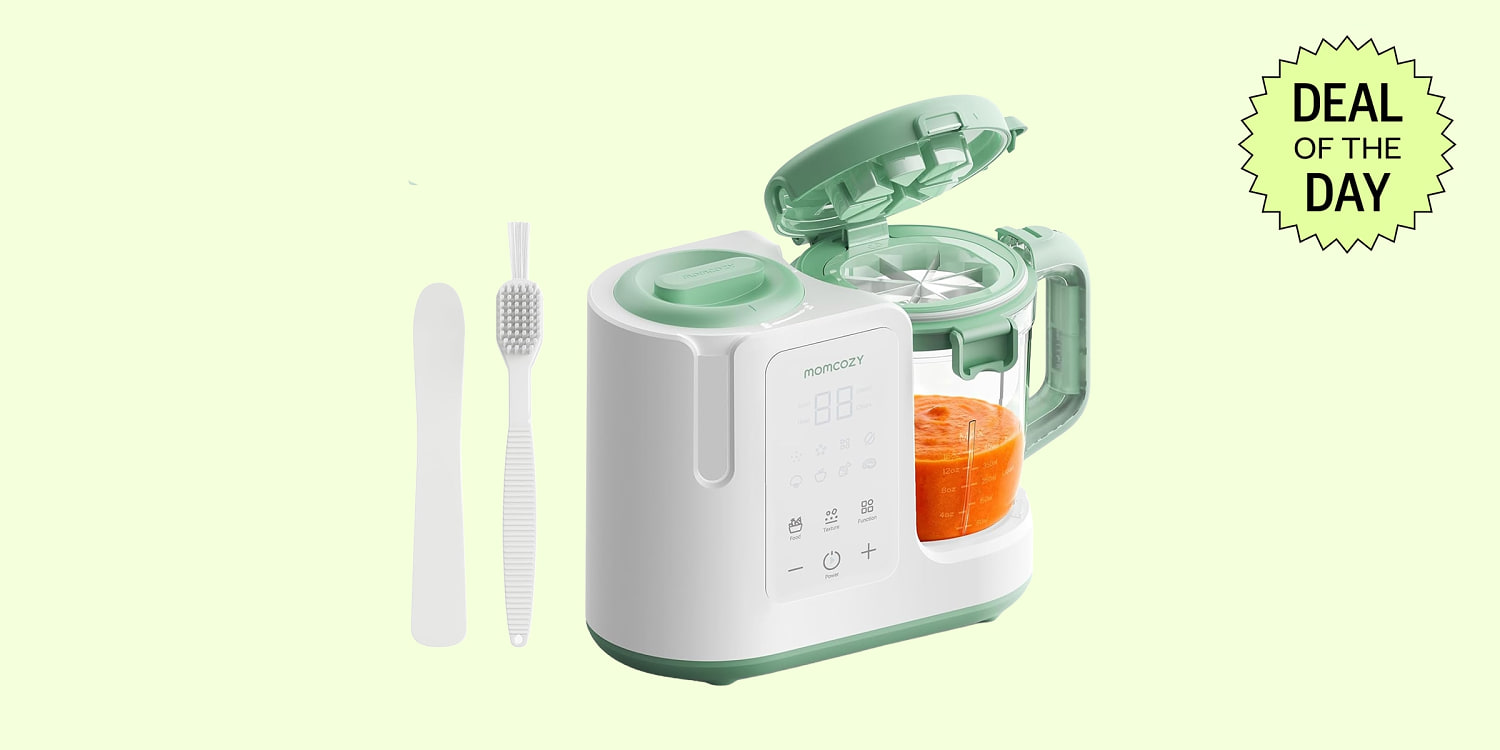
Every November, deal roundups shout the same thing at exhausted parents. A popular baby food maker just dropped under $100, and you're supposed to smash "add to cart" before it sells out. Right now, the spotlight is on the Momcozy AutoMeal Baby Food Maker, which dropped from its $149.99 retail price down to $79.99 at Walmart and Babylist, after hovering right around $100 on Amazon earlier in the month.
Stop and breathe before you pull out your card. A sub-$100 price tag feels like an easy win when you're staring down the cost of $1.50 to $2.00 store-bought pouches, yet half the countertop baby appliances bought on impulse end up collecting dust behind the toaster by month eight. Let's look past the flashy discount banner and examine what the Momcozy AutoMeal actually does, where it falls short, and whether a budget baby food maker belongs in your kitchen at all.
What You Actually Get With the Momcozy AutoMeal Deal
Most deal articles treat a baby food maker like magic. You toss in raw carrots, press a button, and twenty minutes later a gourmet puree appears while you play with your baby. That pitch isn't totally wrong, just incomplete.
The Momcozy AutoMeal Baby Food Maker is a one-jar countertop steamer and blender. You chop raw fruits, vegetables, or meats into small cubes, drop them into the 15-ounce blending cup, fill the separate water reservoir, and hit start. The machine heats up (drawing 330W for steaming and 150W for blending on the 120V US model), steams the food until tender, and automatically triggers its six-blade cyclone blender to puree the batch in under 25 minutes.
Here is why parents gravitate toward this specific model when it drops under $100:
- One-vessel workflow: You aren't transferring scalding hot sweet potatoes from a stovetop steamer basket into a separate blender pitcher, which cuts down on burns and sink clutter.
- Three preset texture stages: Instead of guessing how long to hold a pulse button, you can select smooth, medium, or coarse settings as your baby moves from runny first foods to chunkier mashes.
- Built-in self-clean cycle: Add water and a drop of soap, run the clean mode, and the blades agitate the water to knock off stuck puree before you unscrew the base for a quick rinse.
- 15-ounce batch capacity: That holds roughly three to four standard baby portions at once, enough for a couple of days in the fridge or a small freezer tray.
On paper, getting a steam-and-blend machine with a 4.8-star rating on Momcozy's site and a 4.3-star average on Amazon for $79.99 to $100 sounds hard to beat. Look closer at real owner feedback, though, and a few quirks pop up fast.
The Frustrating Details Deal Roundups Leave Out
Commerce editors rarely use these machines for six straight months. Parents do, and their honest complaints reveal the trade-offs you're making at this price point.
First, there's the watery puree problem. Unlike models with an elevated internal steamer basket—such as the Grownsy Baby Food Maker—the Momcozy AutoMeal suspends ingredients directly over the condensation area using its elevated blades. Because the machine automatically rolls straight from steaming into blending without pausing for you to drain excess liquid, high-moisture foods like zucchini, peaches, or pears can turn into soup. If you want a thick puree, you have to babysit the timer, pause the cycle right as steaming finishes, manually pour off the extra water, and then restart the blend. That eats into the "hands-off" promise.
Second, plastic staining and mineral buildup happen quickly. Owners note on Babylist that leaving carrot, squash, or tomato puree inside the food-grade BPA-free cup overnight will tint the lid and plastic walls orange. You have to wash it the same day. You also have to descale the water heating tank regularly with vinegar or citric acid, or mineral scale from tap water will choke the steam output and make the plastic look cloudy.
Third, the 15-ounce cup is an awkward middle ground. It's bigger than single-serve mini blenders, so it takes up noticeable counter real estate, yet it's too small for serious Sunday meal preppers who want to batch-cook two weeks' worth of food in one go.
Doing the Real Math on Homemade vs Store-Bought Baby Food
Parents usually buy a baby food maker to save money, so let's run the actual numbers rather than guessing.
According to consumer nutrition breakdowns and testing tracked by The Guardian and ChildLife Nutrition, a single store-bought pouch or jar runs between $1.00 and $2.00. A 10-ounce bag of frozen peas or a pound of sweet potatoes costs roughly the same amount at the grocery store, yet yields four to six baby-sized portions. Over a month, making purees at home easily trims your baby food bill by a third or more.
If you buy the Momcozy AutoMeal on sale for $80 and spend another $15 on silicone freezer trays or reusable pouches, your upfront gear cost is $95. Assuming you save around $1.00 per serving compared to commercial pouches, you break even after making 95 portions—roughly five to six weeks of feeding a baby three meals a day.
That math works great if you stick with purees for four or five months. It completely falls apart if you only use the machine for three weeks.
The Short Lifespan of the Puree Phase
Here is the truth nobody in the baby gear industry wants to advertise. Most pediatricians, following American Academy of Pediatrics guidance, recommend introducing solids around 6 months of age. Smooth purees aren't a year-long lifestyle. For many babies, silky purees last anywhere from four to ten weeks before they start demanding mashed table food, soft finger foods, or baby-led weaning (BLW) strips.
If your baby skips straight to gnawing on steamed broccoli florets and strips of avocado by 7.5 months, an automated puree machine suddenly becomes a bulky paperweight. You can't easily repurpose a 15-ounce baby food steamer into a family smoothie blender the way you can with a standard kitchen appliance.
Safety and Nutrition Myths Worth Clearing Up
Another big reason parents rush to buy these machines is fear of what's inside commercial jars. Making food at home gives you total control over salt, added sugars, and spice blends, and it lets you introduce your family's actual flavor profile early on.
At the same time, homemade isn't automatically safer or cleaner than store-bought. Commercial infant food manufacturers operate under strict regulatory limits for heavy metals and pesticide residues—often testing crops before processing—whereas produce from your local supermarket or backyard garden still absorbs trace minerals from soil and water. Regardless of whether you steam at home or twist open a jar, the smartest move recommended by pediatric dietitians is rotating ingredients rather than feeding sweet potatoes and rice cereal every single day.
And if you do make purees at home, treat food safety seriously. Infants have developing immune systems and are far more vulnerable to foodborne bacteria than adults. Never feed your baby directly out of the storage jar if you plan to save the rest; spoon saliva introduces bacteria that will spoil the remaining food in the fridge within 24 to 48 hours. Portion leftovers immediately into clean containers, chill them fast, and thaw frozen cubes in the refrigerator rather than on the kitchen counter.
How the Momcozy AutoMeal Stacks Up Against Other Sub-$100 Options
Before you lock in the Momcozy deal, compare it against the other heavy hitters currently sitting under $100 across major stores. Each one solves a slightly different kitchen problem.
The Grownsy Baby Food Maker regularly drops to $66.49 to $75.99 on sale at Walmart and Target. It takes up less counter space than the Momcozy and includes a dedicated, elevated steam basket that keeps vegetables completely out of the cooking water—preserving water-soluble vitamins and preventing soggy purees. The trade-off is manual blending: you press and hold the blend button yourself instead of walking away for a fully automated cycle.
The NutriBullet Baby Food Prep System sits right around $49.99 at Target and Walmart, while its companion Steam & Blend model runs roughly $87.99 at Babylist. The classic $49.99 NutriBullet Baby doesn't cook food at all—you steam or roast vegetables on your stove first—but it gives you a powerful motor, a large batch bowl, six date-dial storage cups, and a silicone freezer tray right in the box. Better yet, once your toddler outgrows purees, the blender base keeps working for adult smoothies, pestos, and sauces.
The Babymoov Duo Meal Lite occasionally drops to $52.00 on sale at Walmart (down from $124.99), offering a 4-in-1 design that steams and blends separately so you can capture the nutrient-rich cooking liquid in a reservoir and add back only as much as you need for the right thickness.
And honestly? If you already own a $15 steamer basket and an immersion blender or regular food processor, you already own a baby food maker. You just have to wash two things instead of one.
Who Should Actually Buy This Deal—and Who Should Skip It
Sales create fake urgency, especially when a $150 appliance drops to $80. Use your actual daily routine—not aspirational parenting goals—to make the call.
Grab the Momcozy AutoMeal on sale if:
- You plan to start with traditional spoon-fed purees around 4 to 6 months and want a single, push-button machine that cooks and blends while you tend to your baby.
- You hate washing multiple pots, colanders, and blender pitchers, and you know you'll actually run the self-clean cycle right after cooking.
- You don't already own a decent mini food processor or immersion blender.
- You're shopping for a baby shower gift for an expectant parent who specifically registered for a dedicated baby food maker.
Skip it and keep your $80 if:
- You plan to do baby-led weaning with soft finger foods, where a simple fork masher or steamer pot is all you need.
- You have tight kitchen counter space and hate descaling small water reservoirs.
- You like batch-cooking a full month of food on Sunday afternoons—a 15-ounce cup will force you to run three or four back-to-back cycles, whereas a standard pot and full-size blender will finish the job in ten minutes flat.
Smart Steps to Take Right Now Before Buying
If you decide the Momcozy AutoMeal fits your kitchen, don't just click the first link you see.
- Check price across retailers first: While some deal articles cite a $100 Amazon price, both Walmart and Babylist have listed the Momcozy AutoMeal at $79.99 during seasonal sales—saving you an extra $20 right off the bat.
- Factor in storage gear: The base machine doesn't replace portion containers. Add a set of silicone freezer trays with lids or reusable food pouches to your cart at the same time so you aren't stuck storing puree in random coffee mugs.
- Set a calendar reminder to descale: Buy a bottle of plain white vinegar alongside your groceries. Running a quick vinegar-and-water steam cycle every two weeks keeps the heating element from burning out before your baby even hits their first birthday.