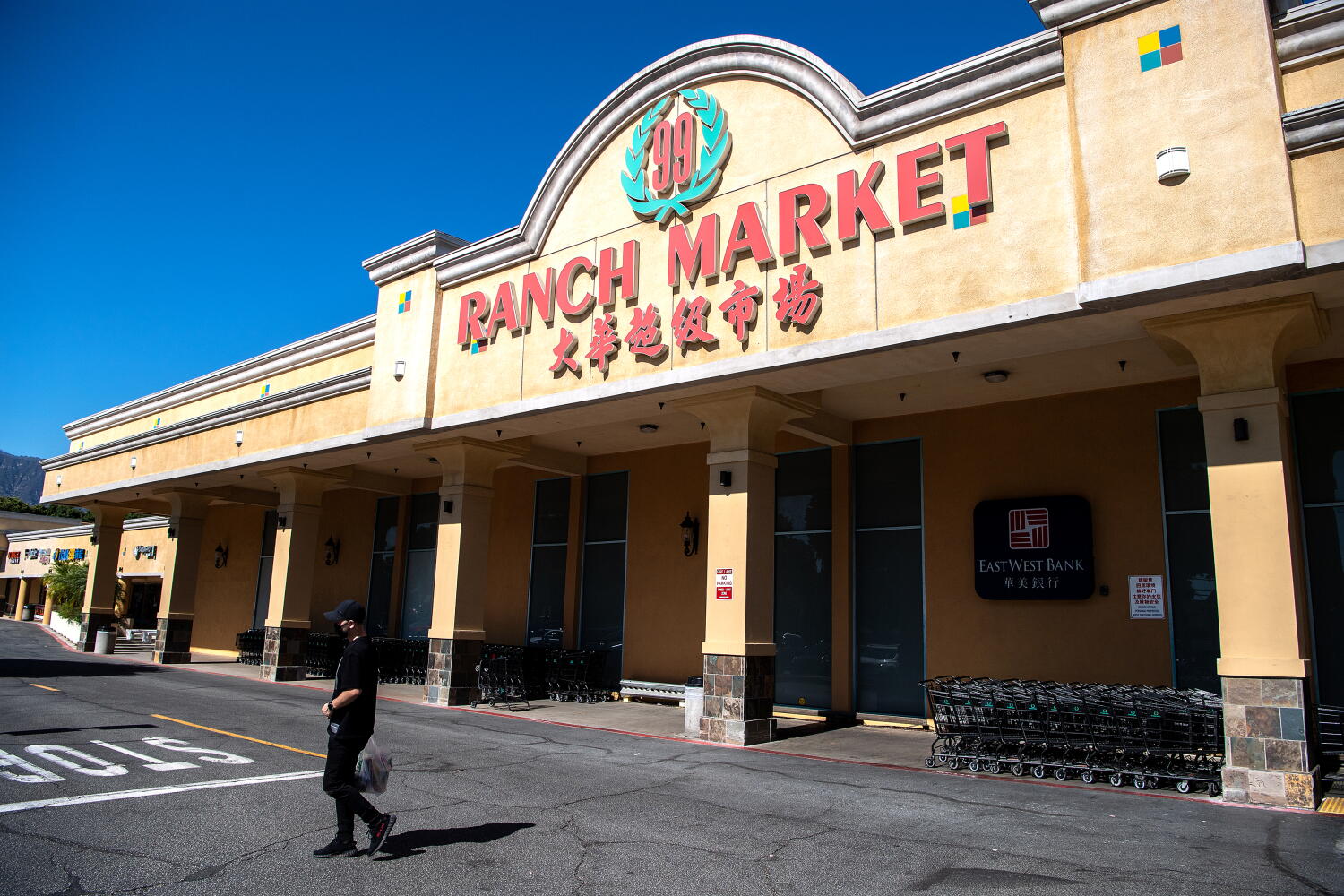
Every local news desk in California runs the exact same obituary whenever a major grocer locks the doors on two locations. They blame inflation. They blame shoplifting. They blame the slow death of brick-and-mortar retail.
They are wrong. Every single one of them.
When 99 Ranch Market—the undisputed heavyweight champion of Asian-American supermarkets—announces the closure of two California storefronts, casual observers see a retreat. Retail analysts who actually read balance sheets see something entirely different. You are witnessing a ruthless, calculated reallocation of capital by a legacy operator that refuses to let aging real estate drag down an aggressive national expansion.
Stop reading the headlines as a sign of weakness. Start reading them as a masterclass in store-fleet hygiene.
The Myth of the Invincible Grocery Anchor
For decades, the conventional wisdom in commercial real estate was simple. Landlords wanted a grocery anchor because grocers signed twenty-year leases, drew daily foot traffic, and almost never moved. In turn, grocers clung to legacy locations out of sheer inertia, terrified of ceding a single zip code to a rival.
That playbook is dead.
Operating a modern, perishable-heavy supermarket in California has become an exercise in margin compression. Commercial lease renewals in mature California strip malls have skyrocketed. Triple-net charges—property taxes, insurance, and common area maintenance—routinely outpace top-line revenue growth in older, physically constrained boxes.
I have watched regional grocery chains bleed tens of millions of dollars trying to keep legacy stores on life support simply because the founder opened that location thirty years ago. Pride is the most expensive line item in retail. When a store's physical footprint cannot accommodate modern cold-chain logistics, expanded prepared-food counters, or high-volume curbside fulfillment, keeping it open is not loyalty. It is financial malpractice.
99 Ranch Market, operated by Tawa Supermarket Inc., did not accidentally stumble into its position as the largest Asian supermarket chain in the United States. You do not build an empire stretching from California to New York and Massachusetts by letting sentimentality dictate your real estate portfolio.
Store Rationalization Is a Weapon, Not a White Flag
If you want to understand what is actually happening, you need to learn the mechanics of store rationalization—the deliberate pruning of underperforming or structurally obsolete locations to boost overall network profitability.
Wall Street rewards tech companies when they kill low-margin products. Yet when a traditional grocer closes two aging stores while simultaneously opening massive, modernized flagship locations across the country, local reporters treat it like a funeral.
Consider the unit economics of an Asian supermarket compared to a standard conventional grocer like Kroger or Safeway:
- Higher Shrink Rates: Live seafood tanks, fresh-cut produce, and house-made bakery items carry substantially higher spoilage risks than center-store boxed goods.
- Labor Intensity: Butchers, fishmongers, and hot-food kitchen staff cannot be replaced by self-checkout kiosks. In California, rising minimum wages and strict scheduling mandates hit full-service ethnic grocers harder than almost any other retail format.
- Energy Consumption: Running banks of open-air refrigeration units and live aquaculture systems under California utility rates eats directly into net operating income.
When a specific location sits in an aging shopping center with poor parking ratios, outdated electrical infrastructure, and a landlord demanding market-rate rent increases, the math breaks. Closing that store immediately lifts the company's EBITDA (Earnings Before Interest, Taxes, Depreciation, and Amortization). That freed-up capital goes straight into high-growth markets where 99 Ranch can build ground-up or newly renovated 40,000-square-foot experiential stores.
Why Competitors Are Actually Terrified
The lazy consensus assumes that when 99 Ranch leaves a neighborhood, the local community loses out and competitors win.
Let us test that premise.
First, look at the competitive pressure inside California itself. Over the last decade, the Golden State's Asian grocery sector went from a sleepy niche to a bloodbath. H Mart expanded aggressively. Tokyo Central and Mitsuwa doubled down on experiential Japanese retail. Online disruptors like Weee! began delivering fresh bok choy, live Dungeness crab, and imported snacks directly to suburban doorsteps, skimming off the highest-margin pantry staples.
In an environment this crowded, having two stores five miles apart—a relic of 1990s suburban sprawl—causes cannibalization. When one store steals 20% of the sales from its sister store down the highway, neither location achieves optimal inventory turnover. Fresh produce sits longer. Seafood moves slower. Brand perception suffers.
By closing redundant or physically outdated California boxes, 99 Ranch eliminates internal cannibalization and concentrates foot traffic into its highest-performing regional hubs. A single store doing $60 million a year in volume is vastly more profitable and offers far fresher inventory than two stores limping along at $28 million each.
Second, look at where Tawa Supermarket is actually placing its chips. While California headlines obsess over two closures, the company has spent the last several years planting flags in East Coast corridors, Texas, and the Pacific Northwest—regions with booming Asian-American demographics and far lower regulatory friction.
Dismantling the Wrong Questions
Whenever a major grocer announces closures, consumers and armchair analysts immediately flood search engines with the exact same predictable questions. Almost all of them are built on flawed premises.
Is 99 Ranch Market going out of business?
No. Not even close. Confusing two store closures in a mature, over-saturated home market with corporate insolvency is like claiming Apple is failing because it closed two legacy mall kiosks to open a flagship store downtown. Tawa Supermarket remains privately held, well-capitalized, and actively expanding its national footprint.
Are mainstream grocers finally beating ethnic supermarkets?
This is the biggest delusion in retail. Mainstream chains like Walmart and Target have spent years adding an "international aisle" stocked with soy sauce, Sriracha, and instant ramen, convinced they are capturing the ethnic food market. They are barely scratching the surface. Mainstream grocers cannot replicate the live seafood counters, specialized butcher cuts, regional produce varieties, or hot deli operations that define a true Asian supermarket. 99 Ranch is not losing to Safeway; it is competing against specialized regional players and direct-to-consumer delivery apps.
Does this mean California retail is completely uninvestable?
It means mediocre California retail is uninvestable. Retailers with differentiated products, experiential dining halls, and strong omnichannel integration continue to print money in California. What no longer works is the 1995 strip-mall model—cramped aisles, fluorescent lighting, and zero digital integration.
The Real Threat Nobody Is Talking About
If you want to critique 99 Ranch Market with actual rigor, ignore the California store closures and look at the structural vulnerabilities facing all legacy brick-and-mortar ethnic grocers.
The biggest threat is not rent. It is the generational shift in shopping behavior.
First-generation immigrants treated the Saturday trip to 99 Ranch as a cultural ritual. They inspected every fish, squeezed every piece of fruit, and bought fifty-pound bags of rice in person. Second- and third-generation Asian Americans do not share that allegiance. They value convenience over tradition. They buy pantry staples on Amazon, order fresh Asian groceries through Weee! on their phones, and visit physical stores primarily for hot prepared foods, specialty snacks, or immediate dinner ingredients.
Imagine a scenario where a legacy grocer refuses to shrink its footprint in older California suburbs. Five years from now, half of its core customer base has aged out or shifted 60% of their basket size to delivery apps. The grocer is stuck with massive, expensive square footage that generates half the revenue per square foot it did in 2015.
To survive that demographic cliff, legacy grocers have to pivot their physical stores from mere warehouses of ingredients into culinary destinations. Look at how H Mart transformed its locations by anchoring them with high-end food halls featuring Korean fried chicken, ramen bars, and artisanal bakeries. You cannot download a hot bowl of hand-pulled noodles. You have to walk through the store to get it.
99 Ranch knows this. Its newer locations feature modernized food courts, upgraded lighting, wider aisles, and integrated digital loyalty programs. You cannot easily retrofit a cramped, thirty-year-old California strip-mall box with grease traps, commercial ventilation hoods, and seating for a modern food hall. Sometimes, the only logical move is to walk away when the lease expires.
The Downside of Aggressive Pruning
Even the sharpest real estate strategy carries real risks. Closing stores is never painless, and pruning a mature market comes with distinct downsides that executives often underestimate:
- Loss of Neighborhood Mindshare: Once you surrender a physical corner in a dense suburban market, you almost never get it back. Competitors will gladly take over the lease—or open a block away—and capture the convenience-driven shoppers who refuse to drive an extra fifteen minutes to your remaining flagship store.
- Supply Chain Density: Grocery distribution relies on tight delivery loops. Dropping stores in a core region slightly reduces truckload efficiency, marginally increasing the per-mile logistics cost for the remaining stores in that territory.
- Public Relations Friction: Because local media reflexively frames every closure as a corporate failure, brands suffer temporary reputational damage. Suppliers get nervous. Landlords in other markets demand higher security deposits.
Tawa Supermarket clearly weighed these drawbacks and decided that bleeding margin in outdated boxes was worse than taking a temporary PR hit. They are right.
What Smart Operators Do Next
Whether you run a multi-unit retail chain, manage commercial real estate, or invest in consumer brands, stop watching top-line store counts. Store count is a vanity metric. Revenue per square foot, four-wall cash flow, and inventory turnover are the only numbers that matter.
If you are holding onto underperforming locations out of habit, fear of bad press, or nostalgia for the market that built your company, audit your leases today. Identify the bottom 10% of your physical footprint—the locations with expiring leases, rising triple-net costs, and physical layouts that cannot support modern consumer habits.
Cut them loose. Take the bad headlines for forty-eight hours. Then redeploy every single dollar of that saved capital into markets and formats built for the next twenty years, not the last thirty.
99 Ranch Market is not dying in California. It is shedding dead weight so it can outrun everyone else.


