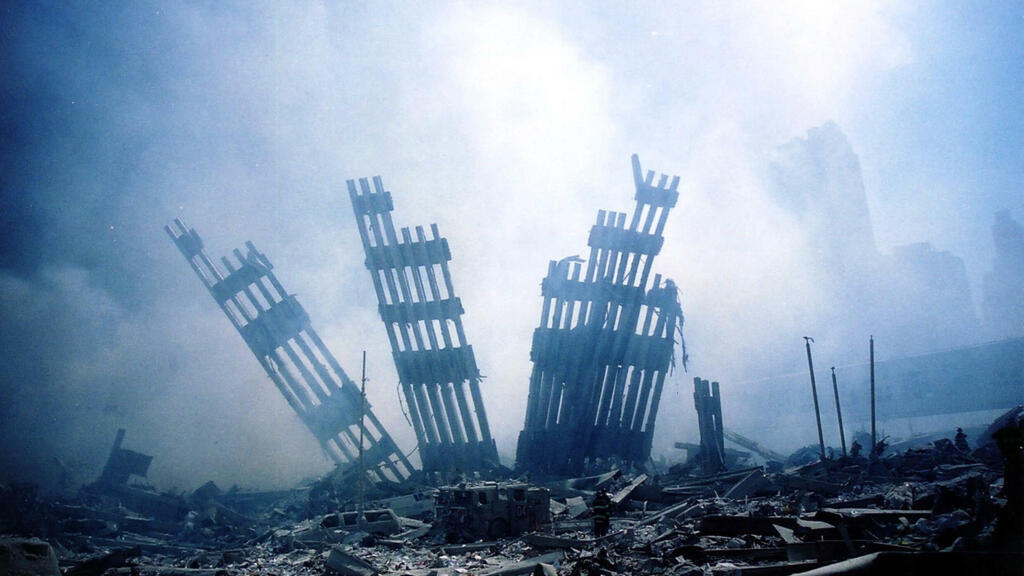
Twenty-five years later, we are still paying for the blind spots of September 11. It's easy to look back at that Tuesday morning as a distant historical shock, but the machinery of global intelligence, aviation security, and cross-border surveillance was completely rewritten in its immediate aftermath. The structural failures exposed by the 9/11 Commission Report weren't minor oversights. They were catastrophic communication gaps, institutional arrogance, and a failure of imagination.
Intelligence agencies simply refused to connect the dots. The CIA had pieces of the puzzle. The FBI had other pieces. Neither talked to the other because bureaucratic turf wars mattered more than shared survival.
If you want to understand how modern governments track threats today, you have to look directly at the heavy price paid for those missed opportunities back in 2001. Let's talk about what actually changed, what stayed broken, and why the lessons of 9/11 still dictate how you travel, browse the internet, and live your daily life.
The failure of imagination that cost thousands of lives
The most striking line in the entire 9/11 Commission Report points to a failure of imagination. Before that day, hijacking an aircraft meant demanding a ransom, rerouting to Cuba, or making political statements. Nobody in mainstream security planning seriously expected commercial airliners to be converted into guided missiles.
That lack of foresight created a massive operational vulnerability. Agencies had intercepted communications about operatives entering the United States, and flight schools reported suspicious students asking to learn how to steer large planes without learning how to land them. Yet, these signals floated in a vacuum.
In the intelligence business, you have to imagine the worst-case scenario and fund it. After 2001, the pendulum swung violently in the opposite direction. Governments built massive data collection apparatuses to ensure nothing would ever be missed again. But swinging from total blindness to total surveillance created an entirely new set of problems.
Building the modern surveillance state
Out of the ashes of the World Trade Center and the Pentagon came the Department of Homeland Security, the Transportation Security Administration, and the Patriot Act. Overnight, the privacy norms of the twentieth century vanished.
You take airport security lines, body scanners, and liquid restrictions for granted now. Back then, walking onto a plane with a pocketknife or a small bottle of shampoo was normal. The new strategy prioritized absolute risk mitigation at the expense of convenience and civil liberties.
Behind the scenes, intelligence sharing transformed completely. The Terrorist Screening Center was established to merge watchlists across federal, state, and local law enforcement. Agencies that used to hoard information now faced intense pressure to share it.
Yet, information sharing created the needle-in-a-haystack problem. When you collect everything, finding the actual threat becomes harder, not easier. Analysts drown in noise. The Boston Marathon bombing in 2013 and the attack at a nightclub in Orlando in 2016 both featured situations where foreign intelligence warnings or local red flags existed, but agencies failed to filter the signal from the noise.
The algorithmic shift in modern counterterrorism
Today, the battleground has shifted from physical flight schools to digital networks. Modern intelligence agencies rely heavily on artificial intelligence, metadata analysis, and predictive policing algorithms to spot threats before they materialize.
This brings us to a harsh reality. The tactics used by extremist groups evolved right alongside state surveillance. Instead of orchestrating complex, multi-year operations requiring flight training and international wire transfers, modern security threats often involve radicalized individuals acting alone using encrypted messaging apps.
Stopping a coordinated foreign cell is difficult. Stopping a lone actor who downloads an extremist manifesto and rents a truck or uses a homemade weapon is almost impossible for traditional intelligence frameworks.
This is where the lessons of 9/11 clash with twenty-first-century realities. We built an apparatus designed to fight a centralized, hierarchical enemy like Al-Qaeda, only to face decentralized, network-driven threats that bypass traditional wiretaps and border controls.
What organizations and individuals still get wrong today
If you study how security failures happen in large institutions today, the root cause remains identical to 2001: stovepiping.
Corporations, government bodies, and cybersecurity teams still struggle to share threat intelligence horizontally. IT departments often keep vulnerability data secret from executive leadership until a breach happens. Different law enforcement branches refuse to share case files due to jurisdictional pride.
To fix this in your own sphere of influence, you have to break down silos actively.
- Audit where your organization hides information and force cross-departmental reviews.
- Reward people who raise red flags early, even if those flags turn out to be false alarms.
- Assume that your current security protocols have blind spots because attackers are actively looking for them.
The architects of the 9/11 attacks exploited a system that relied on trust and rigid boundaries. Security forces adapted by building walls, but walls only work if everyone looks over them together.
We are still learning those lessons because human bureaucracy is hard to change. The next major security failure won't look like the last one. It never does. Stay paranoid, keep your communication channels open, and never assume that intelligence systems are smart enough to protect you on their own.