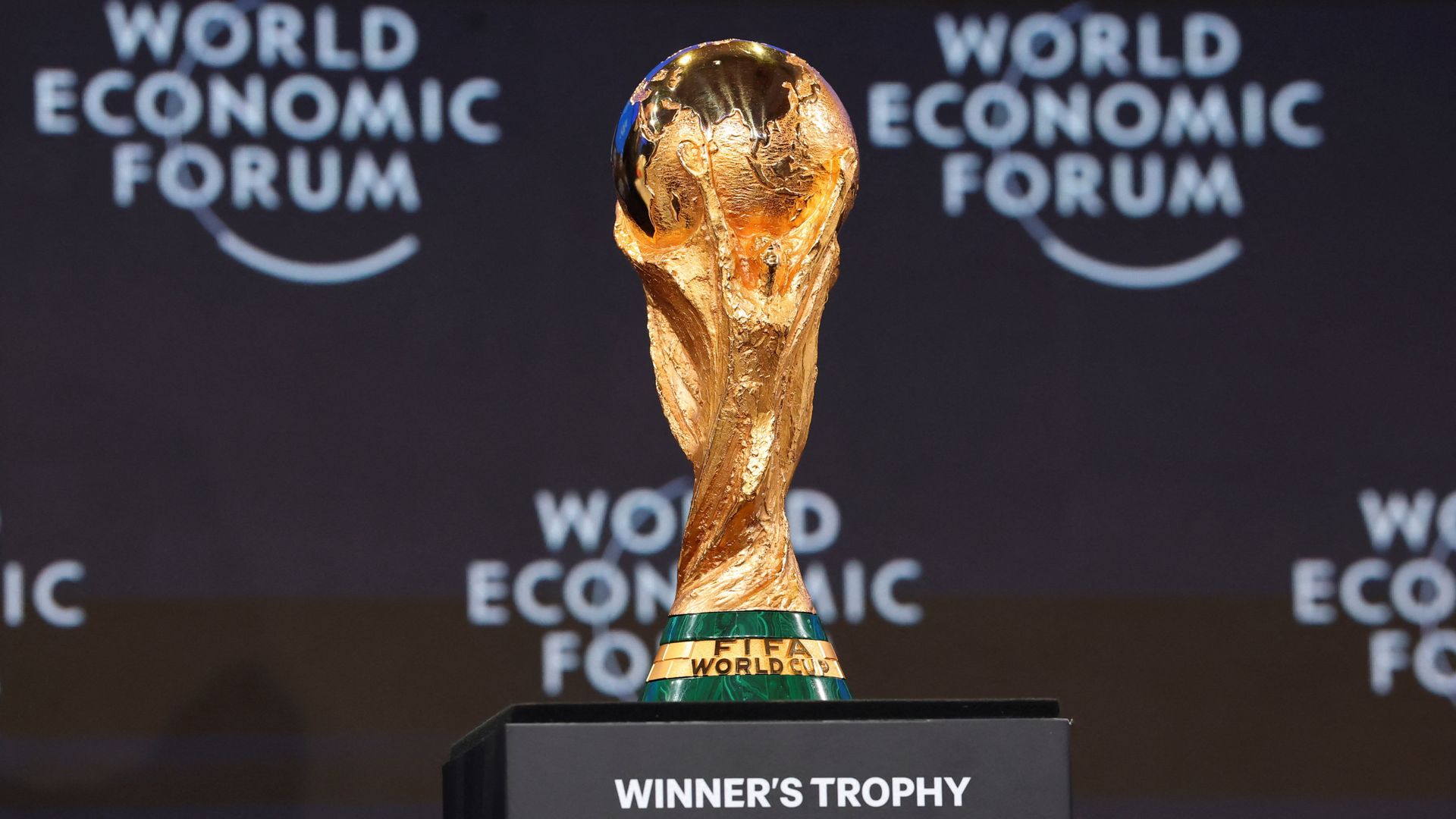
The outrage machine is in full swing. Headlines are screaming about the "death of the beautiful game" because FIFA has dared to attach a £24,000 price tag to premium World Cup seats. Critics are weeping over the "lost working-class fan" while typing on thousand-dollar smartphones. They are missing the point entirely.
High ticket prices are not a bug. They are a feature.
If you think a World Cup final is a local community gathering, you are living in 1966. It is a global luxury event, no different from the Met Gala or the Monaco Grand Prix. By pricing elite seats at market-clearing levels, FIFA is finally stopping the massive wealth transfer to black-market scalpers and putting that capital back into the infrastructure that keeps the sport alive.
The Myth of the Affordable Final
Let’s kill the biggest lie first: that "regular" fans were ever going to get these seats at face value.
When a commodity has a massive gap between its official price and its true market value, that value doesn't vanish. It just flows into the pockets of middle-men. For decades, the primary market for World Cup tickets was a lottery of luck. If a seat was priced at £500 but valued by the market at £10,000, a scalper or a corporate "hospitality partner" captured that £9,500 spread.
By charging £24,000 for top-tier hospitality, FIFA is simply capturing the arbitrage.
I’ve spent fifteen years in sports marketing and event logistics. I’ve watched "fans" complain about prices while simultaneously selling their allocated seats to shady agencies for a 400% markup. FIFA is finally behaving like a rational economic actor. Every pound captured from a billionaire in a glass box is a pound that doesn't have to be extracted from the television rights that allow billions of people to watch for free at home.
Economics 101: Price as a Filter
People ask, "Who is this even for?"
It’s for the people who move the global economy. It’s for the sponsors who fund the development of football in nations that can’t afford their own pitches. It’s for the ultra-high-net-worth individuals who treat the World Cup as a networking hub.
If you want to protect the "soul of football," you don’t do it by subsidizing a wealthy person’s seat in a stadium. You do it by ensuring the tournament generates enough revenue to fund the FIFA Forward program, which pours millions into youth academies from Benin to Bhutan.
The math is simple:
- 1,000 tickets sold at £24,000 = £24 million.
- 1,000 tickets sold at a "fair" £200 = £200,000.
That £23.8 million difference builds roughly 40 FIFA-standard artificial pitches in developing nations. Are you really telling me that one corporate executive's "overpriced" seat isn't worth 40 pitches for kids who have nothing? Your "outrage" is actually a demand for the rich to get a discount at the expense of the global game's growth.
The Hospitality Tier is a Separate Product
The media loves to conflate the "cheap seats" with the hospitality boxes. They see a £24,000 figure and imply that the guy in the nosebleeds is paying that. He isn't.
In any major stadium, there is a cross-subsidy model. The luxury boxes and "Platinum" tiers pay for the maintenance of the entire structure. Without the £24,000 ticket, the £100 ticket would likely have to cost £400 to keep the lights on and the security tight.
Think about it like an airplane. The people in First Class, paying ten times the economy fare, are the only reason the airline can afford to fly the plane at all. If you forced everyone to pay a "fair" average price, the guy in the back would find his ticket doubling overnight.
The Scarcity Reality Check
There are 8 billion people on Earth. There are roughly 80,000 seats in a World Cup final stadium.
Mathematically, 99.999% of fans will never set foot in that stadium. The World Cup is a broadcast event. Its primary "venue" is the television screen and the internet. The physical stadium is a stage set.
When demand exceeds supply by a factor of a million to one, "fairness" is a pipe dream. You can distribute tickets via:
- Price: Only the wealthy go.
- Lottery: Only the lucky go.
- Corruption: Only the connected go.
At least with price, the money stays within the official ecosystem rather than disappearing into the pockets of ticket bots and digital touts.
The Problem with "Fan Activism"
The loudest voices against these prices are often the most entitled. They believe that because they’ve supported a team for twenty years, they have a "right" to a ticket to the most exclusive event on the planet.
Football is a business. It stopped being a charity the moment it became the most popular sport on earth. The costs of hosting a World Cup—security, transportation, technology, and stadium construction—have ballooned into the billions. Qatar 2022 cost an estimated $220 billion. The 2026 North American venture will be astronomical in its operational complexity.
Where do you think that money comes from?
If you want the world-class production, the multi-angle 4K cameras, the lack of crowd violence, and the star-studded ceremonies, you have to pay the bill. The £24,000 ticket is the tip on that bill.
A Brutal Truth for the "Legacy Fan"
The "Legacy Fan" is a demographic, not a protected class.
The industry insiders know what no one wants to say out loud: the traditional fan who buys one jersey every three years and complains about the price of a pie is not the growth engine of the sport. The engine is the emerging middle class in India, China, and the United States. These markets don't care about the "traditional" price of a ticket in London or Manchester in 1994. They care about the spectacle.
FIFA is pivoting toward the global elite because that is where the leverage is.
The Risk of This Approach
There is a downside. I’ll admit it. When you price out the "atmosphere," you risk turning the stadium into a sterile library. We’ve seen it in the Premier League. The "Prawn Sandwich Brigade" doesn't sing. They don't create the tifo. They don't scare the opposing goalkeeper.
If the stadium is full of people who paid £24,000, the "vibe" might die. But FIFA has already accounted for this. They keep a percentage of tickets for the "Yellow Wall" types at lower prices to ensure the cameras capture a "rowdy" crowd for the TV audience. It is curated passion. It is a TV show filmed in front of a live audience.
Stop Crying and Look at the Data
Global football revenues have grown nearly every year for decades. The sport is more popular than it has ever been. This hasn't happened in spite of commercialization; it has happened because of it.
Higher prices at the top end allow for:
- Better Safety: No more Heysel or Hillsborough disasters because we can afford elite-tier stadium tech and staffing.
- Wider Reach: Funding for women's football and youth tournaments that don't make a profit on their own.
- Innovation: VAR (love it or hate it) and advanced analytics require massive investment.
The £24,000 ticket isn't an insult to the fan. It is a tax on the ultra-rich to keep the global machine spinning.
If you’re mad that you can’t afford a luxury suite at the Lusail Stadium, you aren't a victim of "greed." You’re just a person who can't afford a luxury good.
Get over it. The game is better off without your subsidized seat.